
Anxiety
First consultation at half price!
Call us and take advantage of this limited time offer
Book your 1st Visit
What is it?
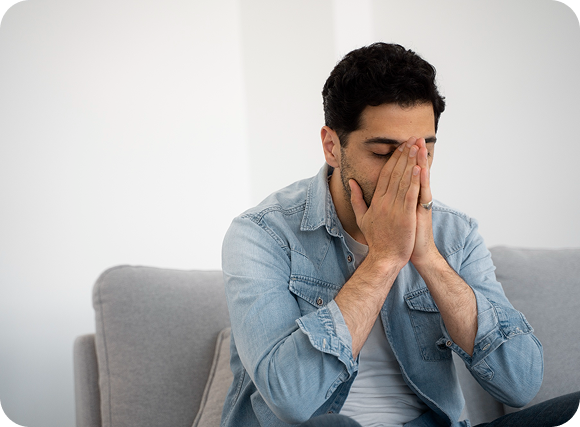
Anxiety is a natural response to dangerous situations, everyday problems, difficulties at work and even when sitting an exam at school.
However, in some cases, anxiety is not just a passing feeling but develops into a disorder. When a person suffers from this condition, they experience a a feeling of uncertainty, fear, anxiety, dread and alarm which takes hold of her even though there is no specific cause.
In other words, anxiety attacks come out of the blue and take hold of the person, paralysing them and making them feel helpless.
Causes
Although there is no proven cause of anxiety, there are internal and external factors that influence this condition. On the one hand, it has been shown that lAnxiety has a certain genetic component, which is why a child whose father or mother suffers from this disorder is likely to inherit a predisposition to develop it at some point in their life.
- The sudden change in life of a person or to live traumatic situations Events such as a car accident, being the victim of sexual abuse or a burglary exponentially increase the likelihood of suffering from anxiety.
- Furthermore, the use of substances such as caffeine, alcohol and drugs, can cause anxiety.

The symptoms of anxiety vary from person to person. However, they most commonly manifest themselves both mentally and physically.
Emotional and mental symptoms manifest themselves as constant worry, difficulty concentrating, trouble sleeping or a feeling of being exposed to some kind of danger. When this happens, adrenaline levels rise and the person may begin to imagine potential dangerous situations or threats.
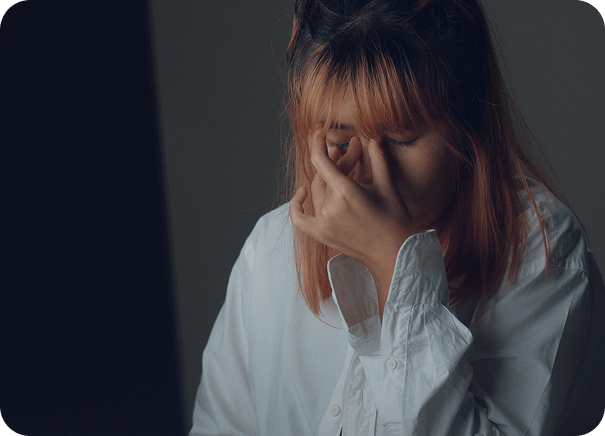
Furthermore, the physical symptoms are:
- Earth tremors
- Stomach problems
- Tachycardia
- Dizziness
- Sweating and shortness of breath
to the extent that people may come to believe they are having a heart attack

Prevention
There are certain steps that people suffering from an anxiety disorder should take, such as maintaining a healthy exercise routine which will allow the mind to focus on something else and create a sense of well-being.
Furthermore, it is necessary to to avoid taking drugs, caffeine and other substances that cause anxiety. It is also advisable to use relaxation techniques and breathing exercises that help you break free from the whirlwind of thoughts that fuel anxiety.
Furthermore, although chiropractic care cannot completely alleviate anxiety and stress, nor eliminate the psychosocial causes that give rise to them, it can help the body respond more effectively and build resilience against these factors.
That is why, at Salud Quiropráctica, we do our utmost to help you achieve better overall health so that you can cope more effectively with anxiety.
Some of the types of anxiety
that exist are these:
Generalised anxiety disorder
A person is diagnosed with this disorder if, for at least six months, they experience constant worry and excessive anxiety for no apparent reason.
Social anxiety disorder
People who suffer from this type of anxiety experience an intense fear of being rejected or exposed in front of others, for fear of being humiliated or judged.
Panic attack
This type of anxiety manifests itself as excessive worry over a period of time and is accompanied by physical symptoms similar to those of a heart attack, leading the person to believe that they are about to collapse or die.
Post-traumatic stress disorder
People suffering from this type of disorder have experienced a traumatic event that has left psychological scars, keeping them in a constant state of alertness and on edge. In many cases, their anxiety increases when they recall that traumatic event.
Phobic disorder
It consists of a constant, irrational fear of an object or situation, although in many cases it is triggered by a specific cause.
Diagnosis
To assess a person with anxiety, it is essential to examine the symptoms they are experiencing and to review their medical history and that of their family. It is also necessary to rule out any other conditions that may be contributing to the person’s condition. For this reason, in some cases it may be necessary to carry out blood tests or other diagnostic tests.
Treatment
La ansiedad es una condición que habitualmente se aborda con medicamentos, ejercicios de relajación y atención cognitiva conductual. El apoyo farmacológico, que debe ser indicado por un profesional con licencia, comprende el uso de ansiolíticos y en algunos casos de antidepresivos. La atención consiste principalmente en trabajar con los pensamientos negativos.
Risk factors
In many cases, the personality type as well as the consumption of substances narcotics. Furthermore, to experience a traumatic event Whether in childhood or at some other stage of life, it increases the risk of developing anxiety.
In this regard, it has been shown that children who have been subjected to some form of maltreatment or have been victims of sexual abuse are more likely to suffer from chronic anxiety in adulthood. Experiencing csudden and drastic changes Changes in one’s lifestyle – such as losing one’s job, becoming pregnant or the death of a family member – could also trigger anxiety.

Complications
When anxiety is chronic, it can lead to other emotional or mental health problems, such as depression. Furthermore, it can significantly interfere with the lives of those who experience it, limiting their exposure to everyday situations for fear of suffering a panic attack or an anxiety episode.
Call us and take advantage of this limited time offer
Formerly
72€
Now
36€
Research and avant-garde
There is now scientific evidence to support the effectiveness and benefits of chiropractic care.
Proven experience
We have extensive experience in supporting people with chiropractic-related complaints, thanks to the day-to-day work of our professionals.
Chiropractic care that delivers results
Our approach is geared towards helping each individual improve from the very first session, thereby achieving a high level of satisfaction.
