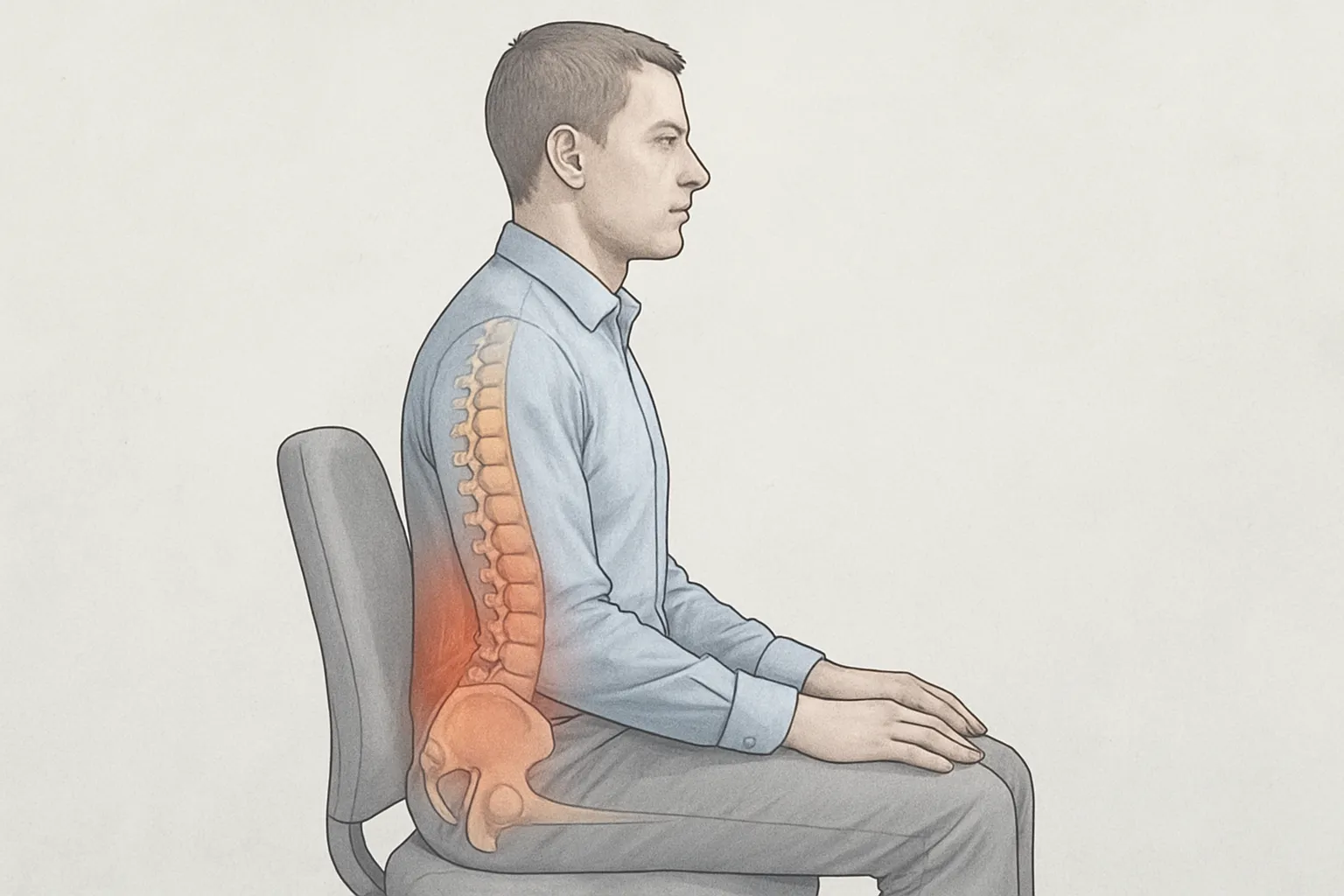
Physical activity and motor control: what they mean and how they relate to everyday health
The physical activity is any bodily movement produced by the skeletal muscles that increases energy expenditure; it is not limited to structured exercise and includes everyday activities such as walking, climbing stairs or carrying objects. The motor control is the nervous system’s ability to to plan, to execute and adjust these movements using sensory signals (such as the proprioception, vision and the vestibular system) and coordinated muscular responses. These two concepts are distinct but complementary: one describes “how much” we move and the other “how” we do so.
In everyday health, this relationship is evident in the quality and efficiency of movement. Regular physical activity is associated with adjustments to the nervous system and the musculoskeletal system, which can improve the precision and stability of everyday movements, although the effects vary from person to person. Components of the motor control Those relevant to day-to-day tasks include:
- Coordination inter- and intramuscular to synchronise muscle groups.
- Balance and postural control to maintain stability on changing surfaces and at varying speeds.
- Timing and rhythm to initiate, sustain and stop movements with precision.
- Modulation of force and accuracy in fine and gross motor skills (e.g. typing, lifting a bag).
- Motor planning and adjustment for sensory feedback in the face of changing circumstances.
The interaction between physical activity and motor control depends on the intensity, the frequency and, above all, of the motor complexity of the tasks. Gradual exposure to a variety of movements, with a focus on technique, rest, sleep and the management of the fatigue and the pain, it can promote adaptations without exceeding an individual’s tolerance. In clinical contexts (such as ageing, persistent pain or neurological conditions), priority is given to individualised adjustments, safe environments and monitoring of the response in order to strike a balance between challenge and control, whilst avoiding overloads that interfere with the quality of movement.
Physical activity and motor control: types of exercise that can support development and maintenance at different ages
Childhood and adolescence
At these stages, the motor control It helps children practise a variety of fundamental skills: running, jumping, turning, throwing and catching. Motor games, skills circuits and sports with simple rules encourage the coordination and postural control. Exercises such as balance (walking in a straight line, single-leg stands) and tasks such as proprioception on stable surfaces; unstable variations require supervision. Bodyweight or resistance band exercises, low-impact plyometrics and rhythmic activities (e.g. dance) aid motor learning if they are introduced gradually and take into account differences in developmental maturity, whilst avoiding excessive strain or intense early specialisation.
Adults
To maintain and refine the motor control, multi-component approaches prove useful: training in force Focusing on basic movement patterns (squats, hip hinging, pushing, pulling) with an emphasis on technique and core stability; mobility and active flexibility; and neuromotor training involving changes of direction, dynamic balance and tasks requiring dual cognitive and motor skills. Mind-body disciplines (tai chi, yoga or Pilates), swimming and cycling can complement the coordination and body awareness. The progression should be tailored to each individual’s physical condition, pain or comorbidities, prioritising the quality of movement and variety in the practice.
Older people
In later life, the focus is on stability, reaction time and the ability to carry out everyday activities. Training in force and from power moderate (particularly in the lower limbs and trunk), together with exercises to balance Static and dynamic exercises (tandem walking, side steps, turns, weight-shifting) and walking with variations or obstacles can contribute to functional maintenance. Activities such as tai chi, gentle dance, aquatic exercise and exercises involving controlled disturbances in safe environments are associated with improvements in postural control. Gradual progression, stable support and supervision where there is a risk of falls help to ensure safety, with the intensity adjusted to the individual’s cardiovascular condition and medication where relevant.
Physical activity and motor control: what the latest scientific evidence shows, and what its limitations are
What does the recent evidence suggest?
Recent scientific evidence suggests that different forms of physical activity — aerobic, strength training and task-oriented exercise — may be associated with improvements in markers of motor control such as balance, coordination and precision of movement, in both healthy adults and certain clinical groups. Plausible mechanisms include the neuroplasticity, the optimisation of the sensory-motor integration and cardiovascular and metabolic adaptations that facilitate motor learning. The effects usually depend on the task specificity, the dosage (frequency, intensity, volume) and the individual context, and tend to be of moderate and variable magnitude.
Limitations and precautions
The available literature contains uncertainties which mean that the findings must be interpreted with caution:
- Heterogeneity protocols and results; lack of standardisation and comparability between studies.
- Follow-up periods are generally short; the long-term sustainability of the changes is not well established.
- List dose–response unclear and with wide inter-individual differences.
- The functional transfer This is not always consistently demonstrated in activities of daily living.
- Risk of bias (small sample sizes, publication bias) and of confounding factors such as motivation, sleep or medication.
- The security and adverse events are reported inconsistently; the generalisability to extreme ages and multimorbidity is limited.
Practical clinical implications
In clinical practice, it is advisable to carry out screening and an initial functional assessment, to tailor the programme to individual goals and comorbidities, and to prioritise task-specific training with gradual progression and monitoring of fatigue, pain and performance. It may be sensible to combine aerobic and strength training components where indicated, to incorporate rest and variability, and to use objective measures to monitor response. In neurological or complex conditions, interdisciplinary coordination provides reassurance; physical activity is not a substitute for prescribed treatments and its potential benefits are not universal.
Physical activity and motor control: safety, progression and warning signs for responsible practice
Security
The motor control It involves coordinating muscle activation and sensory feedback to perform efficient movements. Safety is based on sound technique, alignment and controlled ranges of motion, with a heating specific and risk-free environment. It is prudent to take into account the patient’s medical history and previous pain, and to adjust the upload (volume, intensity and complexity) at the current level, whilst avoiding excessive compensation, sharp, stabbing pain or joint locking. In older people, during pregnancy, or in cases of previous injuries or cardiovascular, metabolic or neurological conditions, more conservative progression and close monitoring of the response to exercise are recommended.
Progression
A responsible training progression prioritises small, controlled increases, changing one variable at a time (volume, intensity or complexity) and respecting the recovery between similar stimuli. Variability (new patterns or surfaces) is introduced once the technique has been mastered. To monitor performance, the following can be used: the rate of perceived exertion (RPE), the “talk test”, movement quality (loss of rhythm, tremors, lack of coordination) and the relative cardiovascular response. If technique repeatedly deteriorates before the target is reached, it is advisable to reduce the load or simplify the task.
Warning signs
- Pain sharp, stabbing or increasing pain that does not subside with rest; unusual night-time pain following the session.
- Instability, sudden loss of strength or numbness/paraesthesia.
- Dizziness, blurred vision, nausea, severe headache or disorientation.
- Disproportionate shortness of breath, chest tightness, irregular heartbeats or fainting.
- Inflammation visible signs, a local rise in temperature, painful clicking or joint locking.
- Fatigue a pronounced symptom lasting more than 24–48 hours or a sustained decline in performance.
These signs may indicate an inadequate response to the workload or complications, and warrant stopping the session, reviewing the plan and, depending on the clinical context, considering professional assessment.
Physical activity and motor control: considerations in neurological disorders, ageing and chronic pain
Neurological disorders
Physical activity aimed at motor control In neurological disorders, treatment must be tailored to the specific phenotype of the condition (selective weakness, spasticity, ataxia, bradykinesia, sensory disturbances). Priority is given to the security (fall prevention, supervision and adaptation of the environment), the specific practice of functional tasks and the judicious use of external cues or rhythms where these facilitate performance. The dosage It is adjusted to prevent peaks in central fatigue or exacerbations of muscle tone; short blocks, scheduled breaks and gradual increases in complexity (from single to dual tasks) are useful, but only when postural stability permits. Monitoring of the autonomic response, pain and motor performance between sessions guides ongoing adjustments.
Ageing
As we get older, changes in strength, power, reaction time and proprioception influence postural control and gait. A multi-component approach incorporating balance, strength of major muscle groups, controlled-speed exercises and submaximal aerobic capacity may help to maintain function. It is recommended that a progression A conservative approach, taking into account comorbidities, polypharmacy and the risk of orthostatic hypotension, with an emphasis on technique, a steady pace and sufficient recovery periods. Exposure to challenging tasks (turning, changes in surface, dual-tasking) is introduced when it is safe to do so, using strategies to reduce the risk of falls.
Chronic pain
In situations involving pain sensitivity, motor control may be impaired by co-contraction, hypervigilance or fear of movement. Physical activity is approached with gradual exposure and pacing, aiming for pattern variability and load tolerance without peaks that perpetuate sensitisation. The self-regulation of effort (for example, using perceived exertion scales), symptom monitoring and adjusting the range of motion help to gauge the daily workload. Factors such as sleep, stress and expectations influence the response to exercise; neutral communication and avoiding alarmist messages promote prudent adherence.