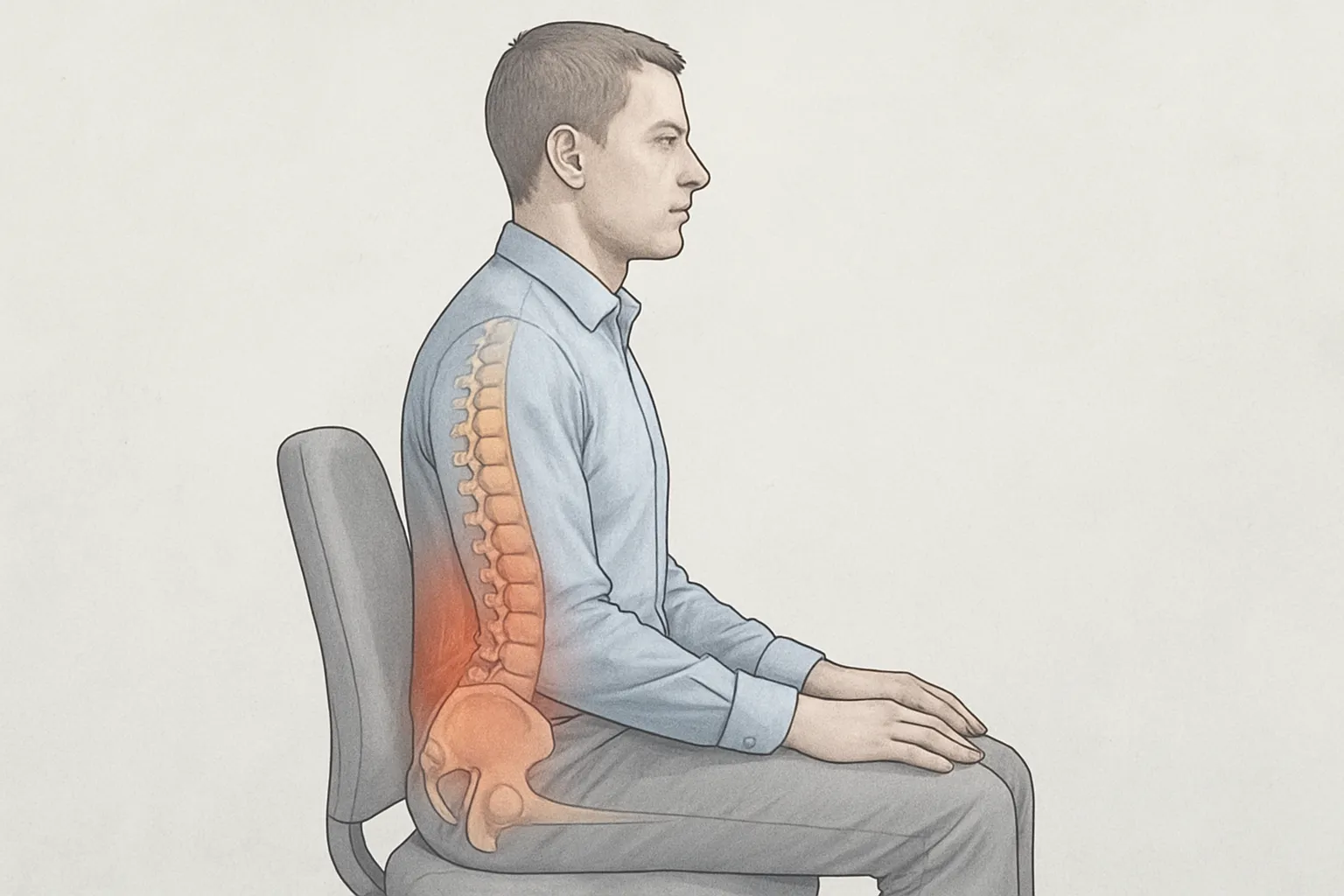
What are active breaks and why they are important for health during long hours of study or work?
The active breaks These are brief, planned breaks during long periods of study or work that provide soft mobility, changes in posture and giving the eyes a rest. They are not looking for an intense workout, but rather to break the prolonged sitting with gentle stretching, short walks, mindful breathing and ergonomic adjustments. They are tailored to the task, the environment and individual abilities, avoiding sudden movements or pain.
Its significance lies in the fact that remaining still for a long time increases the musculoskeletal strain A sedentary lifestyle reduces postural variability and can lead to discomfort in the neck, shoulders and lower back, as well as eye strain and a feeling of mental fatigue. Incorporating brief periods of movement can help to redistribute pressure, improve local circulation, regulate muscle tone and temporarily support sustained attention. These practices are not a substitute for regular physical exercise or clinical treatment in cases of persistent pain or other health conditions.
How to carry them out sensibly
- Guideline intervals used in ergonomics: every 30–60 minutes, spend 2–5 minutes on light activity; for the eyes, the 20-20-20 rule (look at something about 6 m away for 20 seconds every ~20 minutes).
- Simple movements: standing up and taking a few steps, heel raises, gentle neck and shoulder blade mobility exercises, opening and closing your hands, and gradual changes of posture whilst seated.
- Eye breaks: blink deliberately, alternate between focusing on near and far objects, and adjust the screen’s brightness and contrast.
- Breathing and muscle tension: 1–2 minutes of diaphragmatic breathing and gradual relaxation of the shoulders and jaw.
- Safety: low to moderate intensity, no acute pain; adjust the frequency according to your tolerance and individual circumstances. If symptoms persist, consult a healthcare professional.
Why active breaks are important: what the evidence says about musculoskeletal discomfort, circulation and eye strain
Musculoskeletal disorders
The available evidence, although varied, suggests that the prolonged sitting and static tasks are associated with more discomfort in the neck, shoulders and lower back. The active breaks which include gentle movement, brief stretches and changes of posture introduce postural variability and reduce the sustained mechanical load; in the short term, this has been linked to a reduction in stiffness and discomfort in some people who work in front of a screen. The response varies from person to person and is not a substitute for clinical assessment in persistent or complex cases.
Traffic
Sitting for long periods reduces the action of the “muscle pump” in the legs and promotes venous stasis. Short breaks involving standing up and moving your ankles and calves can to promote venous return and alleviate the sensation of heaviness or bloating at the end of the day. Occupational health studies have linked the breaking up of sedentary periods with modest haemodynamic changes; the magnitude of the effect varies depending on the frequency and intensity of the breaks and each individual’s state of health.
Eye strain
Working closely and continuously with screens reduces the flicker and requires a connection sustained, factors linked to digital eye strain and dryness. Taking short breaks to focus on objects at different distances and consciously blinking can help restore lubrication to the surface of the eye and reduce the strain on the eyes’ focusing mechanism. Ergonomic recommendations, such as scheduling regular micro-breaks, have been shown to be useful in alleviating symptoms in certain users, although there is no single protocol applicable to everyone.
Frequency and duration of active breaks: general guidelines for safely breaking up periods of sedentary behaviour
As a practical guide to break the habit of a sedentary lifestyle, it is reasonable to schedule active breaks regularly and briefly. In office environments or sedentary jobs, it can be helpful to get up and move around at intervals of approximately 30–60 minutes. The duration Each break can be brief (1–3 minutes) to encourage compliance; where the task allows, slightly longer breaks (4–5 minutes) taken every 60–90 minutes are also acceptable. The important thing is to take breaks regularly and to avoid prolonged periods without changing position.
- Frequency: at regular intervals; start with 30–60 minutes and adjust according to tolerance and the demands of the task.
- Duration: 1–3 minutes per break; more frequent 30–60-second breaks can be added.
- Accumulation: Taking several short breaks throughout the day helps to break up periods of sitting.
The intensity It should be low to moderate, prioritising movements that allow the person to speak normally (for example, gentle walking, joint mobility exercises or changes in posture). For people who are not used to exercising or who have relevant medical history, it may be prudent to start with shorter breaks and increase the duration gradually, whilst monitoring the body’s response.
It is advisable to adjust the frequency and duration depending on age, physical condition, the tasks performed and any underlying medical conditions. Symptoms such as unusual pain, dizziness, blurred vision, persistent palpitations or disproportionate shortness of breath indicate that it is advisable to reduce the frequency of breaks or take them whilst seated until your tolerance has been assessed. Safety and consistency over time take priority over ambitious short-term goals.
How to take active breaks safely: short, adaptable examples that require no equipment
Put safety first: start with slow movements, within a comfortable range and pain-free. Avoid holding your breath; breathe naturally. Stop if you experience acute pain, dizziness, blurred vision, palpitations or unusual shortness of breath. Pregnancy, uncontrolled high blood pressure, recent injuries, inflammatory pain or balance problems may require individual adjustments by a professional. Ensure there is a clear space, a stable support (wall or chair) and sturdy footwear or non-slip bare feet.
Guideline: 1–3 minutes of gentle activity for every 30–60 minutes of sitting or repetitive tasks, depending on your tolerance. Perform 5–8 slow repetitions per exercise, at an intensity that allows you to speak in full sentences. Maintain neutral column, shoulders relaxed and looking straight ahead; alternate between different areas (neck and shoulders, thoracic spine, hips, legs, hands) to distribute the load.
Short, adaptable examples (no materials required):
- Slight cervical mobility: sitting or standing, side bends and small rotations, 5 repetitions on each side; avoid forcing the extension and stop if you feel dizzy.
- Scapular retraction: Bring your shoulder blades together slightly for 3–5 seconds, then release; 6–8 repetitions. Keep your neck “long”, without raising your shoulders.
- Chest extension in a chair: hands behind the head or clasped, lift the sternum as you breathe out, 6 repetitions; no pain in the shoulders.
- Seated–standing (or partial squat to chair): Feet hip-width apart, lower yourself to a comfortable position and rise in a controlled manner; 5–10 repetitions. Use your hands for support if you need to.
- Heel and toe raises: standing against a wall, 8–12 repetitions of each; focus on your balance, using the wall for support if necessary.
- Mobility of the wrists and fingers: opening and closing the hands, gentle wrist rotations and gentle stretches of the flexors and extensors for 10–15 seconds, without bouncing.
- A gentle march on the site: Lift your knees to a low height for 30–60 seconds whilst maintaining a comfortable conversation; stop if you experience unusual shortness of breath.
Active breaks and safety: precautions, contraindications and when to consult a healthcare professional
Precautions
The active breaks They are generally considered safe for most healthy adults when carried out skilfully and under proper supervision. It is recommended to start with low to moderate intensity, to make gradual progress and to stop any movement that causes acute pain, paraesthesia or a pulling sensation. Keep your breathing steady, neutral stance spinal alignment, controlled movements without bouncing, and a full range of motion without straining. Check for a safe environment (stable surface, clear space), wear suitable footwear and adapt the duration and type of movement to your fitness level, fatigue, ambient temperature and the length of time spent sitting or standing beforehand.
Contraindications
Active breaks are not recommended in the presence of fever or acute infection, chest pain, breathing difficulties unusual dizziness, severe dizziness or a recent fainting episode. These should be avoided in acute musculoskeletal injuries unassessed (sprains, strains, fractures), post-operative or immobilisation without clinical authorisation, deep vein thrombosis or embolism recent, arrhythmias, high blood pressure or heart failure uncontrolled conditions, and in episodes of illness that worsen with physical activity (for example, severe vertigo, neurological exacerbation). In the high-risk pregnancy or in the event of bleeding, abdominal pain or contractions, the course of action must be determined on a case-by-case basis by healthcare professionals.
When to consult a healthcare professional
It may be wise to seek clinical advice if there are chronic illnesses (cardiovascular, respiratory, neurological, metabolic), severe osteoporosis or a high risk of falls, balance disorders, pregnancy with complications, recent operations or injuries, or if you are taking medication that affects your response to physical exertion (e.g., beta-blockers, anticoagulants, antiarrhythmics, hypoglycaemic agents). It is also advisable to carry out an assessment if, during an active break, the following occur: alarm signals as:
- A crushing pain in the chest, radiating to the arm, jaw or back.
- Severe shortness of breath or wheezing that does not improve with rest.
- Severe dizziness, blurred vision, confusion or fainting.
- Sudden weakness, loss of sensation or difficulty speaking.
- Acute musculoskeletal pain that prevents movement.
- Swelling, warmth or pain in one calf.
- Persistent palpitations or a new irregular heart rhythm.