How stress influences body posture: what is known and what remains to be clarified
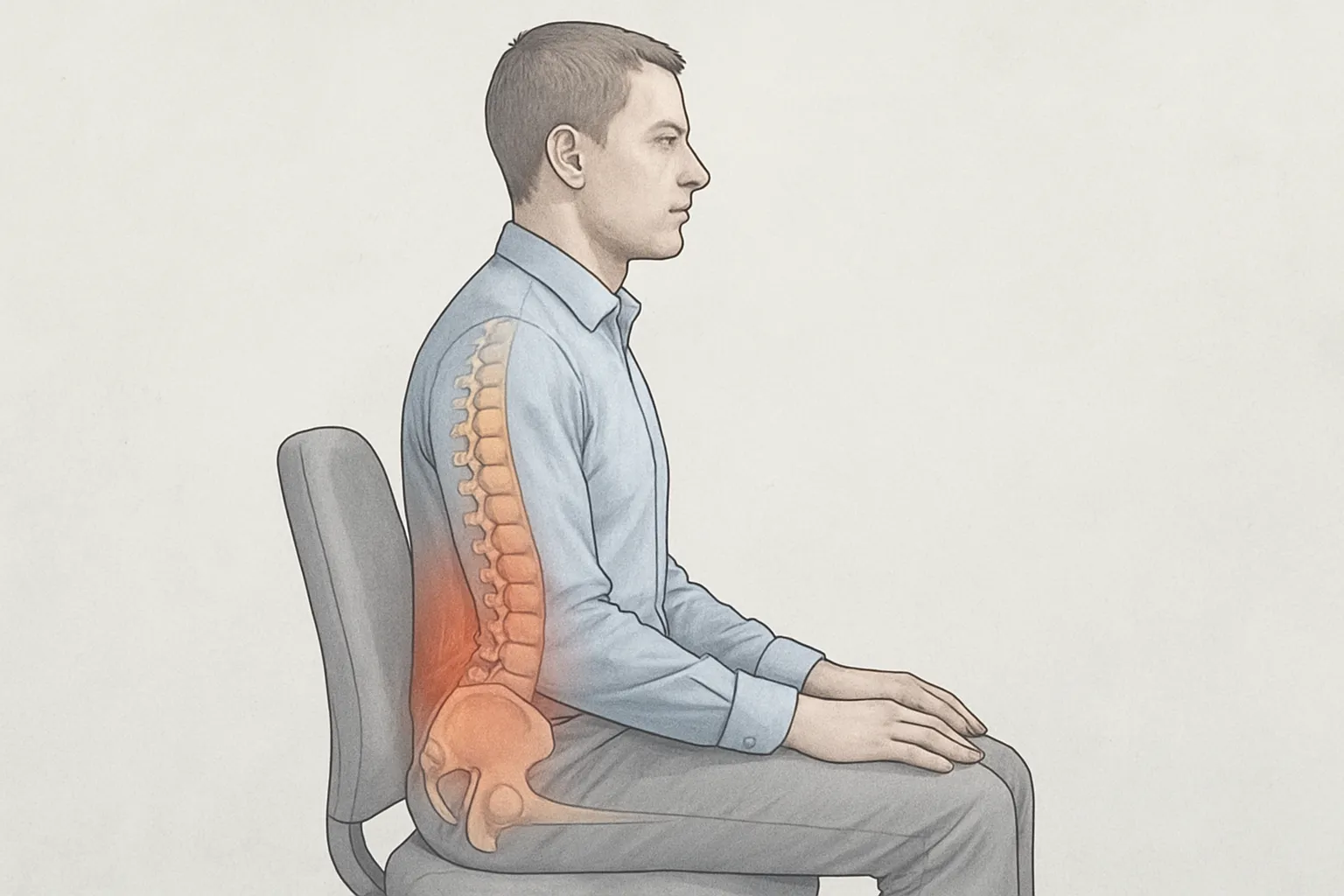
Stress is associated with sympathetic activation and increased basal tone, which can translate into muscular hypertonia especially in the neck, shoulders and lumbar region. Changes in motor control have also been described, with increased co-contracting and smaller motor variability, as well as breathing patterns The higher and faster movements reduce costal and diaphragmatic mobility, influencing thoracic and cervical posture. Taken together, these mechanisms favour more rigid or “protective” postures, without implying a single, permanent pattern.
Clinical observation and experimental studies have shown responses such as shoulder elevation, head forward movement, jaw closure and decreased postural sway in tasks that require postural surveillance. However, the expression is heterogeneous: the individual variability is high and factors such as previous pain, work demands, rest, physical conditioning or emotional state can amplify or attenuate these changes. The relationship is bidirectional: somatic discomfort may reinforce protective postures and, in turn, certain postures may modulate the perception of burden or strain.
The magnitude of the effect (threshold and “dose-response”), its persistence over time and which subpopulations are most susceptible remain to be clarified. The available evidence often comes from controlled settings and indirect measures (EMG, accelerometry, force platforms), which limits its generalisability to everyday life. It is important to underline that correlation does not imply causationstress can coexist with other stresses confounders (ergonomics, medication, mood disorders), so it is not possible to attribute postural changes solely to stress without careful assessment.
Stress-related postural cues: early indicators to guide but not replace clinical assessment
Stress-related postural signals are observable changes in body alignment, muscle tone and movement patterns that may emerge with activation of the sympathetic nervous system. They tend to manifest themselves in a fluctuating manner according to environmental demands and emotional load. They function as early indicators that help to identify possible maladjustments, but due to their low specificity they do not in themselves enable a diagnosis to be made, nor do they replace a clinical assessment.
Frequent manifestations
- Hypertonia in the cervical and shoulder region (upper trapezius, sternocleidomastoid), with elevation or protraction of the shoulders.
- Antepulsion of the head and sustained cervical flexion, often associated with screen tasks or constant monitoring of the environment.
- Jaw tension and dental closure maintained during the day, which may coexist with cervical stiffness.
- High chest breathing and superficial, with reduced rib mobility and a retracted abdomen.
- Weight unloading asymmetric, gluteal locking or pelvic tilt held while standing.
- Subtle motor restlessness (rocking, foot tapping) and protective postures such as persistent shoulder rolls or persistent folding of the arms.
Prudent interpretation
These expressions have low specificityThey may be influenced by poor ergonomics, musculoskeletal pain, visual disturbances, fatigue, lack of sleep, drugs or other health conditions. They are orienting when they are consistent in different contexts, are associated with perceived discomfort and show persistent asymmetry or increased pitch that does not subside with pauses. Requires clinical assessment the emergence of alarm signals such as severe or progressive pain, weakness, tingling or loss of sensation, new headache with marked cervical stiffness, recent trauma, unexplained fever or weight loss. These observations should be integrated with the clinical history, physical examination and, where appropriate, additional tests.
From the nervous system to muscle tone: mechanisms explaining the relationship between stress and posture
Autonomic activation and HHA axis
Acute stress activates the autonomic nervous system, with a predominance of friendly, and the hypothalamic-pituitary-adrenal axis (HHA). This state of alertness increases the muscle tone basal to prime rapid motor responses. Catecholamines and cortisol modulate neural excitability and may influence fatigue and perceived stiffness, facilitating more defensive postural patterns (e.g., shoulder elevation or head forward) in some individuals. In contexts of sustained stress, these transient adjustments may become consolidated as motor habits, although their expression varies between individuals.
Spinal reflexes and motor control
Downstream facilitation on motor neurons and reticulospinal circuits enhances the gain of the muscle spindles and gamma motor neuron activity, favouring faster reflex responses and increased co-activation of stabilising muscles. This “stiffening” manifests as co-contracting of synergies (neck-scapular girdle, lumbar-abdominal region, jaw-floor of mouth), which improves short-term stability but may reduce mechanical efficiency and movement variability. Anticipatory postural adjustments may also become more rigid, with less fine modulation to minor perturbations.
Breathing, sensory integration and pain
Stress tends to modify the breathing towards higher and faster chest patterns, increasing the recruitment of cervical and thoracic accessory muscles. Changes in CO₂ exchange may increase neuromuscular excitability, contributing to the sensation of tension. In parallel, sensory integration (proprioception, vestibular and somatosensory) may be biased towards threat signals: cervical proprioception influences postural control and, if hypervigilance or pain is present, nociception may reinforce protective strategies with increased tone and reduced movement in segments perceived as vulnerable. These responses are adaptive in the short term, but their persistence may be associated with more rigid and fatiguable postural patterns.
Daily habits that mediate stress and body alignment (screens, breathing, sleep)
Screens
Prolonged use of devices combines cognitive demand with sustained postures. The cervical protraction and shoulders forward increase the static load in the neck extensors and dorsal region, which stress can accentuate by raising basal muscle tone. Simple adjustments - screen at eye level, keyboard and mouse close together, foot support and variation of posture at intervals - can reduce sustained mechanical demands and encourage more efficient postural organisation, without replacing individual assessment for persistent discomfort.
Breathing
In situations of sustained activation, it is common to shallow chest breathing, with less mobility of the diaphragm and greater involvement of accessory neck muscles. This pattern may influence rib position and cervicothoracic control. Practising slow nasal breathing, with gentle abdominal expansion and slightly longer exhalation, may modulate the response of the autonomic nervous system and contribute to a more adaptable muscle tone at rest; it should be performed without forcing and avoiding dizziness or discomfort.
Dream
The quality and regularity of sleep are related to the circadian rhythms, pain modulation and motor control. Insufficient rest may be associated with increased perception of tension and less efficient postural strategies during the day. Maintaining stable schedules, dimming bright light at night - especially from screens -, promoting a comfortable temperature and using cervical support that allows neutral alignment can support tissue recovery processes and more stable postural control upon awakening.
Prudent and low-risk strategies for postural care in times of stress: ergonomics, breaks and relaxation
Practical and adjustable ergonomics
Adopting a neutral alignment and comfortable helps distribute loads during demanding workdays: screen at eye level and at a distance that allows reading without protruding the neck; keyboard and mouse close together to keep elbows close to the body and shoulders relaxed; forearms approximately parallel to the floor and wrists without sustained extension; feet fully supported (with footrests if necessary) and soft lumbar support if comfortable. Varying posture throughout the day - sitting, semi-standing or micro-adjustments - is often more sensible than looking for a single “ideal posture”. Headphones on calls and adequate lighting can reduce shoulder elevation and unintentional reaching towards the monitor.
Short breaks and low-risk movement
Schedule active breaks regular breaks (e.g. 1-2 minutes every 30-60 minutes) promotes tissue rest and attention. At each break, getting up, shifting support and making gentle, non-painful movements of the neck, shoulders and thoracic spine can modulate accumulated tension; small gestures such as opening and closing the hands, extending the hips or walking a few steps are often sufficient. Discrete reminders (gentle alarms or task-linked habits) help to sustain regularity without relying on willpower.
Relaxation and self-regulation of tension
The simple techniques of diaphragmatic breathing (inhale through the nose and exhale a little more slowly) and the progressive muscle relaxation focused on the neck, shoulders and jaw can help to reduce the feeling of stiffness during stress. A brief BODY SCANNING to identify areas of tension and soothe them, together with distant gaze pauses to rest the cervical and ocular musculature, is usually a prudent combination. If soft local heat or ambient music is used, it should be done with criteria of comfort and safety, seeking a perception of rest without forcing ranges or maintaining uncomfortable positions.