What is the body’s adaptation to repetitive exertion, and what physiological changes can be observed?
The adaptation to repetitive strain It is the set of biological changes that the body undergoes following repeated exposure to a similar physical load. These changes can be acute (minutes–hours) or chronic (weeks–months) and affect the cardiovascular, musculoskeletal, nervous, metabolic, endocrine and thermoregulatory systems. Their manifestation depends on the intensity of the exercise, recovery and individual characteristics such as age, health status and previous level of fitness.
From a clinical perspective, the process is guided by the principles of progressive overload, specificity y individual variability. The responses are neither linear nor universal, and favourable adaptations may coexist with maladaptations if the stressor exceeds the body’s capacity to recover (e.g. overuse pain, persistent fatigue or sleep disturbances). Many changes are reversible once the stressor is reduced and should be interpreted with caution in people with comorbidities.
Observable physiological changes
- Cardiovascular and autonomic: lower resting heart rate and heart rate at submaximal exercise loads, increased stroke volume and plasma volume, greater peripheral capillarisation and improved baroreflex control; in some people, a moderate reduction in blood pressure may be observed with regular exercise; increased heart rate variability at rest.
- Musculoskeletal: increase in force and/or resistance through selective hypertrophy and neural adaptations; increased mitochondrial density and oxidative enzyme activity; higher glycogen content; changes in tendon and connective tissue stiffness; and stimulation of load-dependent bone remodelling.
- Metabolic: a shift in the lactate threshold to higher intensities, greater utilisation of fatty acids during submaximal exercise, and an improvement in insulin sensitivity In the short and medium term, lower lactate accumulation for the same relative workload.
- Neuromotor: more efficient recruitment and synchronisation of motor units, improved intermuscular coordination and a reduction in unnecessary co-contractions.
- Thermoregulation and the endocrine-inflammatory response: earlier onset and a higher rate of sweating with a lower relative loss of electrolytes; plasma expansion; a smaller increase in body temperature under the same environmental load; more moderate acute hormonal responses to the same load; and a tendency for inflammatory markers to normalise with regular exposure, with high variability between individuals.
Factors influencing the body’s adaptation to repetitive exertion: workload, technique, rest and state of health
Load
The mechanical load (intensity, volume, frequency and density of the rest periods) determines the magnitude of the stimulus on tissues and energy systems. Adaptation is promoted by a gradual progression and a training load that takes into account individual tolerance and the body’s natural recovery time. Sudden increases in training load or accumulation of training without periods of rest are associated with a higher risk of overtraining, particularly when combined with factors such as fatigue or poor technique. Signs such as pain that increases between sessions, persistent stiffness or a decline in performance suggest that the training load should be adjusted.
Technical
The technique It influences how forces are distributed and the efficiency of movement. A stable pattern, with adequate motor control and alignment, tends to reduce localised stress peaks and improve the economy of repetitive movements. Fatigue can impair performance and shift the load onto more vulnerable structures; therefore, mindful practice, motor variability and ergonomic surroundings help to maintain safer and more consistent movement mechanics.
Rest
The rest It forms part of the adaptive response: sufficient sleep, breaks during sessions and the weekly distribution of training loads allow for tissue repair and neuromuscular adaptation. Insufficient recovery leads to the build-up of fatigue and increases the perceived effort required for the same task. Practical indicators such as sleep quality, mood and the feeling of recovery at the start of the next session can guide the need to adjust volume or intensity.
State of health
The state of health It modulates the response to repetitive strain: age, history of injuries, metabolic or hormonal conditions, energy availability and habits such as nutrition and hydration all affect tissue tolerance. Certain medications (e.g. corticosteroids) and psychosocial factors (stress, mental workload) also influence recovery and the perception of pain. Tailoring exposure to these variables reduces the likelihood of overuse and facilitates a more stable adaptation.
The body’s adaptation to repetitive exertion: signs consistent with progress and warning signs of overexertion to watch out for
Adaptation to repetitive exertion is a gradual adjustment of the musculoskeletal and neuromotor systems, influenced by the dosing of the load, technique and recovery. The response is individual and varies depending on the task; not all pain indicates an injury, and not all fatigue suggests improvement. Distinguishing between signs of progress from signs of overload It helps to modulate the stimulus and reduce the risk of dysfunction.
Signs of progress
- Mild fatigue and delayed-onset muscle soreness which clearly subside within 24–48 hours with normal rest.
- Gradual ability to repeat the task with stable technique and a perception of effort that is the same or less for the same load.
- Localised, low-intensity discomfort that does not affect movement or cause any obvious compensatory responses.
- Sleep and appetite remain unchanged; a sense of improved coordination and control of movement.
Signs of overload to look out for
- Increasing pain during physical activity, or which persists for more than 48–72 hours, or occurs at rest.
- The need to change technique due to pain, the onset of lameness, instability or loss of control.
- Visible swelling, localised heat, loss of rank or a marked decrease in strength compared with the baseline.
- Cumulative fatigue accompanied by a decline in performance, non-restorative sleep or persistent irritability.
- Night-time pain, tingling, numbness or sudden weakness: warning signs that deviate from the expected pattern of adaptation.
How the body’s adaptation to repetitive strain varies in sport, manual labour and office work
Sport
In sport, adaptation to repetitive exertion usually occurs under progressive overload and planned recovery periods. This facilitates specific adaptations: increased neuromuscular capacity, greater efficiency in motor patterns, and changes in tendon and bone tissue in line with the type of movement. Repetition improves the economy of movement, but tissues that adapt more slowly (e.g. tendons) may accumulate stress if the volume and intensity increase rapidly or without sufficient variability of movement, increasing the likelihood of overuse injuries in some athletes.
Crafts
In repetitive manual tasks, the loads are usually moderate but very frequent, with limited breaks. An increase in local strength and endurance is observed, along with changes in soft tissues and skin in the areas under the greatest strain; however, the low variability, the held postures and additional stressors (vibration, cold, unsuitable tools) can lead to less efficient tissue responses and increased sensitivity in areas such as the forearms, shoulders or lower back. Adaptation can stabilise if the stimulus remains constant, and tolerance decreases when the demand exceeds the available recovery capacity.
Office tasks
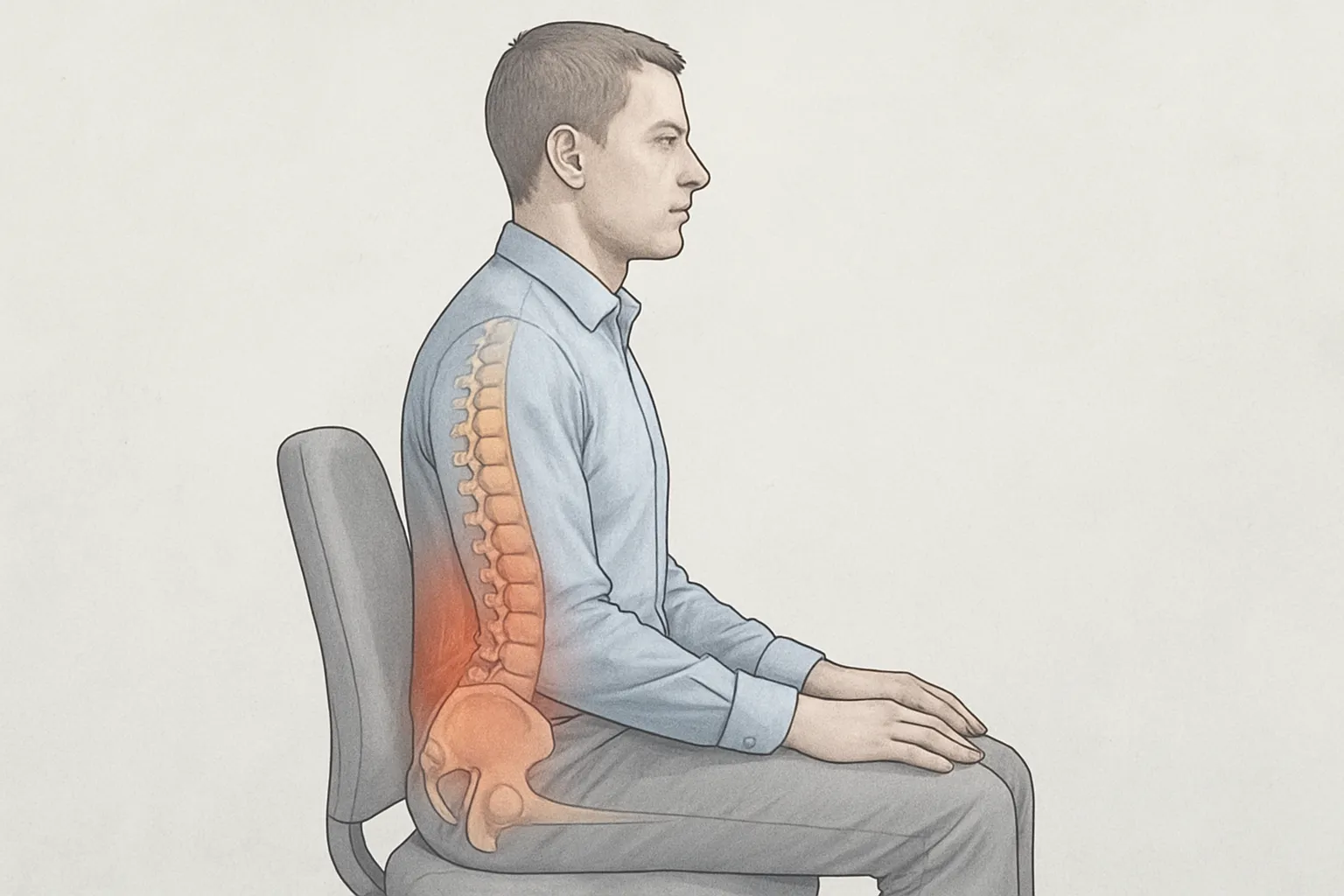
Office work is characterised by low-intensity but very prolonged static loads (isometric tension in the neck and shoulder blades, continuous strain on the wrists, prolonged sitting). The body tends to adapt by developing a greater tolerance to inactivity and a certain deconditioning of large muscle groups, with less cardiorespiratory exertion and mechanical load than in sport or physical work. Limited postural variability may be linked to stiffness and perceived fatigue in the neck, shoulders or lower back, without there necessarily being a structural injury; the body’s ability to adapt improves when the activity includes changes in posture and short, regularly spaced breaks.
Prudent measures to help the body adapt to repetitive exertion without increasing the risk of injury
The gradual progression The key to managing exposure to repetitive strain is to adjust the volume, intensity and frequency in a planned manner, avoiding sudden peaks. It is advisable to maintain submaximal loads for several weeks before increasing them, as tissues such as tendons and fascia tend to adapt more slowly than muscle. The variety of tasks (alternating sides, grips, rhythms and movement patterns) can distribute mechanical stress across different structures and help the body cope better with the cumulative load.
The technology and ergonomics These factors influence the distribution of forces during each repetition. Finding efficient joint alignments, adjusting working heights, grips and distances, and using aids that reduce unfavourable leverage all contribute to a more economical use of muscle tissue. Useful measures include:
- Micro-breaks short, scheduled breaks throughout the session to allow the body to recover and to refocus.
- Specific warm-up with warm-up sets at a lower load or speed before the main set.
- Dosage of the daily/weekly total, spreading the repeats across shorter blocks where possible.
- Alternation exercises that involve different muscle groups or ranges of motion.
The load monitoring (external: repetitions, weight, time; and internal: perceived effort, fatigue, pain) guide adjustments. Signs such as increasing pain during the exercise, prolonged morning stiffness, loss of strength or coordination, and fatigue that does not subside with a short rest suggest that progression, technique and recovery should be reassessed. Include submaximal strength y controlled mobility In the regions involved, interspersing days of lower demand and prioritising sufficient sleep are measures that are often associated with better tolerance to repetitive exertion without placing an excessive short-term burden on the body.