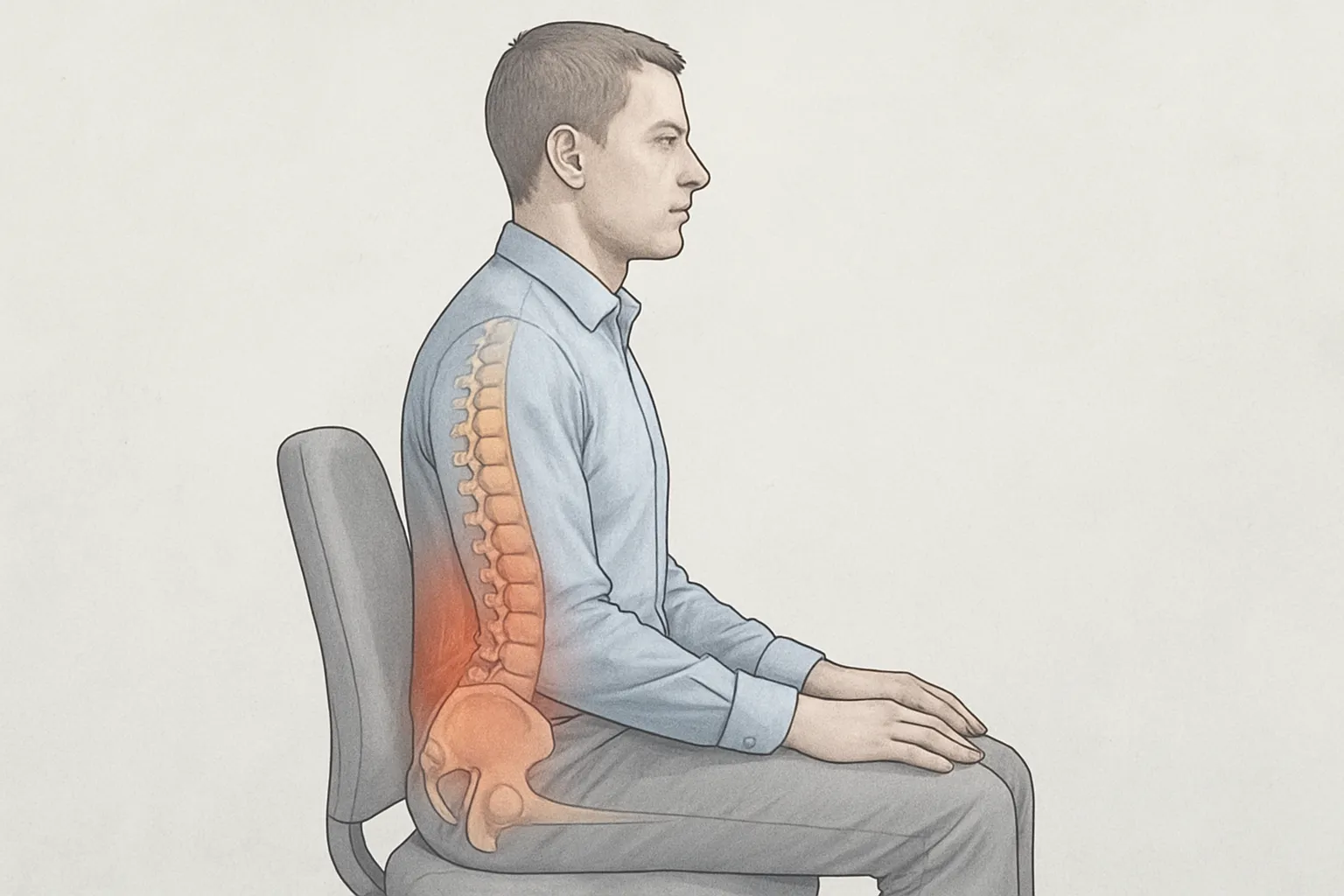
Objective and subjective indicators to measure chiropractic progress
Objective indicators
- Range of movement measured with inclinometer or goniometer to quantify amplitude and symmetries.
- Muscular strength and endurance by manual dynamometry or standardised repetition/time tests.
- Neurological examination (reflexes, skin sensitivity and myotome tests) to detect changes in neurological function.
- Pressure Algometry for pain threshold and mechanical tolerance tests when available.
- Functional and balance tests (e.g. squat, gait, unipodal support) with defined performance criteria.
- Diagnostic imaging only when there is a clear clinical indication; avoid routine use without specific suspicion.
Subjective indicators
- Intensity of pain with validated scales (NPRS/EVN or EVA).
- Perceived disability using regionally validated functional questionnaires (e.g. neck or lower back).
- Health-related quality of life and tolerance to activities of daily living (sleep, work, leisure).
- Overall perception of change and expectations of the patient, recorded in a structured way.
- Recording of adverse events and changes in medication use related to musculoskeletal symptoms, where appropriate.
In order to interpret developments in a prudent manner, the key is the standardisation (same instruments and conditions), the use of validated instruments and monitoring at regular intervals. Changes should be assessed in terms of clinically relevant change more than just numerical differences, integrating objective information and patient-reported experience. This approach helps to guide clinical decisions and early detection of the need for plan adjustment or referral where appropriate.
Validated scales and questionnaires for documenting patient-perceived changes
The patient-based measures (PROMs) allow standardised quantification of the changes that the person perceives in symptoms, function and quality of life. Among them, the overall impression of change summarises subjective assessment of improvement or worsening and can complement status questionnaires to capture both magnitude and direction of change. Its application requires clear instructions, defined recall periods and an environment that minimises response bias.
- Global impression of change: PGIC (Patient Global Impression of Change) and, in specific contexts, CGIC.
- Symptoms and pain: NRS 0-10, VAS/VAS 0-100, Brief Pain Inventory (intensity and interference).
- Generic quality of life: EQ-5D, SF-36/SF-12, PROMIS Global Health.
- Specific function: WOMAC (knee/hip osteoarthritis), Oswestry Disability Index (low back pain), DASH (upper limb), KOOS/HOOS (knee/hip).
- Mental health and well-being: PHQ-9 (depression), GAD-7 (anxiety), HADS (anxiety/depression) and PROMIS modules by domains.
In selecting and applying these tools, priority should be given to validity, reliability y responsiveness to change, as well as the availability of a clinically important value of change (MCID) and the cultural adaptation to language and context. Other practical aspects include: low response burden and accessible reading; mode of administration (paper vs. digital) and data management; time windows consistent with clinical evolution; control for ceiling/ floor effects and recall bias; and combined interpretation of state measures and change scales where warranted. These precautions improve the comparability between assessments and the clinical utility of patient-reported data.
Frequency of follow-up: when and why to conduct clinical reassessments
The monitoring frequency is determined by the combination of clinical severity, stability, comorbidities and degree of diagnostic uncertainty. The clinical re-evaluations allow for monitoring progress, detecting adverse effects, reviewing adherence, integrating test results and adjusting the treatment plan prudently, prioritising patient safety and timely decision-making.
As a guideline and always on a case-by-case basis, intervals can be considered as follows:
- Acute condition mild-moderate with stability: review in 24-72 hours to confirm trend and need for adjustments.
- After recent therapeutic adjustment (initiation or change of drugs requiring titration or monitoring): 2-8 weeks depending on treatment profile, response and tolerability.
- Disease stable chronicleEvery 3-6 months, with the possibility of spacing if there is documented stability and low clinical complexity.
- Complex post-episode: early contact (48-72 hours) and structured review in 7-14 days to integrate reports and plan follow-up.
- With relevant pending evidence: reassessment when results are available or earlier if the likelihood/impact of management change is high.
Earlier re-evaluations are reasonable in the face of warning signs (rapid worsening, progressive dyspnoea, chest pain, persistent high fever, acute neurological deficit, bleeding, hypotension, dehydration) and in people at higher risk (advanced age, relevant comorbidities, pregnancy, immunosuppression). Factors such as variability of symptoms, occurrence of adverse effects, out-of-range test results, poor adherence, limited social support or access difficulties may shorten intervals; sustained clinical stability and good therapeutic tolerance may allow for spacing of visits. Defining monitoring targets, intervention thresholds and signals for unscheduled review in advance contributes to safer monitoring.
Cautious interpretation of pain, mobility and function in the evolution of treatment
Clinical interpretation should prioritise trends versus isolated measurements. Pain, mobility and function fluctuate by factors such as upload recent events, sleep, stress, expectations, temperature or medication. Comparing records under as similar conditions as possible (same tests, instructions and time of day) reduces noise. Small and variable changes do not always reflect real progress or worsening; it is more useful to observe consistent patterns over several sessions and their relationship to specific activities.
In the pain, intensity does not directly equate to «damage». It is important to differentiate between baseline, in-activity and post-activity pain and recovery. Transient increases may represent sensitisation or protection; disproportionate and persistent increases after habitual loads suggest adjusting volume, intensity or rhythm. Warning signs such as progressive nocturnal pain, fever, loss of strength or sensation, or recent trauma require specific clinical assessment. The aim is to modulate exposure so that the system can better tolerate the demands, avoiding catastrophic interpretations or hasty conclusions.
At mobility y function, rather than the isolated rank, it is the motor control and the quality of movement in meaningful tasks. Improvements are most robust when they are reproducible, sustained across days, and translated into everyday abilities (e.g., standing, walking, climbing steps) with tolerable symptoms and predictable recovery. The occurrence of increasing compensations, disproportionate fatigue or sustained loss of performance prompts adjustment of progression. Balanced monitoring of these three axes - pain, mobility and function - helps to decide whether to maintain, reduce or redistribute load without assuming simplistic causal relationships.
Warning signs and criteria for referral in case of unexpected developments
Warning signs are considered when manifestations suggesting complication, clinical deterioration or alternative diagnosis appear. These include:
- Severe or progressive pain, who does not respond to usual measures or wakes up at night.
- Dyspnoea, cyanosis or worsening of exercise tolerance.
- Persistent high fever or repeated febrile peaks with poor general condition.
- Altered mental stateconfusion, marked drowsiness, disorientation or convulsions.
- Sudden neurological deficitsweakness or asymmetry, speech or visual disturbances, incoordination.
- Oppressive chest pain, sustained palpitations, syncope or presyncope.
- Active bleeding (digestive, respiratory, genitourinary) or extensive bruising without obvious cause.
- Signs of serious infection or sepsis (haemodynamic worsening, cold skin, decreased diuresis).
- Unintentional weight loss, jaundice, palpable mass or progressive lymphadenopathy.
- Incoercible vomiting, dehydration or inability to maintain hydration/feeding.
Referral criteria are adjusted to risk and resource availability:
- Immediate/urgent referral when any of the above warning signs are present, rapid deterioration despite initial measures, suspected serious complication (e.g., obstruction, ischemia, significant bleeding, acute cardiovascular/neurological event) or constraints to safe operation in the current level of care.
- Preferential referral when there is no improvement or worsening treatment adherence and adherence verified, frequent recurrences o noticeable functional impact, suspicion of complex underlying pathology, relevant comorbidity (immunosuppression, frailty, pregnancy) or the need for tests/therapies not available at the initial level.
In the assessment of unexpected developments, the key is the diagnostic re-evaluation (including the possibility of alternative diagnoses), the verification of adherence and tolerance to the indicated plan, the review of interactions and comorbidities and the temporary documentation of the response. In more vulnerable groups (infants, elderly, pregnant women, immunocompromised) a lower referral threshold is recommended because of the risk of rapid decompensation.