Planning personalised chiropractic care: principles and clinical approach
Initial clinical assessment
Planning is based on a detailed medical history and a neuromusculoskeletal examination problem-oriented. History, medication (e.g., anticoagulants), psychosocial factors and RED FLAGS such as progressive neurological deficit, fever, relevant trauma, suspected fracture, infection or neoplasia. With the information available, the following is performed clinical and differential diagnosis, identifying indications and contraindications for manual techniques (including high-speed manipulation). Where appropriate, imaging or referral is requested. Prior to intervention, the following is established informed consent and remember realistic functional objectives.
Therapeutic plan and dosage
The plan is designed on an individual basis, prioritising patient safety and preference. It may include a combination of mobilisation and/or manipulation where indicated, techniques for soft tissues, therapeutic exercise y education (ergonomics, self-care). The frequency and intensity are matched to the clinical presentation and comorbidities, starting with the minimum effective dose and a limited trial period. Coordination with other professionals where appropriate and avoidance of interventions if the child is not in need. risk-benefit balance is not favourable.
Monitoring, measures and adjustment
Progress is monitored with objective and subjective measures (e.g., functional changes, activity tolerance, validated scales) in scheduled re-evaluations. Depending on the response, techniques are maintained, modified or discontinued, gradually reducing the frequency if there are clinically relevant changes. The systematic documentation response, adverse events and adherence. In the event of alarm signs, prolonged stagnation or new diagnostic suspicion, the plan is reconsidered and the drift when necessary.
Initial assessment for an individualised chiropractic plan: medical history, examination and indication criteria
Directed medical history
Systematic history-taking allows the origin of the pain to be defined and safety to be prioritised. The reason for consultation, onset and evolution, location and irradiation, aggravating or relieving factors, previous episodes and response to treatment are investigated. The following are assessed RED FLAGS such as significant trauma, fever, unintentional weight loss, history of cancer, immunosuppression, persistent nocturnal pain, progressive neurological disturbances or sphincter dysfunction. Relevant co-morbidities are recorded (e.g, osteoporosis, coagulation disorders), medication (including anticoagulants), previous surgeries, habits, work and sports demands, sleep and psychosocial factors (stress, pain beliefs, fear avoidance). Realistic functional goals and expectations are explored, as well as patient preferences for shared decision-making.
Physical examination and complementary tests
The assessment combines inspection of posture and gait, active and passive range of motion, palpation of soft tissues and vertebral segments, and prudently applied orthopaedic testing. The neurological examination (strength, reflexes, sensation, neural tension tests) is key to detect motor or sensory deficits. Findings suggestive of significant neurological compromise or systemic pathology warrant referral. Imaging or laboratory tests are reserved for clinical suspicion of serious or specific conditions; not routinely recommended in non-specific low back or neck pain without warning signs. Before high-speed techniques, cervical vascular risk and ligament stability are assessed.
Indication and safety criteria
Chiropractic intervention is considered when the condition is predominantly musculoskeletal mechanical, The patient is evaluated with no red flags, with consistent findings (segmental mobility restriction, myofascial hypersensitivity, altered postural or loading patterns) and clear functional goals. Alternatives are weighted and result in informed consent. Absolute and relative contraindications should be reviewed prior to any manual technique:
- Acute fracture, spinal neoplasm, unstable vertebral neoplasm, spinal infection, cauda equina syndrome.
- Severe osteoporosis or marked bone fragility; bleeding disorders or uncontrolled anticoagulation.
- Instability significant ligament involvement, unstable structural malformations, active inflammatory arthritis with atlantoaxial involvement.
- Suspicion of cervical arterial dysfunction or dissection; progressive neurological deficits.
- Precautions in pregnancy, advanced age, generalised hypermobility and complex comorbidities.
Clinical response is monitored with baseline measures of pain and function, the plan is adjusted according to evolution, and referral is made when findings change, there is no reasonable improvement, or new alarm symptoms appear.
Definition of clinical objectives, frequency of sessions and indicative duration in personalised chiropractic care
Definition of clinical objectives
The initial evaluation (clinical history, physical examination and complementary tests where appropriate) orients objectives focused on safety and function. The following are formulated specific and measurable objectives The goals of the treatment are to reduce pain irritability, improve range of motion, optimise activity tolerance and promote self-management. These goals are prioritised according to severity, time of evolution, psychosocial factors and presence of neurological signs. Coordination with other professionals is considered when there are indications that go beyond the chiropractic scope.
Frequency of sessions
Frequency is individualised according to severity, tissue irritability, response to previous interventions, comorbidities and patient preferences. As a guideline, patterns can be used as follows:
- Acute phase (high irritability and functional limitation): 1-2 sessions per week in the short term, adjusting according to clinical response.
- Sub-acute or persistent phase (more stable symptoms): 1 session per week or every 1-2 weeks, progressively integrating exercise and education.
- Consolidation and monitoring phase (sustained improvement): spacing to 2-4 weeks if targets are maintained and patient manages care appropriately.
At any stage, if no clinically relevant change or warning signs are observed, the plan is reconsidered.
Indicative duration and reassessment
The periodic re-evaluation guides the continuity of the plan. As a guideline, an initial trial period of 2-4 weeks (or 4-6 visits) can be considered to assess progress towards the objectives. Depending on progress, doses and techniques may be continued, modified, or referred. Indicators for adjustment or discontinuation include:
- No significant improvement or worsening.
- Progression of neurological deficits, non-mechanical pain or appearance of red flags.
- Difficulty adhering to the plan or lack of tolerance to interventions.
Clinical discharge is considered when functional goals are achieved or stabilised, leaving guidelines for self-management and follow-up commensurate with the risk of relapse.
Techniques and recommendations that can be included in a chiropractic plan according to the patient's needs
Applicable manual techniques according to assessment
- High Velocity Low Amplitude Spinal Manipulation (HVLA)considered in the absence of contraindications, with adjustment of vectors and amplitude according to region and tolerance.
- Mobilisation low velocity and graduated amplitude when a more progressive load is sought or there are factors that discourage higher impulse techniques.
- Techniques of soft tissues (myofascial release, ischaemic pressure, assisted stretching) to address hypertonia or trigger points.
- Manual traction or decompression on selected trajectories; instrument assisted techniques and drop tables when less load is required.
Therapeutic exercise and physical modalities
- Therapeutic exercise dosed: joint mobility, lumbopelvic and scapular stabilisation, and motor control patient function-oriented.
- Specific stretching and progressive strengthening with guidelines for gradual progression and self-reporting of symptoms.
- Physical modalities such as heat/cold or TENS may be considered on a complementary and limited basis, depending on clinical response.
Education, ergonomics and habits
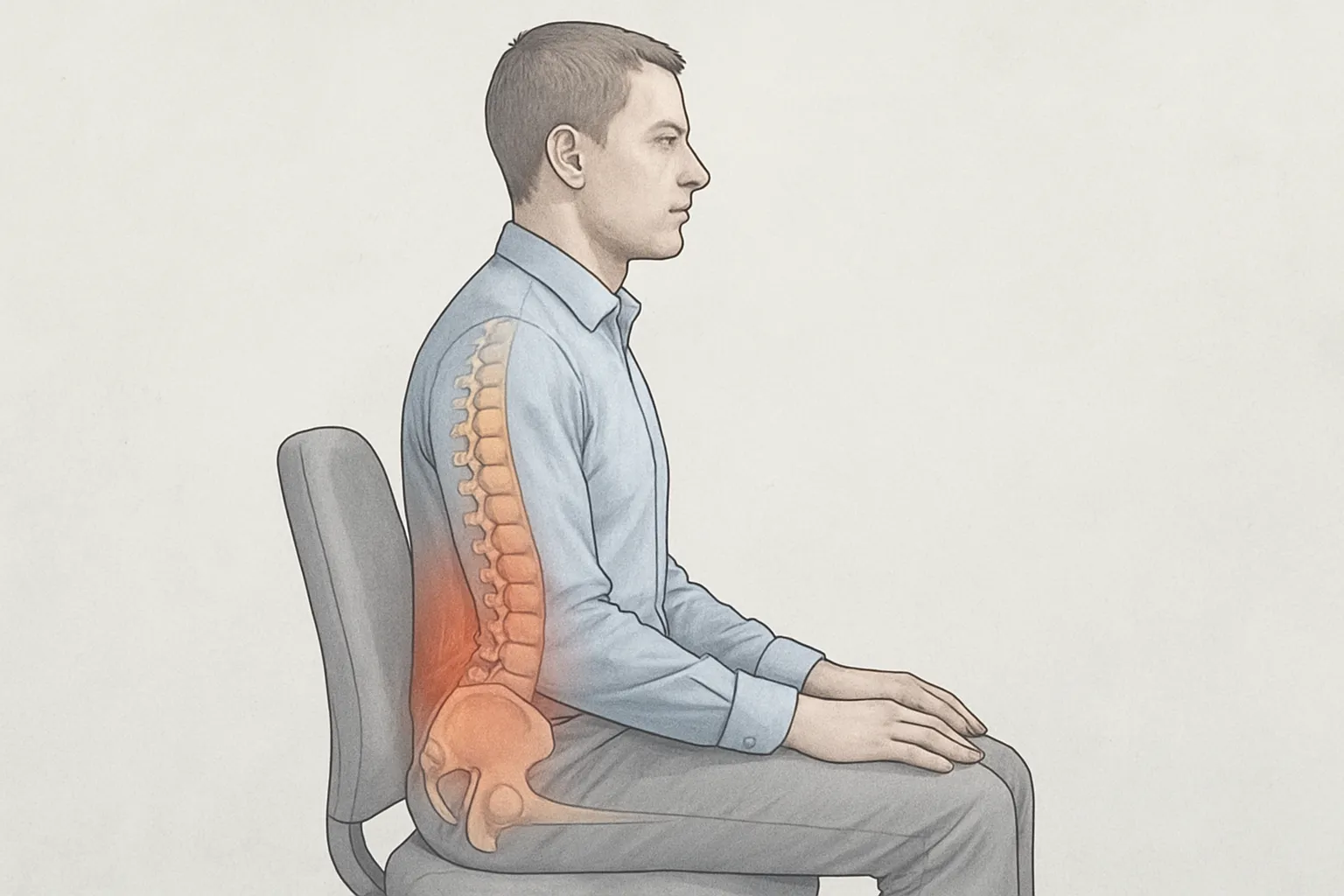
- Postural education and ergonomic adjustment in work and domestic activities: screen height, lumbar support, load handling and active breaks.
- Recommendations from gradual return to activity, avoiding prolonged immobilisation and favouring variability of movement.
- Sleep hygiene, activity planning and basic pain coping strategies to facilitate adherence.
Individualisation, monitoring and security
- Assessment of factors such as age, osteoporosis, The use of the treatment of anticoagulation, anticoagulation, pregnancy, radiculopathy or neurological signs to adjust or avoid certain techniques.
- Identification of RED FLAGS and referral or comanagement with other disciplines when appropriate; consider imaging only in case of clinical suspicion or failure to progress.
- Informed consent, definition of measurable functional objectives and periodic reassessments to adapt the frequency and content of the plan.
Safety, contraindications and coordination with other practitioners when designing a chiropractic care plan
Clinical safety
Planning must be based on a comprehensive clinical assessmentdetailed history, neurological and musculoskeletal examination, identification of RED FLAGS and history check (surgery, drugs such as anticoagulants or corticosteroids, connective tissue disorders, osteoporosis). Order imaging tests only when clinically indicated. Choose technique and intensity according to the patient's risk profile (e.g. prefer gentle mobilisation or non-high-speed techniques in frail individuals) and document informed consent with explanation of reasonable risks and alternatives. Monitor response on a session-by-session basis and record adverse events to adjust the plan prudently.
Contraindications and red flags
- Avoid high-speed spinal manipulation acute fractures or vertebral instability, spinal infection (discitis, osteomyelitis), unstable vertebral neoplasia, compressive myelopathy, suspected cervical arterial dissection, The patient may also be diagnosed with a variety of other conditions, such as cauda equina syndrome, progressive neurological deficits, or following major trauma without adequate assessment.
- Using extreme caution or non-impulsive techniques in severe osteoporosis, bleeding disorders or uncontrolled anticoagulation, inflammatory arthropathies with atlantoaxial involvement, significant hypermobility (e.g. Ehlers-Danlos syndrome), advanced pregnancy, recent spinal surgery, and non-mechanical pain of uncertain origin.
- The occurrence of disproportionate pain, fever with spinal pain, new onset loss of strength or sensation, sphincteric disturbances, unusual cervical headache or vascular symptoms require urgent referral and suspension of risky manual techniques.
Coordination with other professionals
The design of the plan benefits from interdisciplinary coordination with family medicine, physiotherapy, rheumatology, neurology, traumatology or pain units as appropriate. Share relevant information (diagnoses, functional objectives, medication, imaging findings when available) and agree on reassessment and co-management criteria. Prioritise referral when non-mechanical aetiologies, complex comorbidities or the need for pharmacological adjustments are suspected. Integrate education, therapeutic exercise and ergonomic recommendations, maintaining realistic goals and regular reviews to minimise risks and optimise clinical decision-making.