Postural control and infant motor development: definition and clinical relationship in early life
Definition
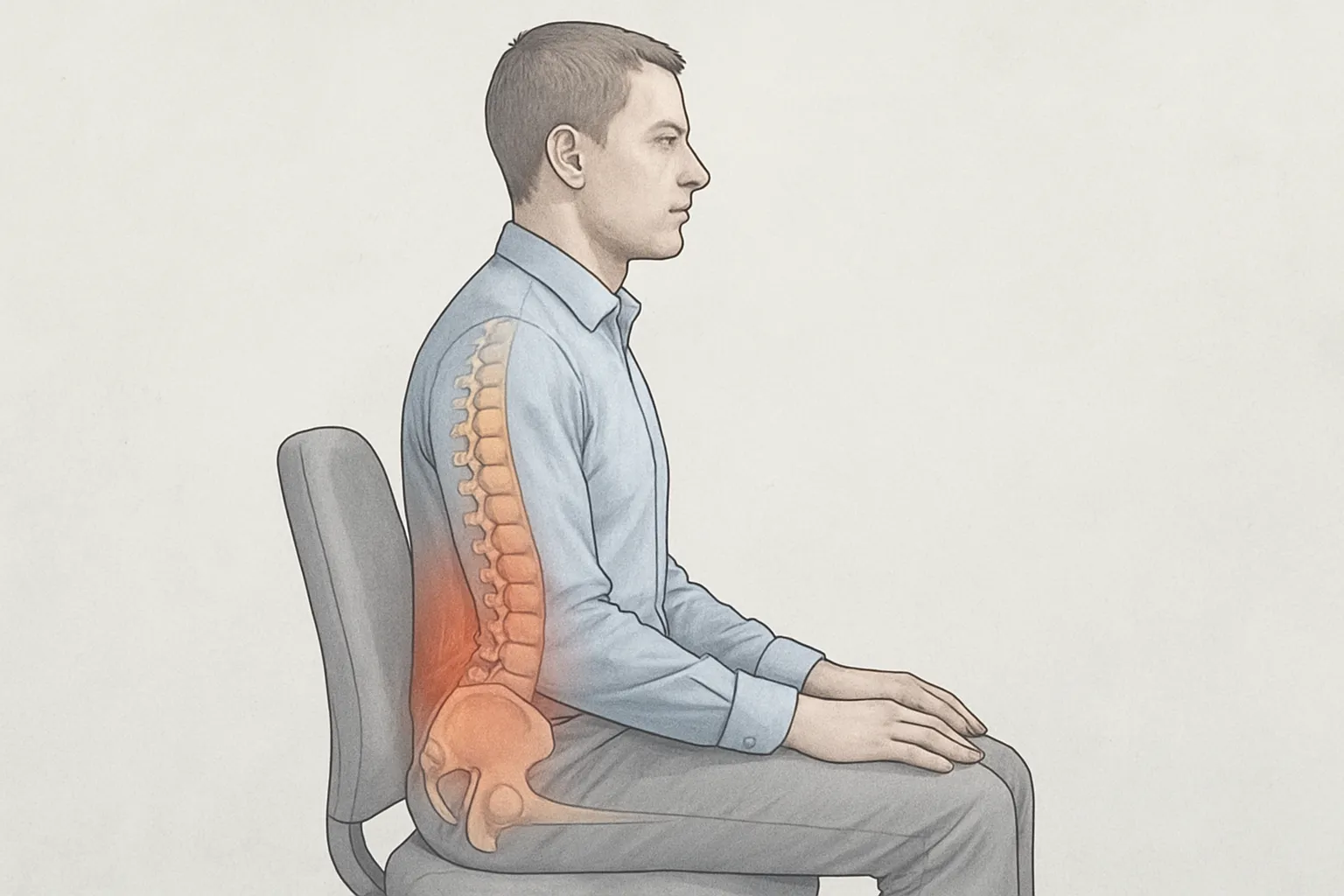
The postural control is the ability to maintain and adjust the position of the body and head in relation to gravity in order to enable orientation and stability during movement and stillness. In early childhood it depends on the integration of sensory systems (visual, vestibular and somatosensory) with the motor response (pitch, alignment, coordination), including anticipatory and reactive postural adjustments. It is a dynamic, task- and environment-specific process that reorganises itself as neuromotor circuits mature.
Clinical relationship in the early stages
In the first months and years of life, the development of postural control underpins the acquisition of motor milestones such as head support, turning, sitting, transitions to the floor, standing and walking. Beyond “reaching” a milestone, it is clinically relevant the quality of movementThe following are important: alignment and symmetry, ability to stabilise to free segments (e.g. hands), motor variability and efficiency in initiating and stopping movements. A more organised postural base favours safe explorations and coordinated postural changes; when control is immature, compensatory strategies or less variety of patterns may be observed.
Early clinical observation usually focuses on the organisation against gravity (especially in prone and supine), the presence and modulation of tone, the response to small perturbations, persistence of primitive reflexes, notorious asymmetries and the motor variability over time. The trajectory is modulated by multiple factors (e.g. prematurity, neurological or musculoskeletal conditions, discomfort or pain, opportunities for floor play and environmental management). There are wide ranges of individual variation, so clinical interpretation relies on the time course and overall findings, avoiding conclusions based on a single isolated sign.
Postural control and motor development in children by age: indicative milestones and signs to look out for
0-6 months: initial postural organisation
During this period, head control and trunk alignment progresses with increasingly varied movements.
- Indicative milestones: progressive prone head control; hands to midline; forearm support; initiation of roll over; overall symmetry at rest and during movement.
- Signs to watch out for: hypotonia o hypertonia marked; persistent asymmetry (constant preference for one side or the head); absence of prone support or continued extreme intolerance; very poor or little varied movement; rigidly clenched fists beyond the first few weeks.
6-12 months: proximal stability and transitions
Increases trunk stability and the ability to change posture with control.
- Indicative milestones: sitting without support; turning to both sides; weight transfers in prone and seated position; autonomous movement (crawling or other functional forms); standing with support and beginning to stand up.
- Signs to watch out for: preferential use of one side when rolling or leaning; difficulty in maintaining seated position at around 8-9 months; poor weight bearing on legs; very rigid patterns or block movements; few transitions between postures.
12-36 months: standing, walking and balance
Vertical postural control, gait and gross coordination are refined.
- Indicative milestones: usual independent walking between 12-18 months; unsupported standing; controlled bending and rising; initiation of basic running around 18-24 months; supported climbing up and down steps; jumping with both feet around 24-30 months; brief unipodal balance around 3 years.
- Signs to watch out for: persistent tiptoeing and constant beyond the age of 2 years; very frequent falls with poor postural control; difficulty bending and rising without support after the age of 18 months; loss of milestones already acquired or regression; marked asymmetry of arms or legs during walking or play.
Factors influencing postural control and infant motor development (environment, health, sleep and stimulation)
Physical environment
A safe, predictable and varied environment is associated with improved motor exploration. Stable, firm surfaces facilitate postural control The different textures and heights introduce progressive challenges without demanding skills for which the child is not yet ready. The time on the ground supervised allows for turning, support and transitions; prolonged exposure to restraint devices (pushchairs, bouncers) can limit opportunities for movement. Adequate lighting and an unobstructed space promote visual orientation and balance.
Health and background
The children's motor development is influenced by muscle tone, joint range, quality of vision and hearing, nutritional status and perinatal factors such as prematurity. Episodes of pain, frequent infections, anaemia or certain drugs may reduce activity level and motor practice. Individual variability is wide; observation of milestones should consider the clinical history and, where appropriate, age correction in preterm infants, avoiding rigid comparisons between children.
Dream
The dream adequate in duration and continuity is related to the consolidation of motor learning and the regulation of tone and postural attention during wakefulness. Frequent awakenings, irregular schedules or environments with a lot of nocturnal stimuli may hinder motor practice the next day due to increased fatigue and attentional instability. Consistent routines and a quiet sleep environment often contribute to better daytime motor performance without replacing the need for movement opportunities.
Stimulation and play
The stimulation based on free play, sensitive adult interaction and stage-appropriate tasks promotes postural organisation. Manipulating objects of different sizes and weights, inviting non-forced postural changes (decubitus-prone-sitting-kneeling) and offering achievable challenges facilitates the trial and error necessary for balance and coordination. It is advisable to alternate short periods of challenge with breaks, to observe signs of tiredness and to respect individual pace, avoiding devices or practices that advance postures for which the child is not prepared.
How practitioners assess children's postural control and motor development: observation, testing and prudent judgement
Structured clinical observation
The assessment usually begins with structured clinical observation in spontaneous activities and directed tasks, considering the environment and the child's comfort. The quality of movement is analysed in decubitus, prone, seated, standing and during transitions, paying attention to:
- Head-trunk-pelvis alignment and proximal stability.
- Straightening, balancing and protective reactions to mild disturbances.
- Symmetry, use of hands and feet, and variability of the motor repertoire.
- Fatigue resistance, attention and response to sensory stimuli.
Standardised tests and complementary measurements
When indicated, the following are used standardised testing validated to estimate gross and fine motor milestones, seated/standing postural control and dynamic balance. They are integrated with the clinical history (including the corrected gestational age, The assessment of the patient's physical condition, perinatal history and comorbidities) and functional observation in activities of daily living. Complementary measurements can be added according to availability and clinical relevance, such as task timing, qualitative video analysis, assessment of tone and strength, joint range, hand-eye coordination and sensory exploration. In specialised settings, instrumentation (e.g. force platforms) can be used to characterise centre of pressure control, always interpreting the data in relation to functionality.
Prudent judgement and interpretation
Interpreting is done with prudent approaches, The study considers the individual and cultural variability of motor milestones and prioritises trajectories over time rather than a single measurement. It assesses possible warning signs that prompt further assessment, such as regression of previously acquired skills, marked and persistent asymmetries, absence of protective reactions after the expected age, sustained difficulties in maintaining alignment against gravity or pain associated with movement. Factors such as prematurity, play opportunities, sleep, motivation and health status can modulate performance and are taken into account before conclusions are drawn. The final reading combines objective scores and clinical observation to estimate postural competence and participation in habitual activities.
Play activities and safe habits to promote postural control and children's motor development at home.
Play activities on the ground
Favouring the postural control and the children's motor development at home relies on frequent, varied and supervised practice. Play on firm, uncluttered surfaces allows the child to explore safely without restricting movement. These may include:
- Upside-down time with monitoringShort, repeated periods, gradually increasing according to tolerance, to stimulate cervical extension, shoulder support and trunk stability.
- Games of reach and grip in different positions (face up, sideways, face down, sitting on the floor), placing light objects at different heights to promote weight shifts and smooth rotations.
- Transitions autonomous and minimally assisted (rolling, sitting up, crawling, standing with stable support), prioritising the child's initiation of movement and respecting the child's pauses.
- Vary support and balance with low firm mats and cushions, as well as small safe circuits that invite crawling, crawling or climbing at very low levels.
- Foot scanning barefoot indoors clean to facilitate plantar perception and stability, using flexible footwear only when necessary.
Safe habits at home
A safe environment and predictability reduces risks and facilitates quality motor practice. Keep the play area free of obstacles, with good lighting and stable surfaces, and actively accompany the activity without forcing postures. Practical recommendations:
- Constant monitoring during play on the ground; avoid soft or raised surfaces where falls are likely to occur.
- Limit time in “containers” (car seats outside the car, hammocks, bouncers), allowing ample periods of free movement on the ground.
- Avoid wheeled walkers because of their association with injuries and alterations in the scanning pattern; if static activity centres are used, use them for short periods of time.
- Adapt support furniture to the child's height (stable and without sharp edges), secure non-slip mats and remove small or unstable parts.
- Observe for signs of fatigue or frustration (decreased head control, marked arching, irritability) and offer pauses; the variability and gradual dosing are often preferable to long sessions.
- Alternate sides of support and positions during wakefulness to distribute loads and offer diverse sensorimotor experiences, respecting individual rhythms.