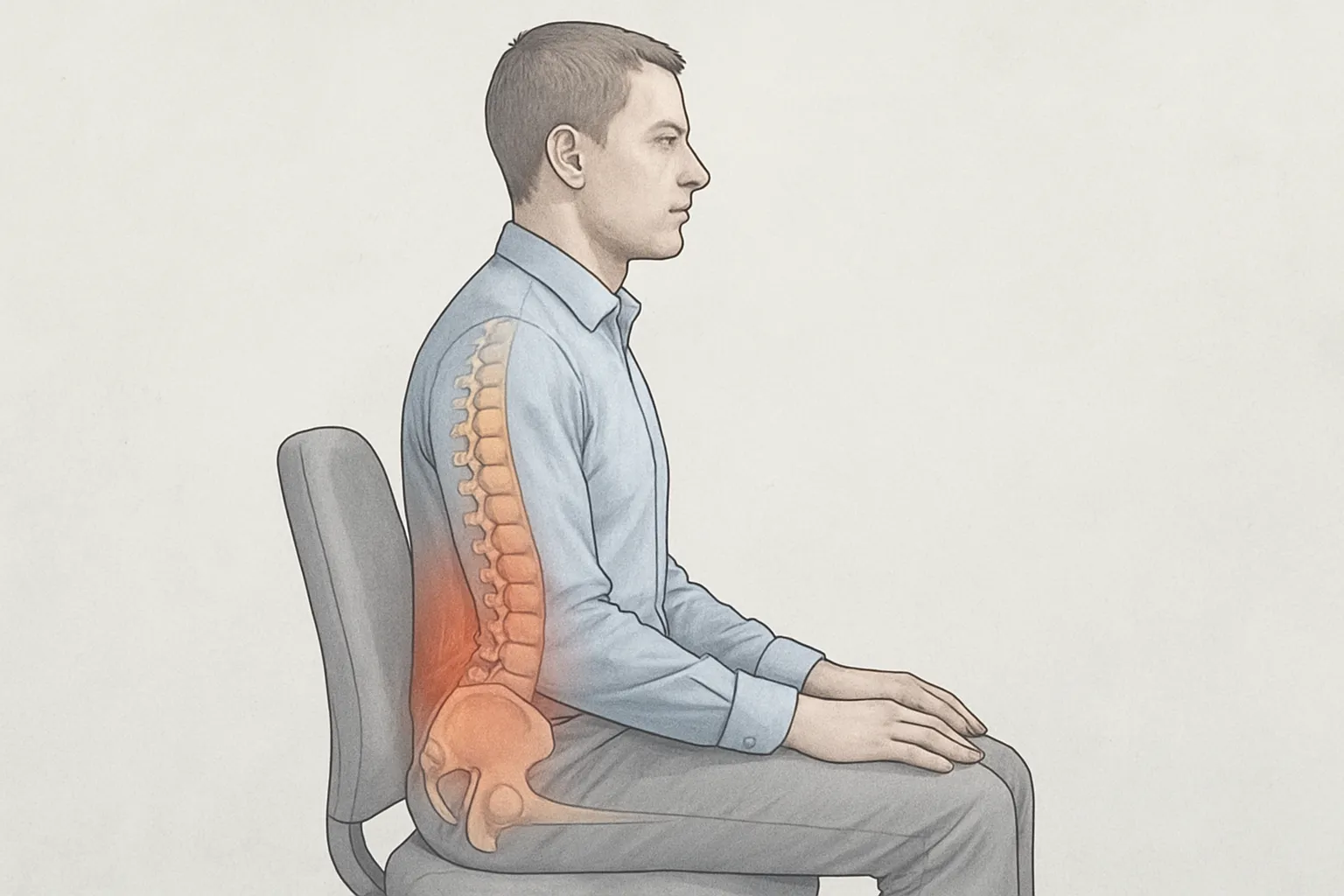
Nervous system stress and muscle stiffness: how they are connected and why tension develops
Neurophysiological mechanisms involved
The stress activates the sympathetic nervous system and the axis hypothalamus-pituitary-adrenal (HPA), The motor function of the brain is enhanced, increasing energy availability and vigilance. On the motor level, the excitability of alpha motor neurons is increased and the base tone is increased via the gamma loop, which makes them more sensitive to muscle spindles and facilitates reflex contraction. This pattern favours co-contracting and the “guarding” or protective response: muscles in the neck, shoulders, jaw and lumbar region tend to remain in slight contraction in preparation for perceived threatening demands.
Why tension arises
The combination of hypervigilance and motor readiness increases the muscle tone even at rest. If this activation is prolonged, the sustained contraction may be associated with reduced local perfusion and fatigue, which the brain interprets as rigidity or heaviness. Stress-related respiratory changes (e.g. shallow chest breathing or episodes of hyperventilation) alter acid-base balance and modulate neuromuscular excitability, contributing to the feeling of tension. Not everyone responds in the same way; the intensity and duration of the stressful stimulus, together with individual susceptibility, determine the magnitude of the phenomenon.
Factors that favour and perpetuate it
- Sustained exposure to unpredictable or perceived uncontrollable demands, which sustain sympathetic activation.
- Insufficient sleep and fatigue, which reduce cortical inhibitory capacity and facilitate increased tone.
- Previous pain or awareness-raising of the nervous system, which reinforce the cycle stress-tension-pain.
- Habits of prolonged immobility under mental load (e.g. concentrated work with static postures), which maintain alertness signals and the pattern of co-contraction.
Symptoms of stress-related muscle stiffness and how to differentiate it from injury or other causes
Stress-related muscle stiffness usually manifests as a feeling of continuous tension or tightness in postural muscle groups - mainly neck, shoulders, jaw and lower back - often accompanied by dull ache and tension-type headache. Its course is fluctuating: it appears or intensifies in the presence of emotional stressors, It may alternate with periods of lesser discomfort throughout the day. It is not usually accompanied by objective weakness, no sensory loss or clear neurological symptoms.
It is also common to diffuse or bilateral distribution of discomfort, moderate hypersensitivity to palpation and a sensation of “stiff muscle” without obvious inflammatory signs. Habits such as nocturnal bruxism, shallow breathing or body hypervigilance may coexist, which increase the perception of tension without in themselves indicating a structural lesion.
Clinical clues to differentiate it from injuries or other causes
- Home: temporal relationship with stressful events or sustained postures, versus onset after trauma, sudden exertion or specific sporting gesture.
- Location: pain and stiffness diffuse in various muscle groups in the face of pain focal well demarcated in a muscle or tendon.
- Evolution: symptoms variables with everyday activity in the face of pain that go to or consistently limits range of motion after injury.
- Exploration: increased tone and sensitivity without haematoma, deformity ni local heat; The presence of these signs suggests tissue damage or an inflammatory process.
- Characteristics of pain: dull or oppressive discomfort in the presence of neuritic pain with tingling, burning o downloads, which leads to nervous compromise.
- Other indicators: prolonged morning stiffness with swollen joints, fever, weight loss, waking night pain o outright weakness are not typical of stress and may point to different causes.
Factors that can intensify muscle stiffness under stress: posture, sleep, activity and medication.
Posture and ergonomics
Under stress, the position held (e.g. raised shoulders, sustained cervical flexion or bruxism) increases isometric co-contraction of groups such as trapezius, spinal erectors and mandibular musculature. Sustained contraction reduces local perfusion and may promote feelings of stiffness and tenderness. Prolonged immobility in front of screens or repetitive fine tasks is associated with increased cumulative mechanical load and perception of tension.
Dream
The sleep deprivation or fragmented sleep alter pain modulation and tissue recovery, and are often accompanied by increased sympathetic activation. These changes may amplify stiffness, especially in cervical and mandibular regions if stress-related bruxism coexists. Daytime fatigue and sleepiness may also modify postural control and muscle discomfort threshold.
Physical activity and movement pattern
Both the inactivity as well as unadapted sudden physical loads can intensify stiffness under stress. Stress tends to reduce motor variability and promote co-contraction patterns, increasing sustained demand on particular muscle groups. Repetition without pauses, high-precision gestures and sudden changes in volume or intensity are associated with greater perceived stiffness in the short term.
Medicines
Some drugs have been linked to stiffness or myalgias. These include antipsychotics (extrapyramidal rigidity), certain antidepressants (e.g., jaw tension or bruxism) and statins (myalgia/myopathy). Diuretics or other treatments that alter electrolyte balance may promote cramps and feelings of tightness. A pharmacological contribution is more plausible when stiffness appears or intensifies after starting or adjusting a medication.
Clinically supported strategies that can help to reduce stress-related muscle stiffness
Low-risk physical interventions are often considered a reasonable first step. The moderate aerobic activity Regular exercise (brisk walking, exercise bike) can facilitate blood flow and modulate stress-influenced muscle tone. The graduated stretches neck, shoulder and back pain - sustained without pain and with a gradual progression - together with the brief application of local heat (e.g. warm compresses) are used to promote tissue relaxation. Intensity and frequency should be adapted to individual tolerance and possible health conditions.
Strategies aimed at regulating the autonomic nervous system are also used in clinical settings. The diaphragmatic breathing at a slow pace, with exhalation slightly longer than inhalation, and the progressive muscle relaxation (tension and release by muscle groups) can reduce stress-related reactivity and the perception of stiffness when practised consistently in short sessions. In the presence of dizziness or shortness of breath, it is advisable to start gently and in a comfortable posture.
Behavioural and work environment adjustments help to reduce sustained loads. Short active breaks and postural variability every 30-60 minutes can limit sustained strain in typically affected areas. Basic ergonomic improvements (screen at eye level, lumbar support, keyboard that avoids raising the shoulders) reduce prolonged isometric demands. Adequate sleep hygiene -regular schedules, a dark and quiet environment, and limiting stimulants in the evening - is associated with better muscle recovery and less sensitivity to stress.
When to consult: warning signs and medical assessment for stress, nervous system and persistent muscle stiffness
Clinical warning signs
- Persistent muscle stiffness that lasts more than 4-6 weeks, limits activities, or shows progression, especially if it is asymmetrical or worse at night.
- Neurological deficitloss of strength, numbness, tingling, fine clumsiness, falls, gait changes, spasticity; sphincteric disturbances or “saddle” anaesthesia suggest spinal cord involvement.
- Systemic symptomsUnexplained fever, unintentional weight loss, night sweats, marked fatigue, redness, warmth or local swelling.
- Autonomic dysfunctionpersistent palpitations, dizziness on standing, syncope, unexplained dyspnoea, profuse sweating or exercise intolerance associated with stiffness.
- Other priority signs: severe new headache, nuchal rigidity with fever, confusion, visual or speech disturbances, sustained severe insomnia, frequent panic attacks with functional impairment, or presence of self-harming thoughts.
Routine medical assessment
The clinical evaluation focuses on characterising the onset, temporal pattern and triggers (psychosocial stress, exertion, infections), reviewing potentially implicated drugs and substances (e.g. statins, antipsychotics, stimulants, alcohol/benzodiazepine withdrawal), and neurological, endocrine and rheumatological history. The neurological and musculoskeletal examination assesses tone, strength, reflexes, sensation, coordination, joint range and gait; and the constants in decubitus and standing position suggest orthostatic hypotension. Depending on the findings, the following can be considered:
- CBC: CBC, electrolytes, renal/liver function, TSH, vitamin B12/folate, glucose/HbA1c, ferritin, CRP/VSG, CPK.
- Neurophysiology (EMG/conduction studies) in case of objective weakness or neuropathy.
- Imaging (spinal or brain MRI) if there are focal deficits, signs of compression or alarm symptoms.
- Sleep assessment when there is refractory insomnia or suspected movement disorders; standardised psychometric screening for anxiety/depression when appropriate.
Priorities and differential diagnosis
The prioritisation criteria include symptom progression, presence of neurological deficit o systemic symptoms. Differential diagnosis includes drug effects, stress and anxiety disorders with somatisation, autonomic dysfunction, movement disorders (e.g. parkinsonism, dystonia, central lesion spasticity), hypothyroidism, myositis, electrolyte disturbances, vitamin deficiencies, myofascial pain/fibromyalgia (without objective weakness) and mechanical causes such as bruxism or cervicalgia. A stepwise, clinically guided approach, without unnecessary testing, helps to identify early the conditions that require priority attention.