How prolonged screen use affects the cervical spine: posture, loads and biomechanics
Typical posture when using screens
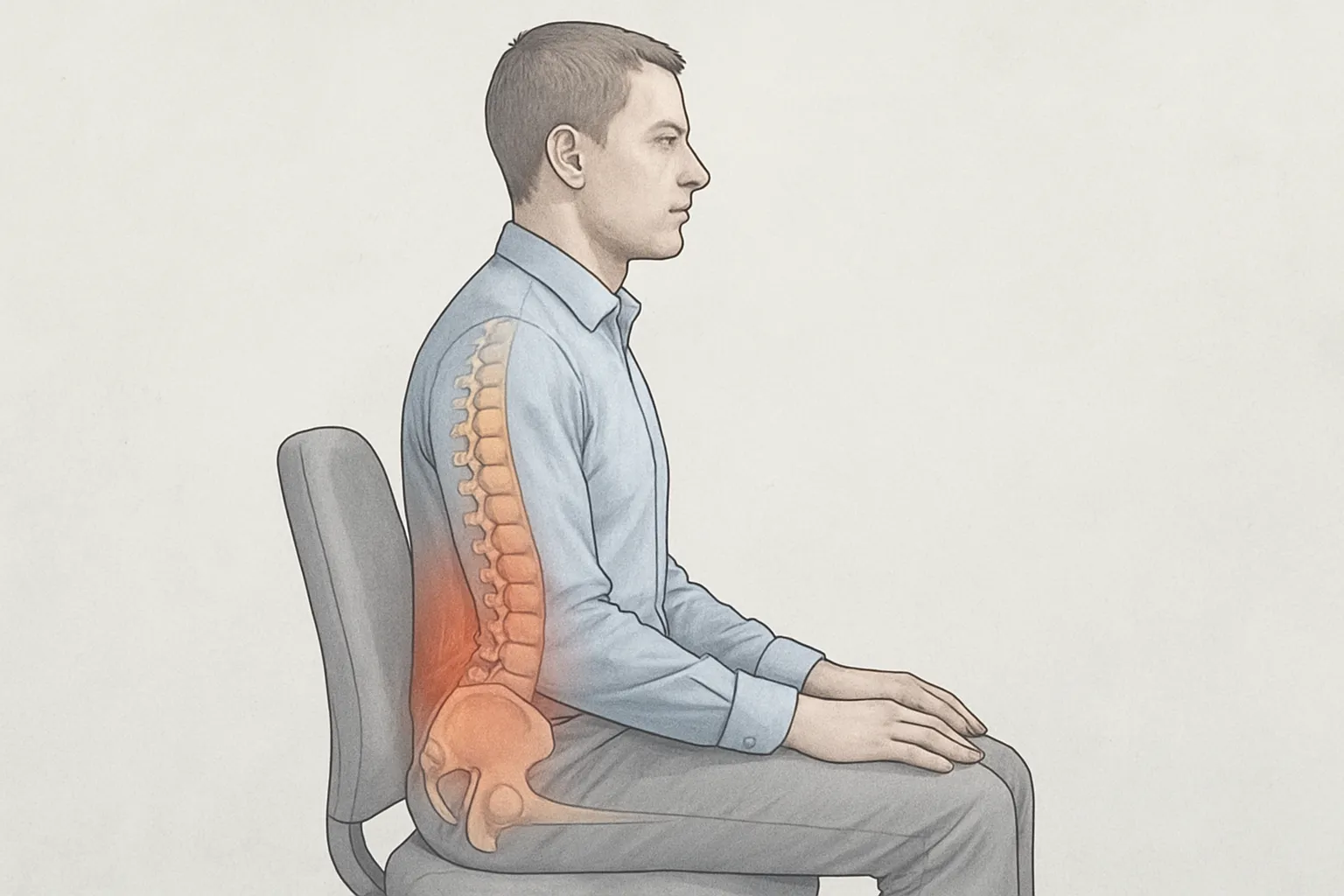
Prolonged screen use is often associated with head forward, with flexion of the lower cervical segments and light high cervical extension to maintain eye contact. This posture shifts the head’s centre of mass forwards in relation to the spine, often accompanied by scapular protrusion and an increase in thoracic kyphosis, which affects the alignment and mechanical stress on the cervical region.
Loads and resulting biomechanics
When the head is tilted forwards, the moment of bending which acts on the cervical spine. The extensor muscles must generate greater force to counterbalance this, which increases the compressive and shear loads across the segments, particularly in the middle and lower sections. The sustained cervical flexion tends to increase intradiscal pressure compared with a neutral position and to concentrate stress on the posterior and facet structures. Put simply:
- Greater anterior lever arm of the head → progressive increase in external torque.
- Extensor muscle response → increased joint compression and metabolic demand.
- Prolonged flexion → increased strain on the posterior ligaments and pressure on the intervertebral discs and vertebral endplates.
Tissue and neuromuscular response over time
Prolonged exposure may contribute to viscoelastic creep in ligaments and joint capsules, with temporary micro-changes in their length and passive stabilisation capacity. The muscle fatigue A reduction in the activity of deep extensors and stabilisers reduces their ability to counteract the flexion moment, leading to compensatory strategies involving more superficial muscles. Adjustments in sensorimotor control (for example, increased co-activation) may also occur which, if sustained over low postural variability and prolonged periods under strain increase the likelihood of mechanical overload in the cervical region.
Common symptoms and signs to look out for in cases of cervical spine discomfort associated with screen time
Frequent symptoms
- Mechanical neck pain: a pressing or stabbing pain in the back of the neck that worsens with sustained flexed postures (looking down) and improves when the posture is changed. It may radiate to the trapezius muscles, shoulders or the interscapular region and be accompanied by tenderness on paravertebral palpation.
- Stiffness and restricted mobility: a sensation of a “stiff” neck, with pain when turning or tilting the head following prolonged periods spent looking at a screen. Joint noises without severe pain are usually common findings and do not, in themselves, indicate a structural injury.
- Headache of possible cervical origin: pain that originates at the base of the skull and may radiate to the temple or eye socket, often associated with tension in the neck and shoulder muscles, and linked to long periods spent in front of screens.
- Fatigue and a feeling of heaviness in the shoulders: a sensation of tension in the trapezius muscles with areas that are tender to the touch. Mild, temporary paraesthesia in the forearm or hand may occur as a result of maintaining certain postures, but requires monitoring if it persists or worsens.
Signs to watch out for
- Persistent or progressive neurological deficit: weakness in the shoulder, arm or hand; persistent loss of sensation; impaired fine motor skills; or balance problems.
- Disproportionate, night-time or worsening pain: pain that does not vary with changes in posture, wakes the patient at night or significantly interferes with sleep.
- Systemic symptoms or relevant medical history: fever, general malaise, unexplained weight loss, a history of cancer or immunosuppression.
- Severe dizziness, double vision or fainting triggered by neck movements, or occipital pain accompanied by neurological symptoms.
- Radicular pain: electric shock-like sensations in the arm, accompanied by tingling or numbness that persists or worsens.
- Context of trauma: pain arising following a blow, a fall or an accident, particularly if accompanied by marked stiffness or functional impairment.
Risk factors and habits that may increase neck pain when using screens
Exposure settings and exposure times
The combination of held postures y long periods without breaks is associated with a greater mechanical load on the cervical region.
- Constant bending of the head whilst looking at mobile phones or tablets (“text neck”).
- Prolonged lateral rotation or tilting, such as holding the phone between your ear and shoulder.
- Prolonged shrugging of the shoulders whilst typing or using the mouse for long periods.
- Prolonged periods of work or play, with little variation in posture.
Workstation and device configuration
A incorrect screen height and an unergonomic layout can lead to postures that cause neck strain.
- Screens that are too low or too high, causing the neck to bend or extend.
- A keyboard and mouse positioned too far away, which encourages the head and shoulders to be held forward.
- Using a laptop in bed, on the sofa or on low tables, which forces you to hunch over.
- Mobile devices held at lap height for long periods.
- Poor lighting or glare that forces you to move your head closer to the screen.
- Chairs without backrests or with poorly adjusted armrests, which reduce postural support.
Individual and psychosocial factors
Certain personal and contextual factors can amplify the pain response to the same postural load.
- Low levels of physical activity or poor conditioning of the cervical and scapular muscles.
- A history of neck pain or headaches and increased sensitivity to pain.
- Stress, high demands on attention or tight deadlines, which can lead to muscle tension.
- Lack of rest and accumulated fatigue, which reduce exercise tolerance.
- Uncorrected vision problems or the use of glasses that cause the head to tilt in order to focus.
Ergonomic measures and active breaks to reduce the impact of prolonged screen use on the cervical spine
Workstation ergonomics
Proper workplace set-up can reduce the mechanical strain on the cervical spine by limiting sustained neck flexion and shoulder elevation. Prioritise the neutral alignment and the proximity of workstation components to minimise repetitive strain and prolonged static postures.
- Neutral alignment: ears aligned with the shoulders, chin parallel to the floor, and avoid cervical protraction.
- Screen height: top edge at eye level and ~50–70 cm; when using a laptop, use a stand and external keyboard/mouse.
- Upper limb supports: elbows at ~90°, forearms supported and shoulders relaxed; mouse and keyboard close at hand to avoid excessive reaching.
- Lumbar support and footrests: a backrest that supports the lumbar lordosis and keeps the feet fully supported (a footrest if necessary).
- Use of mobile devices: raise your phone or tablet to eye level to minimise prolonged neck flexion.
- Change your posture: alternate positions (sitting/standing, if you have an adjustable desk) and reorganise your work to avoid staying in one position for too long.
Active breaks and pacing
The active breaks and the micro-breaks They break up static loading and encourage movement without requiring intense effort. A common and well-tolerated approach is to incorporate micro-breaks of 30–60 seconds every 20–30 minutes and breaks of 3–5 minutes every 60–90 minutes, adjusting the frequency according to individual tolerance and the demands of the task.
- Slight cervical mobility: lateral bends, rotations and flexion-extension within a comfortable range, 5–8 repetitions, without bouncing.
- Cervical retraction (chin tuck): whilst seated, gently pull your chin back as if “creating a double chin”, 5–8 repetitions, 3–5 seconds.
- Scapular retraction: Bring your shoulder blades together slightly without raising your shoulders; 5–8 repetitions.
- Pectoral stretch: in a door frame, 15–20 seconds, 1–2 repetitions per side, without pain.
- Stand to and march in place: 1–3 minutes to change the load and improve circulation.
- Diaphragmatic breathing: 4–6 slow breaths to reduce accessory muscle co-activation in the neck.
If you experience acute pain, dizziness, tingling or blurred vision, stop exercising and prioritise rest. If you have a diagnosed cervical condition or persistent symptoms, the choice and intensity of movements should be tailored to your individual needs.
What does the current scientific evidence show regarding the impact of screen time on cervical health?
The available evidence, consisting mainly of observational studies and a few reviews, suggests a association the greater screen time (especially with handheld devices) and an increase in reports of neck pain, stiffness and muscle fatigue in the neck region. These findings are consistent across students, the general population and workers who spend long periods using screens, although the magnitude of the effect varies and the quality of evidence is heterogeneous. Taken together, they describe probable relationships, but do not allow us to establish causality on their own.
The proposed mechanisms focus on sustained flexion postures with the head and neck positioned forward, which increase the mechanical demand on the cervical extensor muscles and reduce postural variability. Other contributing factors include screen height and distance, the type of visual task (e.g. reading on a mobile phone versus a computer monitor) and the duration of continuous use without breaks; these factors can increase tissue strain and the perception of discomfort. These processes are considered plausible from the perspective of biomechanics and exercise physiology, without implying inevitable structural effects.
Significant uncertainties remain: a large proportion of the studies rely on self-reported exposure and symptoms, with a risk of bias and confounding due to variables such as physical activity, sleep or stress. The link between screen time and long-term structural changes in the cervical spine has not been consistently demonstrated. In current clinical interpretation, the following appear to be more decisive: cumulative load (duration and continuity), the ergonomics and the postural variability that “total time” alone is not sufficient, and that better-designed longitudinal and experimental studies are required to determine dose–response relationships and identify subgroups with greater susceptibility.