Importance of regular movement throughout life: what it includes, realistic goals and how it differs from planned exercise
What is included in the regular movement
The regular movement encompasses any bodily activity that minimally increases energy expenditure relative to rest and can be sustained in daily life. It includes walking for mobility, stair climbing, active household and work tasks, games and leisure in movement, short breaks for getting up and stretching, gentle mobility and balance exercises, gardening or light DIY. It is adapted to age, environment and individual abilities and does not require specific equipment.
Realistic objectives
Raise realistic objectives involves starting from the current level and progressing in a way that is gradual in frequency, duration or complexity, prioritising the consistency on intensity. It is useful to integrate movement into daily routines (e.g. breaking up sitting time with active breaks and alternating postures), varying tasks to spread the physical load and allowing time for recovery. Planning should be individualised according to age, history and health status; if there is persistent pain, dizziness, unusual dyspnoea or other symptoms, activity should be adjusted and sudden increases avoided.
Difference with the planned exercise
The planned exercise is a form of structured physical activity, with defined objectives (e.g. to improve strength, endurance or flexibility) and controlled parameters of intensity, volume and technique. The regular movement is a broader and less formal concept, focusing on staying active throughout the day through everyday actions. The two approaches are complementary: exercise contributes specifically to the development of physical capacities, while continuous movement helps to limit prolonged periods of inactivity and promotes functionality in daily tasks.
Effects of regular movement on heart, metabolism, mood and autonomy: what the evidence suggests
Regular movement has been linked to improvements in cardiovascular health y metabolic control. The evidence suggests associations with more stable blood pressure, better blood pressure and better cardiorespiratory fitness, The results show a more favourable lipid profile and improved endothelial efficiency. On the metabolic level, improvements in insulin sensitivity, postprandial glucose management and body composition are described by increasing muscle mass. These effects depend on the dose (frequency, duration and intensity), the type of activity (aerobic and strength) and the individual's starting point, with variable responses in the presence of comorbidities or treatments.
With regard to the state of mind, In addition, sustained practice is associated with modest reductions in symptoms of anxiety and subclinical depression, improved sleep quality and more manageable stress perception. Proposed mechanisms include neurochemical and circadian rhythm changes, as well as psychosocial factors. Not everyone experiences the same degree of response and, where there are established mood disorders, movement is considered an adjunct to, not a substitute for, specific clinical approaches.
In terms of functional autonomy, In addition, staying active can contribute to the maintenance of strength, power, balance and mobility, which are key skills for performing daily activities and reducing the risk of falls, especially with ageing or in chronic diseases. Gradual progression and individualisation are relevant to minimise discomfort and adverse events; excessive load, persistent pain or atypical symptoms are signs that the response may not be as expected. Heterogeneity of effects is the norm and depends on clinical context and activity history.
Physical activity throughout life: guideline recommendations by age and health conditions, with precautions
As a guideline, and unless clinically indicated otherwise, most adults can aim for 150-300 minutes of physical activity per week. moderate intensity or 75-150 of vigorous intensity, or a combination, together with at least 2 days/week of work of force. In people over 65 years of age, add exercises of balance and multicomponent components 3 or more days/wk. In children and adolescents, at least 60 minutes daily of moderate to vigorous activity, with vigorous stimuli and strengthening 3 days/wk. Moderate usually allows comfortable speech; vigorous limits speech to short sentences. Prioritise gradual progression and alternate loads with recovery.
Age guidelines and precautions:
- Childhood and adolescence: active play, cycling, gentle running, swimming; include self-weight strengthening and basic technique. Avoid early specialisation and monitor for persistent pain, unusual fatigue or signs of overuse during growth.
- Adults: combine continuous or moderate interval aerobic exercise with strength 2-3 days/wk. If previously sedentary, start with 10-20 min/session and increase by 5-10%/wk according to tolerance. Adjust if there is joint pain that does not subside with rest or sustained fatigue.
- Elderly people: walking on stable ground, balance work (e.g. unipodal support, tai chi) and strength with light-moderate loads. Check footwear and environment to reduce falls; prefer paces that allow for conversation and scheduled breaks.
- Pregnancy and postpartum without contraindications: about 150 min/wk of moderate activity, with emphasis on mobility, low to moderate strength and pelvic floor. Avoid intense impacts and prolonged supine decubitus if it causes discomfort; progressive reintroduction after delivery according to clinical evolution.
Adaptations due to health conditions:
- Stable hypertension/cardiomyopathy: Prioritise moderate intensity and multi-component work; avoid Valsalva manoeuvre and maximal efforts until good control. Prolonged warm-up and cool-down; monitor blood pressure if therapeutic changes occur.
- Diabetes: check feet and blood glucose; carry fast-acting carbohydrates if there is a risk of hypoglycaemia; avoid injections in the muscle to be exercised; adjust according to symptoms of hypo/hyperglycaemia.
- Asthma/COPD: progressive warm-up and short series; use of rescue bronchodilator if prescribed; avoid very cold or dry air without protection.
- Musculoskeletal pain, osteoarthritis, osteoporosis: prefer low-impact and progressive strength; in osteoporosis, avoid deep spinal flexion and sharp twisting under load; respect periods of inflammatory pain.
- Neurological disease or disability: adapt tasks to fatigue, use supports and supervision where instability exists; prioritise safety and structured breaks.
Before alarm signals (chest pain, disproportionate dyspnoea, dizziness or syncope, sustained palpitations, radiating pain, acute neurological deficit, vaginal bleeding in pregnancy, joint pain preventing weight bearing, fever with severe myalgia), discontinue the session and seek professional assessment.
Sedentary lifestyles and sitting: what is known about taking movement breaks at regular intervals?
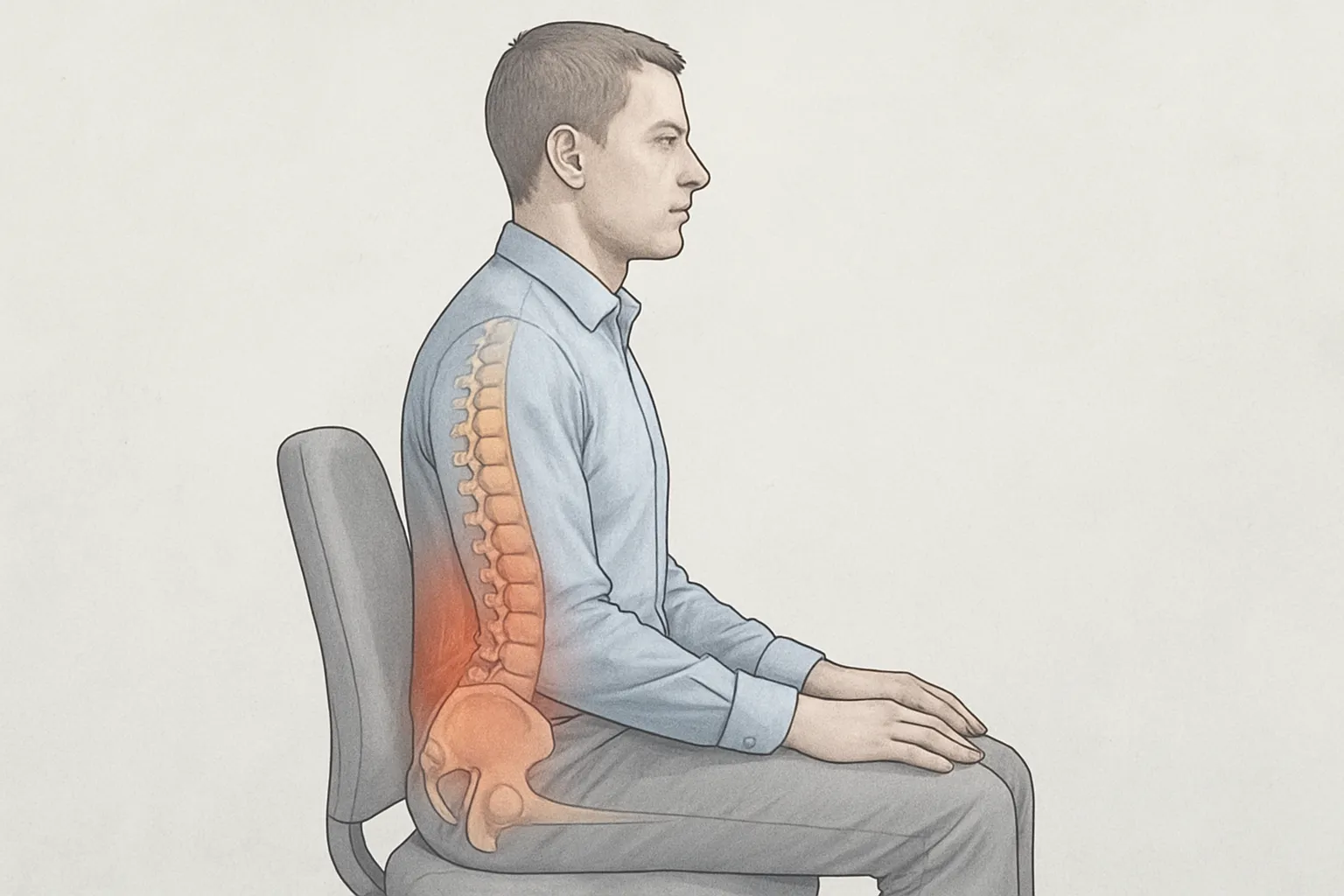
The prolonged sedentary lifestyle and the sitting time without interruptions are associated with cardiometabolic disturbances and musculoskeletal complaints. Interrupting these periods with movement pauses at regular intervals has been associated with modest and short-lived changes in parameters such as postprandial blood glucose, blood pressure and stiffness; the response is variable and depends on the intensity, the frequency and context. These breaks are considered as a supplement and do not replace the weekly physical activity recommendations.
What a movement pause is and how to apply it
Breaks usually consist of a light intensity The following are the most important aspects to be considered regularity more than the effort. Practical examples that do not require equipment:
- Stand up and walk a few steps around the room.
- Gentle on-site gait, heel raises or ankle flexion and extension.
- Joint mobility of shoulders, neck and thoracic spine.
- Alternate sitting and standing at adjustable desks where possible.
What is known and clinical considerations
The available evidence is largely from short-term studies in laboratory and office settings, with varying protocols; therefore, the optimal “dose” (duration and interval) is not fully established and the long-term effects remain under investigation. Possible mechanisms include increased muscle “pumping” activity in the legs, increased endothelial flow and shear, and muscle activation that facilitates insulin-independent glucose uptake and redistributes loads over the spine and limbs. Implementation should be individualised for people at risk of falls, orthostatic hypotension, mobility limitations or acute pain, prioritising gradual transitions and stable movements to minimise discomfort or transient dizziness.
Warning signs during movement and when to consult health professionals
During movement, it is useful to differentiate discomfort that is expected during exercise from warning signs that may indicate injury or underlying condition. Attention to the intensity, duration, distribution The pain and accompanying symptoms indicate the need for clinical assessment.
Symptoms requiring urgent assessment
- Chest pain, oppression, dyspnoea, severe dizziness or syncope during exertion.
- Acute neurological deficitsudden loss of strength or sensation, radiating pain with progressive weakness, impaired sphincter control.
- Acute pain with a click, joint locking, visible deformity o inability to carry weight after torsion or impact.
- Rapid swelling, The heat and redness of a joint associated with fever or general malaise.
Signs for scheduling clinical assessment
- Persistent pain more than 7-14 days, increasing or limiting activities despite relative rest.
- Night pain progressive or not improving with rest, prolonged morning stiffness.
- Repeated episodes of inflammation, painful creaks, instability or blockages when moving a joint.
- Tingling intermittent, cramps or a feeling of weakness with certain positions or loads.
- History that increases the risk (e.g., osteoporosis, (e.g., prolonged use of corticosteroids, previous surgery or injury to the area, cancer), or extensive bruising if taken anticoagulants.