Physical activity and growth during childhood: what the evidence says about bones, muscles and development
Bone: mechanical load and mineralisation
The evidence suggests that the impact load and repeated muscle contractions stimulate the osteogenesis during childhood, promoting a more robust skeletal structure. Activities involving jumping, sprinting and changes of direction generate forces that benefit the growing skeleton, particularly during stages close to the pubertal development. These effects vary according to the stage of development, nutritional status (for example, calcium and vitamin D) and activity history. Low-impact activities improve physical fitness, but do not provide the same skeletal stimulus; prolonged inactivity is associated with lower bone mass. The aim is not to “maximise” bone mass at any cost, but to encourage varied and age-appropriate stimuli, whilst avoiding overload and ensuring adequate rest.
Muscles: strength, coordination and safety
Children’s muscles respond to movement through improvements in neuromotor function and, as they mature, increases in muscle mass and strength. Progressive training that emphasises technique and postural control can be associated with functional gains without the need for high loads; in school-age children, supervised strength training adapted to their height and ability is considered a reasonable option for developing motor competence. Factors such as energy availability, sleep and recovery influence these adaptations. Incorrectly calibrated loads, excessive training volumes or persistent technical errors increase the risk of overuse injuries and stress on the growth plates.
Motor development: variability and critical periods
Diversifying motor skills activities (running, climbing, throwing, balancing) supports the motor neurodevelopment and the acquisition of fundamental skills, associated with greater future physical competence. Growth spurts may be accompanied by temporary lack of coordination and increased susceptibility to apophyseal irritation; adjusting the intensity and reinforcing technique during these phases helps to maintain the quality of movement. A combination of free play and structured practice, together with regular recovery periods, promotes sustainable adaptations without relying on early specialisation. In the event of persistent pain, functional limitation or unusual fatigue, an individualised clinical assessment is recommended.
Physical activity recommendations by age group and their relationship to child growth
Infants and pre-school children (0–4/5 years)
At this stage, priority is given to the daily movement free and supervised: babies need to play on the floor several times a day (including “tummy time”), and from the age of one it is recommended that they accumulate around 180 minutes of varied activity, incorporating at least 60 minutes of moderate to vigorous intensity. Avoiding prolonged periods of inactivity promotes motor development, balance and age-appropriate weight gain, without the activity accelerating the size. It is advisable to vary the types of exercise, ensure you take adequate rest and adjust the intensity if you experience any discomfort that restricts your movement.
School-age (5–11/12 years)
It is recommended that you do at least 60 minutes of physical activity every day moderate to vigorous, mainly aerobic, including at least 3 days a week of bone and muscle strengthening through jumping, running and active play. This pattern is associated with better bone mass development and coordination as children grow, and helps to maintain a healthy body composition when combined with adequate sleep and nutrition. To minimise risks, it is advisable to progress gradually, vary the sports practised and monitor any persistent or localised pain that interferes with exercise.
Adolescence (12–17 years)
During the growth spurt of puberty, children continue to engage in ≥60 minutes of physical activity per day moderate to vigorous, incorporating vigorous exercise and strength training 2–3 days a week, with supervised technique and loads appropriate to the child’s stage of development. Physical activity at these levels is associated with age-appropriate bone mineralisation and functional development, although it does not replace the rest and nutrition. In demanding applications, excessive load or a low energy availability These may be associated with fatigue, overuse injuries or stunted growth; if these signs are observed, it is advisable to adjust the training load and prioritise recovery.
Active play and a sedentary lifestyle: possible effects on children’s growth and health
The active play includes spontaneous and structured movements such as running, jumping, climbing or throwing. The sedentary lifestyle refers to prolonged periods of inactivity with low energy expenditure, such as sitting or using screens. The growth Childhood depends on a number of factors (genetics, nutrition, hormones and dream), and physical activity is a modifiable factor that can influence musculoskeletal development and general health. Responses vary according to age, health status and environment.
Active play is associated with functional adaptations that can support healthy development. The areas most frequently described include:
- Bone health and muscular: intermittent mechanical loading promotes the development of more resilient structures during key stages of development.
- Motor skills and coordination: varied exercise improves postural control and agility, which are useful for everyday activities.
- Cardiometabolic markers more favourable: regular physical activity is associated with lower body fat and better aerobic capacity.
- Dream and self-regulation: physical activity during the day can help establish sleep patterns and manage stress.
These combinations do not guarantee therapeutic effects and depend on intensity, regularity and enjoyment.
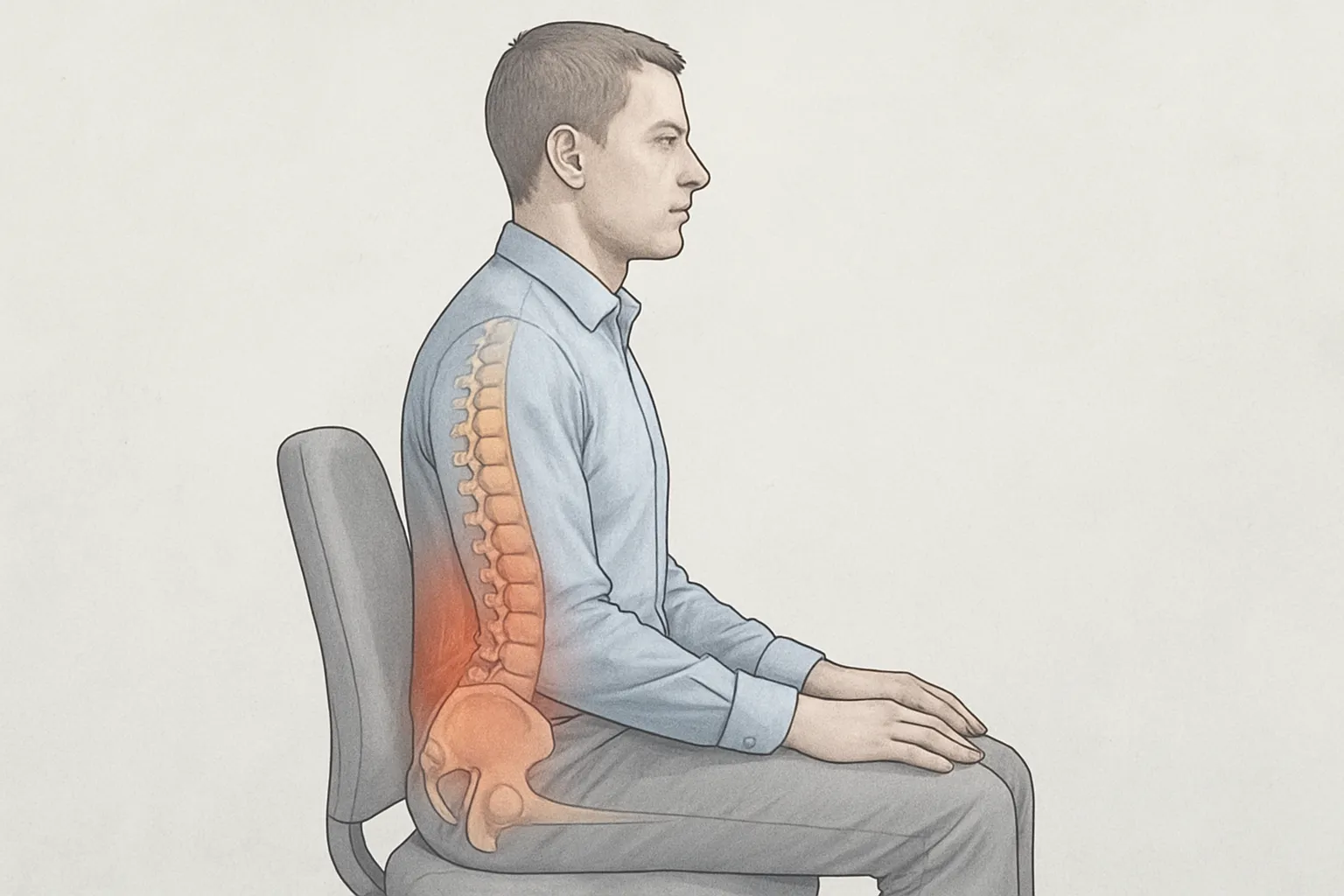
The sedentary lifestyle Prolonged screen use, particularly involving screens, has been linked to increased body fat, reduced aerobic capacity and musculoskeletal discomfort (for example, in the neck and back), as well as eye strain. It may also be linked to irregular sleep patterns and less time spent on motor experiences essential for learning movement. Taking frequent breaks and changing posture can help mitigate some of these potential effects.
It is advisable to prioritise safe, progressive and varied active play, appropriate to the child’s stage of development and including adequate rest periods. Excessive physical demands or early specialisation in sport may increase the risk of overuse injuries. Where medical conditions are present, exercise planning should be tailored to the individual, taking into account nutritional status and sleep quality as factors that influence children’s growth and health.
Signs that indicate the need to consult a paediatrician when assessing movement and growth during childhood
Movement and motor development
- Engine delay evident in terms of what is expected for their age (for example, persistent difficulty holding up their head, sitting up, standing or walking) or very slow progress in reaching developmental milestones.
- Skills regression: loss of previously acquired skills (such as rolling over, crawling or walking) or reduced use of one hand or one side of the body for no known reason.
- Asymmetries marked, persistent limp, worsening gait, or abnormal postures that do not correct themselves spontaneously.
- Hypotonia or hypertonia sustained (muscle weakness or stiffness), tremors or involuntary movements that interfere with play or everyday activities.
- Frequent falls, weakness o abnormal fatigue during exercise, and musculoskeletal pain that limits activity or wakes you up at night.
Physical growth and maturation
- Slowdown in growth with sustained decline in percentiles in height or weight in serial measurements, or notable discrepancies between the two.
- Weight plateau or insufficient weight gain, signs of malnutrition, or a height significantly below or above that expected for their family history and age.
- Abnormal changes in head circumference (rapid increases or decreases) or discrepancies with the rest of the body’s growth.
- Puberty outside the usual range (very early or delayed onset of secondary sexual characteristics) or body asymmetries/disproportions eye-catching.
Myths and facts about exercise and growth in children: what we know so far
There are various beliefs circulating about how exercise affects children’s growth. To summarise the clinical evidence cautiously:
- Myth: “Lifting weights stunts growth.”. Reality: in age-appropriate programmes, with a clear progression and supervised strength training, no consistent negative effect has been observed on the growth plates nor on the final height; the risk stems mainly from incorrectly adjusted loads, poor technique or physical trauma.
- Myth: “High-impact sports always damage the plaques.”. Reality: Reasonable and gradual impact is associated with bone adaptation; problems arise with overuse, excessive volume or acute injuries.
- Myth: “Stretching or hanging makes you taller.”. Reality: It can improve posture and mobility, but it does not permanently change your height.
- Myth: “More exercise or hormonal surges will make them grow more.”. Reality: Exercise-induced hormonal changes are temporary, and height is determined primarily by genetics, nutrition, general health and sleep.
In clinical terms, linear growth occurs in the cartilage of the metaphyseal plates and is sensitive to extreme or repetitive, poorly planned loads. Regular and varied physical activity is associated with neuromuscular and skeletal development, but there is no conclusive evidence that, on its own, it accelerates or increases final height. Strength training programmes adapted to the child’s stage of maturity, with an emphasis on technique, moderate volume and recovery, demonstrate favourable safety profiles when carried out under qualified supervision, whilst avoiding comparisons with adult routines.
To minimise risks associated with growth, the context of load and recovery is important:
- Risk factors: early specialisation in a single sport, a sudden increase in training volume or intensity, poor technique, a lack of rest days, persistent localised pain near the joints, a history of overuse injuries.
- Prudent practices: gradual progression, variety of movements, weekly rest periods, attention to technique and the size of the equipment in relation to body size, and adjustment of the training programme at the first signs of overload (persistent pain, lameness, disproportionate fatigue, persistent inflammation).