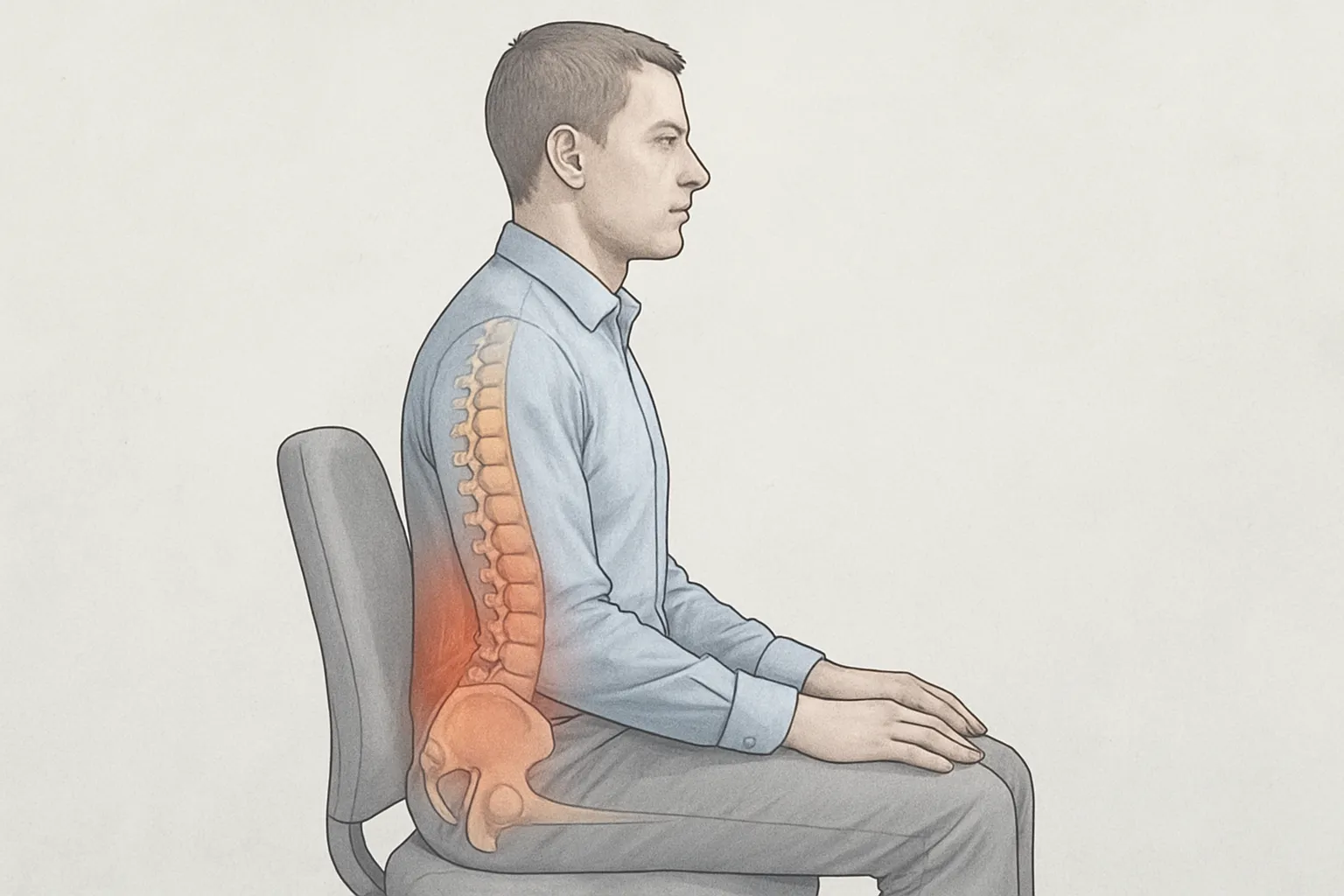
Role of conservative care in active people: definition, objectives and clinical scope
Definition
The conservative care in active individuals is a non-surgical, non-invasive, stepwise, patient-centred approach to the management of musculoskeletal disorders and overload conditions. It is usually prioritised when the clinical presentation is stable and there are no warning signs. It includes education, self-regulation of activity and upload physical, prescription of therapeutic exercise It is based on continuous clinical assessment, realistic functional goal setting and shared decision making. It is based on ongoing clinical assessment, realistic functional goal setting and shared decision making.
Clinical objectives
Its main objectives are to modulate symptoms and improve function without compromising safety; to optimise tissue tolerance through load progression planned; to promote a gradual return to activity when appropriate; and decrease the risk of flare-ups through education and adjustment of contributing factors (e.g. volume, intensity and recovery). These goals are tailored to the specific condition, level of sporting demand and preferences of the individual, with periodic reviews to monitor response and adjust the dosage of the therapeutic exercise and of the other interventions.
Clinical Outreach
It has particular application in tendinopathies, patellofemoral pain, uncomplicated ankle sprains, mild to moderate muscle strains and low back pain without red flags, as well as mild to moderate degenerative changes with manageable symptoms. The indication is maintained as long as the evolution is compatible with the expected course and reasonable clinical or functional improvements are observed. The strategy should be reconsidered or referral should occur if alarm signals (progressive neurological deficit, suspected fracture, infection, active systemic inflammatory disease, disproportionate pain with systemic symptoms) or if lack of response suggests the need for further testing or therapeutic alternatives. In all cases, structured follow-up is recommended to monitor safety and document achievable clinical milestones.
When to opt for conservative care in a physically active population: indications and limits according to the picture
Clinical indications for prioritising conservative care
In physically active people, conservative care is reasonable when the picture suggests stable injury, no red flags and with preserved function in basic activities. It is usually considered appropriate if the pain is manageable, there is no progressive neurological deficit and the examination/imaging does not indicate structural compromise requiring immediate intervention. This option is also favoured by the possibility of adjusting training (cargo handling), adherence to progressive rehabilitation and the absence of a high risk of aggravating the injury with activity modifications.
Conditions that usually admit an initial conservative approach
- Grade I-II ankle sprains and mild-moderate muscle strains, with full joint stability.
- Tendinopathies and patellofemoral pain without signs of complete rupture or blockage.
- Nonspecific low back pain without red flags or progressive radiculopathy.
- Overuse injuries (e.g. bone stress reactions without fracture trace) with real possibility of reducing impact/load.
- Degenerative meniscal lesions with mild symptoms, without mechanical locking no significant recurrent stroke.
Boundaries and signals for rethinking strategy
The conservative approach is less appropriate in the face of frank instability which prevents basic sporting gestures, mechanical locking suspected complete fractures with relevant functional loss (e.g. extensor mechanism failure, repeated pivot failures), displaced fractures or vascular/compartmental involvement. Signs of neurological impairment, If the patient is suffering from a chronic, disproportionate nocturnal pain, fever, or progression of inflammation, the patient should be re-evaluated. It is also appropriate to reassess if, after a reasonable period of structured rehabilitation and load adjustments, functional limitations persist that prevent safe sporting practice or daily tasks. The final decision should integrate the type of sport, specific demands, injury history and risk tolerance, and be reviewed periodically based on clinical response.
Routine conservative care interventions in active people: therapeutic exercise, education and burden management
Therapeutic exercise
It is planned on the basis of an individual assessment and the specific demand of the activity. It usually includes strength, motor control and conditioning work with gradual progression and minimum effective dose. Load tolerance guides decisions: mild and transient discomfort may be acceptable if it does not worsen or alter technique, adjusting volume, intensity, frequency, range of motion, speed and rest. In case of increased irritability or fatigue, less demanding variants and staggered exposure are prioritised. Signs to reassess cautiously include increasing pain, progressive loss of strength, joint locking or neurological symptoms.
Education
Provides guidance on the condition, the expected course and modifiable factors, with realistic expectations. Favours the self-regulation through strategies such as pacing, graded return to activity and differentiating between exertional discomfort and exacerbation. It also addresses movement-related beliefs and fears, defines agreed symptom thresholds and criteria for progression or regression, and reinforces adherence to the exercise plan without making therapeutic promises.
Cargo handling
Implies load monitoring external (time, distance, sets, repetitions, weight) and internal (perceived exertion, 24-48 h response). Planning (periodisation) seeks to avoid abrupt changes, alternate intensities, include weeks of lower load and sustain specific exposure to the sporting gesture when tolerable. If symptoms exceed the agreed threshold, persist for more than 24-48 h or alter technique, volume or intensity is temporarily reduced and equivalent alternatives are prioritised; if the response is adequate, continue with a conservative progression.
Available evidence on conservative care in athletes and active people: possible outcomes and safety considerations
Possible outcomes
In athletes and active people, the conservative management (education, therapeutic exercise, adjustment of the upload, (e.g., physiotherapy, bandages or orthoses and, in some cases, occasional analgesia) is usually associated with small to moderate improvements in pain and function in the short to medium term in frequent musculoskeletal injuries. Return to activity can be achieved with gradual progression and clinical criteria based on load tolerance and functional performance, with times varying according to affected tissue, severity, sport demands and adherence. Under certain conditions, conservative results may be comparable to more invasive alternatives in the short term, although individual selection and periodic reassessment are decisive.
Quality of evidence and influencing factors
The available evidence is heterogeneous and often of low to moderate certainty for sport-specific populations, so it is recommended to interpret effects with caution. Outcomes depend on factors such as injury history, phase of the season, cumulative load, sleep and nutrition, as well as interdisciplinary support. Recurrences are possible, especially in contexts of rapidly increasing load; maintenance programmes and exposure control can reduce this risk, without eliminating it. The correlation between imaging and symptoms is not always direct, so decisions are often based on clinical response rather than isolated radiological findings.
Security considerations
- Mild adverse effectsTransient discomfort, delayed onset muscle pain, fatigue or skin irritation with bandages; usually self-limiting.
- Progression and monitoring: increase the load gradually, prioritise technique and recovery, and monitor for persistent or worsening symptoms after 24-48 hours.
- MedicinesNSAIDs may relieve symptoms, but with gastrointestinal, renal and cardiovascular risks, and may mask pain during exertion. Consider personal history and hydration, especially in endurance sports.
- Physical modalitiesCryotherapy/thermothermotherapy may provide brief relief; avoid in cases of tenderness or local vascular problems. Manual therapy offers short term relief in some cases; avoid high speed techniques in the presence of RED FLAGS or neurological deficits.
- Warning signsThe following symptoms: progressive pain not proportional to the load, inability to bear weight, relevant blockage or instability, associated fever, loss of strength or sensation, or persistent nocturnal symptoms usually require specific clinical assessment.
Signs for reassessing the conservative plan and referral criteria in active persons
Indications for reassessing the conservative plan
- Lack of clinically significant progress in pain, function, strength or range of motion despite adequate adherence and reasonable load adjustments.
- Pain that limits function in daily activities or planned training, or increased and sustained need for analgesics.
- Inability to increase tolerance to load or to resume specific tasks without repeated flare-ups.
- Frequent recurrences of the same condition or persistent diagnostic doubts that prevent management guidance.
Preferential referral criteria (non-urgent)
- Suspected stress fractureFocal bone pain, point tenderness and pain with impact that does not fully subside at rest or occurs at night.
- Mechanical instability or repeated episodes of sprain/dislocation, feeling of joint “failure” or loss of functional confidence.
- Joint effusion relevant, painful locking or clicking with loss of extension/flexion limiting performance.
- Tendinopathies or possible partial ruptures with strength/power deficit or inability to perform technical tasks specific to the sport.
- Symptoms compatible with radiculopathy or entrapment neuropathy showing no favourable evolution.
Warning signs and urgent referral
- Progressive neurological deficitsSignificant weakness, significant sensory impairment, reflex changes or symptoms consistent with spinal cord involvement/cauda.
- Inability to carry weight after trauma with localised bone pain, deformity or crepitus.
- Signs of infection o intense inflammatory process: fever, progressive local redness and warmth, penetrating wound or discharge.
- Continuous nocturnal pain or at rest associated with unexplained weight loss, general malaise or a history of cancer.
- Disproportionate pain with marked tension and increasing paraesthesias suggestive of acute compartment syndrome.