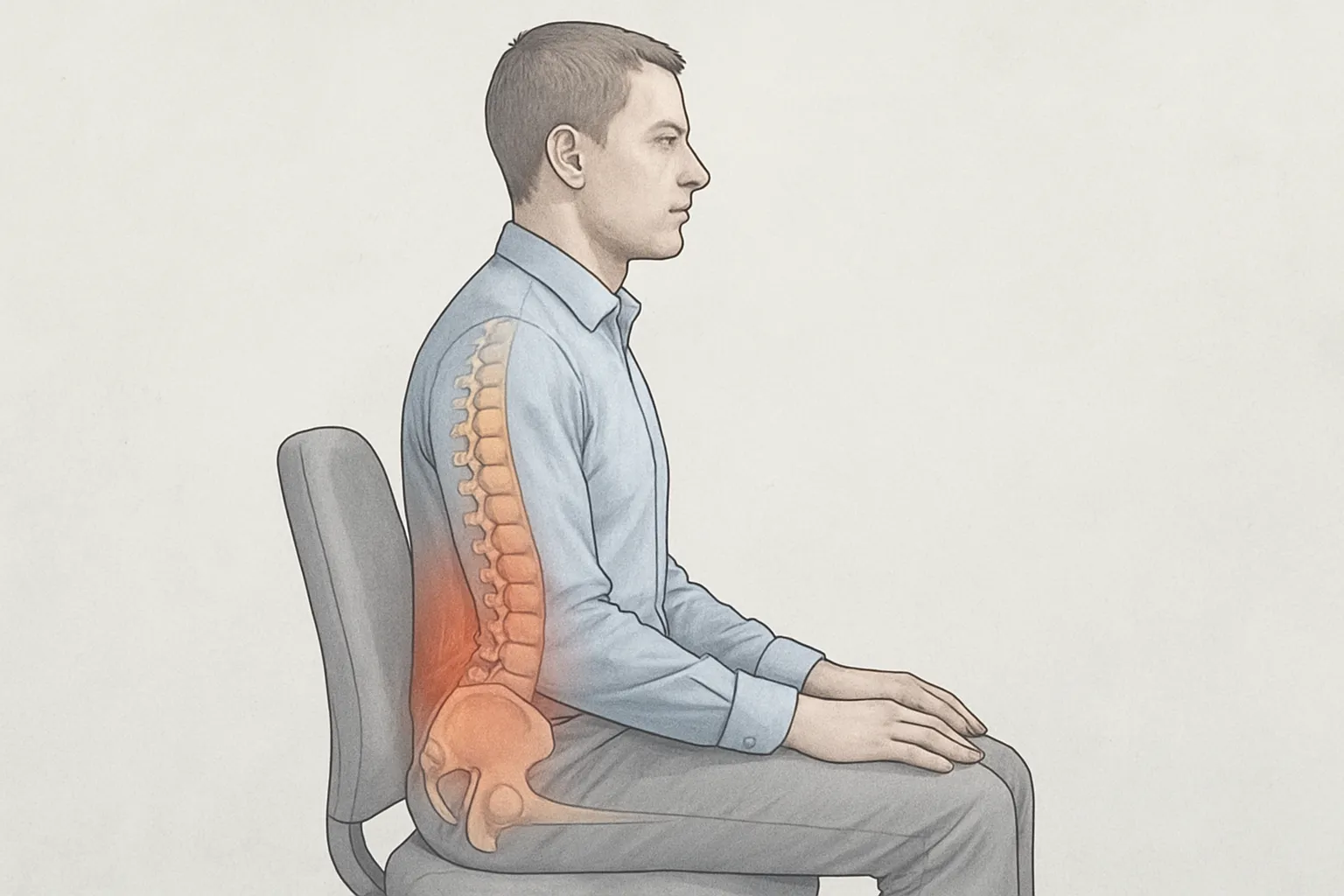
What are posture and body balance and how do they relate to everyday health?
The position is the alignment and organisation of the head, spine, pelvis and limbs in both stillness and movement. The body balance is the ability to maintain or recover the centre of gravity within the support base against internal and external forces. Both processes depend on neuromotor control, muscle tone and strength and individual morphology, and are continuously adjusted to each task and environment.
To sustain this stability, several systems are involved in an integrated way: vision; vestibular system (organs of the inner ear that detect accelerations and orientation); somatosensory sensitivity, including the proprioception and tactile information from the feet and hands; and the musculoskeletal apparatus. The central nervous system integrates these signals to generate proportional postural responses. Factors such as age, fatigue, pain, certain drugs, neurological disorders, activity level, type of footwear and environmental characteristics can modify the effectiveness of these responses.
In daily life, proper postural organisation and balance control are associated with more efficient movements, more even distribution of loads and less perceived strain in tasks such as walking, standing and handling objects. Stable functional balance is associated with less likelihood of stumbling and falling, especially in older people, although this does not guarantee its absence. Conversely, sustained postures and sedentary lifestyles have been linked to increased fatigue and musculoskeletal discomfort in some people. Postural variation, regular movement and prudent training of strength, mobility and balance can contribute to the maintenance of these functions, always considering the characteristics and possible health conditions of each individual.
Factors that can affect posture and body balance: musculature, vestibular system, vision and habits.
The musculature supports alignment and contributes to centre of gravity control through strength, endurance and neuromotor control. Imbalances in tone, shortening, weakness or fatigue modify postural strategies and can increase energy expenditure to maintain balance. Muscle and tendon proprioception provides information about position and movement; when inaccurate (due to pain, scarring or disuse), postural control may become less efficient.
The vestibular system detects accelerations of the head and orients with respect to gravity, coordinating with reflexes that stabilise the gaze. Peripheral or central disturbances can result in instability, oscillations and the sensation of unwanted movement. The vision provides spatial references (acuity, contrast, visual field, depth perception and binocularity). Changes in these functions, together with environmental conditions such as low lighting or glare, hinder sensory integration and can affect body balance.
The habits The cumulative influence of posture, sedentary lifestyles, workplace organisation, repeated movement patterns and the type of footwear or surface modifies the loads on joints and tissues. Factors such as insufficient rest, sustained stress and prolonged exposure to screens can alter body attention and muscle tone, conditioning the postural response to everyday disturbances.
Common signs of impaired posture and balance and when to seek professional assessment
Alterations in body posture and balance are usually manifested by observable changes in alignment and symptoms during standing or walking. They may include persistent asymmetries (shoulders or hips at different heights), instability when standing or walking, repeated falls or trips, y vertigo or spinning sensation when moving the head or changing position. Musculoskeletal pain related to sustained postures, movement-limiting stiffness and disproportionate fatigue are also common. Clinical relevance increases when signs are constant, progressive or have functional impact.
- Persistent asymmetriestrunk tilt, pelvic rotation, prominent scapulae, uneven wear of shoes.
- Marked postural patternsHead forward, increased kyphosis, hyperlordosis, visible valgus/varus knees.
- Instability and gait disturbance: very wide support base, excessive sway, need for frequent support.
- Dizziness, light-headedness or nausea when sitting up, turning or looking up.
- Pain, stiffness or weakness that worsen with sustained postures or affect activities of daily living.
When to seek professional assessment
Clinical assessment is recommended when these signs are persistent or progressing, interfere with work, sport or basic activities, occur repeated falls, There may be a history of a recent trauma or relevant history (e.g. vestibular or neurological disorders, neuropathies, diabetes, advanced osteoarthritis, use of sedative drugs) or a recent trauma. A structured assessment of the musculoskeletal, vestibular, visual and neurological systems helps to identify contributing factors and to plan safe and realistic management.
- Go urgently to sudden neurological debit (weakness, loss of sensation, facial deviation, difficulty in speaking or understanding).
- Sudden, severe headache, loss of vision or double vision, loss of consciousness o ataxia abruptio.
- Fall with head injury (especially if you take anticoagulants), chest pain o dyspnoea associated with instability.
How posture and body balance are clinically assessed: common tests and guidance criteria
The clinical assessment combines postural inspection and simple functional tests. Alignment in sagittal and frontal planes (head-shoulders-pelvis-knees-ankles), scapular and pelvic symmetries, vertebral curvatures and plantar footprint are observed in comfortable standing. Factors influencing balance (vision, medication, pain, fatigue, footwear, support surface) are recorded and conditions (stable surface, distance between feet, eyes open/closed) are standardised to improve reproducibility.
Standard tests:
- Static and dynamic inspectionPlummet or basic clinical photogrammetry for references and changes with flexion/rotation; Adams test to detect thoracic or lumbar asymmetries.
- Static equilibriumRomberg (eyes open/closed), sensitised/tandem Romberg and unipodal support, recording time, oscillation and “errors” (additional supports, eye opening, loss of position).
- Dynamic balanceFunctional reach (anterior/lateral), gait test with turns and double task, Time Up and Go for guidance.
- Validated scalesBerg Balance Scale or Tinetti for global scores; basic instrumentation if available (stabilometry/posturography) to quantify oscillation.
Indicative criteria for interpretation: priority is given to the symmetry, the relative alignment and the stability (ability to maintain the task with controlled swing and without aids). Ankle/hip strategy, safety (need for support, imbalances), consistency between repetitions and consistency with age and clinical context are assessed. Results are not diagnostic by themselves; they should be integrated with neurological and musculoskeletal examination and documented with the same test conditions to allow for prudent comparisons over time.
Moderate-evidence habits and exercises that can promote safe posture and body balance
The available evidence, of moderate quality, suggests that combining trunk and hip strengthening with motor control can promote more efficient alignment and stable balance support. Exercises that prioritise technique and breathing, with gradual progressions and no acute pain are often used. Safe examples include:
- Activation and control: dead bug and bird-dog with diaphragmatic breathing.
- Lumbopelvic stability: gluteal bridges, modified and lateral planks.
- Hip strength: abductions and extensions with elastic band, assisted partial squat.
For balance, the specific training of static and dynamic equilibrium shows modest and consistent benefits when practised regularly. It can be started with close support and a broad base of support, and progressed gradually:
- Static: standing with feet together, semi-tandem and tandem; unipodal support with stable support.
- Dynamic and proprioceptive: weight transfers, in-line walking, walking up and down a low step, slow head turns while walking.
- Mind-body approaches: Tai Chi y Gentle yoga have been associated with modest improvements in postural control in adults, especially older adults, when extreme postures are avoided and individual tolerance is respected.
Some habits can safely support these effects: postural variability and active breaks every 30-60 minutes if sitting or standing for long periods; adjustment of workstation to maintain forward vision and steady feet; regular practice on 2-3 non-consecutive days a week with gradual progression and security (start with short sets, use handrails or a chair for support, stable footwear and adequate lighting). In case of dizziness, acute pain, marked instability or a history of frequent falls, tasks should be adapted and controlled environments should be prioritised.