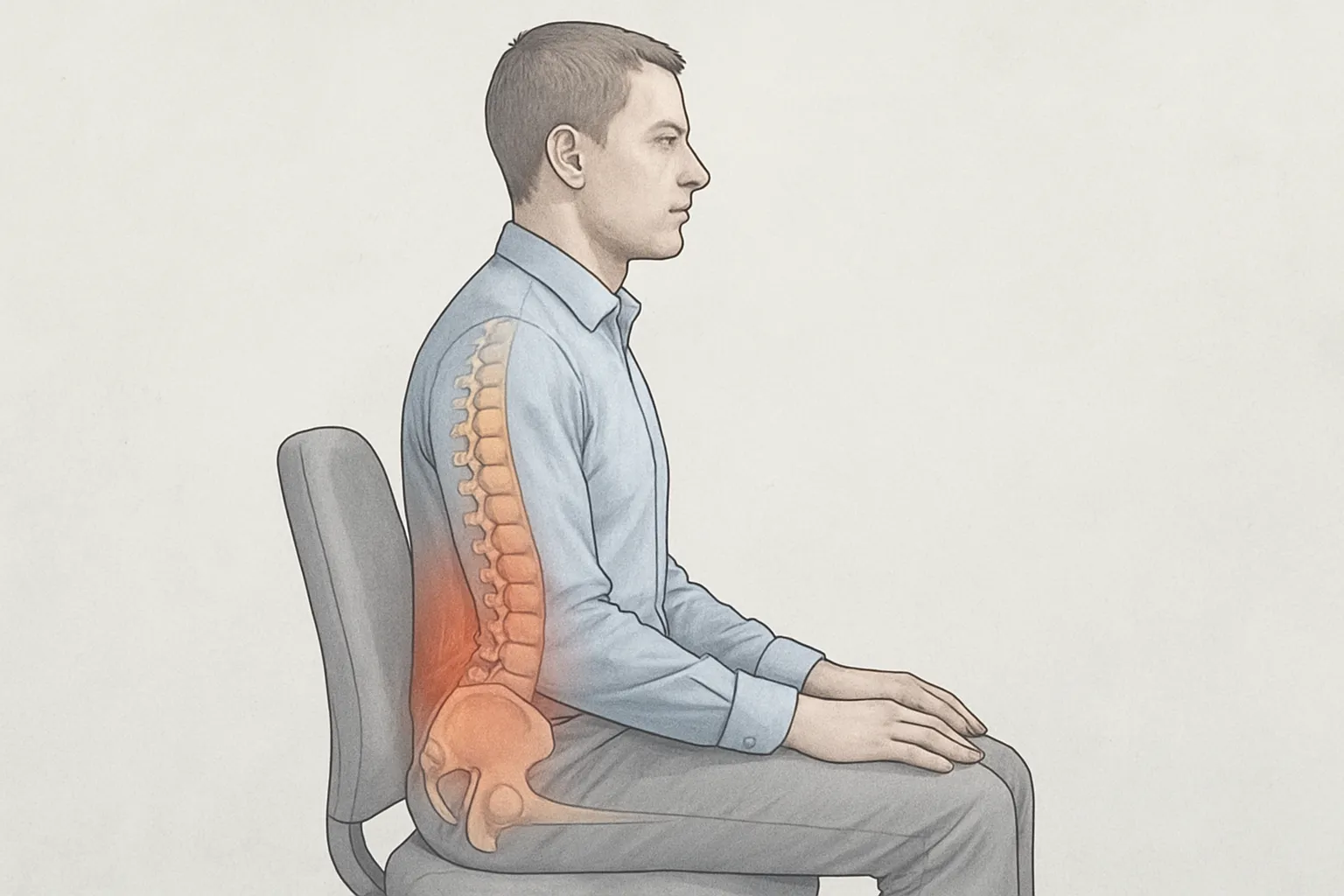
Posture and breathing: a functional relationship explained through the lens of anatomy and biomechanics
Functional anatomy involved
The diaphragm is the main driving force behind ventilation and works in synergy with the abdominal wall and the pelvic floor to form a pressurisable cylinder that supports the column and the rib cage. The intercostal muscles modulate rib movement, whilst the paravertebral and scapulothoracic muscles provide a stable foundation. The alignment of the cervical, thoracic and lumbar spine and the pelvis alters the relationship between length-voltage and the apposition zone of the diaphragm (contact with the rib cage), which affects its mechanical efficiency.
Biomechanics of interaction
During inhalation, the descent of the diaphragm increases the intra-abdominal pressure and, if the abdominal wall provides support, the diaphragm–abdomen piston facilitates thoracic expansion. The costal mechanics It combines “pump-handle” (anteroposterior diameter) and “bucket-handle” (transverse diameter) movements. Increased thoracic kyphosis or a protruding scapula may limit the anterosuperior component, whilst hyperlordosis with pelvic anteversion reduces the area of contact and promotes anterior rib flare (“costal flare”). Cervical protraction and a forward-tilted head are usually associated with greater involvement of accessory muscles; conversely, thoracoabdominal coordination improves when pressure and expansion are distributed more evenly in time with the respiratory rhythm.
Clinical variables and useful signs
The interaction between posture and breathing depends on factors such as age, thoracic morphology, pain, fatigue, pregnancy, body mass index, position (lying down versus standing) and ventilatory demand. There is no “single” pattern that applies to everyone; in clinical practice, findings are assessed which, depending on the context, can provide guidance on the mechanical availability of the system:
- Prominent elevation of the upper ribs with minimal abdominal expansion at rest.
- Persistent anterior costal flare and difficulty in directing air to the lower lobes of the lungs.
- Paradoxical thoracoabdominal patterns (the abdomen retracts during inhalation).
- Visible use of accessory muscles (ECM, scalene muscles) during low-intensity tasks.
These signs should be interpreted with caution and always in the context of the patient’s symptoms, the task at hand and individual variability.
How to tell if your posture is affecting your breathing: common signs, risk factors and when to seek advice
Common signs
The relationship between posture and breathing is complex; certain signs may suggest that body position is increasing the work of breathing. These signs are non-specific and may have a variety of non-postural causes.
- Dyspnoea or “shortness of breath” which occurs or worsens when the person is bent over and improves when they stand up straight.
- Shallow, rapid breathing predominantly in the upper thoracic region, accompanied by frequent sighs or yawns.
- Tension in the neck, shoulders and jaw when breathing, or a feeling of “not being able to fill” the lower part of the ribs.
- Fatigue when speaking, a hoarser voice after long periods of sitting, or intercostal pain with deep breaths.
Risk factors
Certain circumstances can cause a posture to restrict chest mobility or impair diaphragmatic function, particularly when maintained for a long time.
- Held positions in flexion neck and thoracic spine (desk work, prolonged use of devices at lap height).
- Incorrect height of chair/table or screen which encourages slouching and shrugging of the shoulders.
- Clothes or belts that are very tight-fitting y pressure on the chest or abdomen which restrict coastal expansion.
- Abdominal obesity y pregnancy, which can increase pressure on the diaphragm, as well as chest/abdominal scars which restrict movement.
- Severe hyperkyphosis or scoliosis, which can alter the mechanics of the ribcage.
When to consult
It is considered prudent to seek a clinical assessment to rule out cardiopulmonary or other causes if the following occur:
- Shortness of breath at rest, chest pain, severe dizziness, blue lips or fingers o persistent palpitations.
- Progressive worsening breathing regardless of posture, or persistent cough, fever y loss of performance recent.
- Noticeable nocturnal respiratory symptoms, cardiopulmonary history relevant or thoracic/abdominal surgery recent.
Ergonomics and daily habits to promote efficient ventilation: sitting, working from home and taking breaks
Seating
A active sitting It can promote more efficient ventilation by allowing the rib cage and the diaphragm: resting on the sit bones with the pelvis tilted slightly forwards, the spine elongated but not stiff, the shoulder blades relaxed (without the shoulders protruding excessively) and cervical alignment neutral posture with the chin slightly tucked in. Feet flat on the ground and hips/knees at angles of around 90–100° help to distribute the load without compressing the ribcage. The postural variability throughout the day, taking short breaks every 30–60 minutes to take 2–3 nasal breaths with prolonged exhalation can help regulate the breathing pattern without tiring the accessory muscles.
Remote working
The workstation should be arranged to minimise positions that restrict rib cage movement: a monitor at eye level to maintain a neutral neck position, a keyboard and mouse within easy reach to prevent the shoulders from rising or hunching forward, and armrests or a surface on which to rest the forearms, and a backrest that follows the natural curve of the thoracic spine without compressing the lower rib cage. Alternating between sitting and standing tasks where possible, together with breaks for gentle movement (chest expansion, slight trunk rotations and controlled shoulder drops), is associated with a lower load on the accessory muscles and may facilitate calmer and more efficient breathing during long working days.
Rest
When resting at night, positions that maintain the cervical alignment and positions that avoid pressure on the hemithorax are generally better tolerated: lying on one’s side with a pillow filling the space between the shoulder and neck, and neutral pelvic support, can promote rib expansion; in the supine position, a slight elevation of the head of the bed may help in cases of nasal congestion or reflux. The prone position, if it restricts rib or neck mobility, may not be suitable for some people. Maintaining predominantly nasal breathing and following pre-sleep routines that do not increase ventilatory effort (for example, avoiding heavy meals and alcohol close to bedtime) can contribute to a more stable breathing pattern during sleep.
Prudent self-care guidelines: diaphragmatic breathing and chest mobility with a safe approach
Safe diaphragmatic breathing
For a breathing pattern efficient, prioritise the diaphragm may help to ensure a calm approach to rhythm. Lying on your back with your knees bent or sitting with neutral stance, place one hand on your abdomen and the other on the ribs lower. Breathe in gently through the nose, directing the air towards the abdomen and lower ribcage (allowing the abdomen and ribs to expand without raising the shoulders excessively); breathe out through the nose or pursed lips without straining. Maintain a comfortable range Take 3–5 slow breaths, pause briefly and assess your tolerance. Avoid apnoeas, hyperventilation and Valsalva manoeuvres; stop if dizziness, nausea, chest pain or shortness of breath occurs.
Thoracic mobility with a cautious approach
The chest mobility You can practise using gentle movements coordinated with your breathing, taking care to thoracic spine and the ribcage. Whilst sitting, perform gentle trunk rotations to each side, synchronising inhalation with the opening of the chest and exhalation with the return to the neutral position; whilst lying on your side, accompany the expansion of the posterior ribs with inhalation by placing your hand on your ribs; whilst standing, practise short lateral bends, avoiding bouncing movements. The aim is to achieve a sensation of expansiveness without any sharp pain or increasing stiffness. Short sets with rest periods are generally better tolerated than prolonged or intense exertion.
Warning signs and precautions
- Suspend if they appear warning signs: oppressive or radiating chest pain, severe shortness of breath, intense dizziness, paleness or cold sweats, irregular heart palpitations, sharp pain in the spine or ribs.
- The following require an individual assessment: recent thoracic or abdominal surgery, known cardiopulmonary conditions, osteoporosis advanced stage, unexplained chest pain, pregnancy with chest discomfort, hernias or uncontrolled high blood pressure.
- A conservative approach: start with short durations, prioritise the quality of movement and slow breathing, and increase gradually only if the response remains stable during and after the session.
What does the evidence say about “Posture and breathing: a functional relationship”: current findings and limitations
Current findings
The literature suggests a functional relationship between position y respiratory mechanics: the alignment of the rib cage and the column determines the travel of the diaphragm, rib cage mobility and volume distribution. Postures involving thoracic flexion or hyperkyphosis tend to be associated with reduced rib cage expansion and changes in the ventilatory patterns, whilst a forward-tilted head is associated with greater involvement of the accessory neck muscles. In more upright positions, some people show increased mobility of the lower ribs and of the diaphragmatic component, although these effects vary between individuals and contexts.
Proposed mechanisms
The most frequently cited mechanisms include variations in the length-tension relationship of the diaphragm depending on the orientation of the sternum and lumbar lordosis, the pressure–volume interaction between the thoracic and abdominal cavities, and the synergy between the abdominal wall and the pelvic floor, which stabilises the trunk during ventilation. Changes in posture alter the costovertebral levers and the intrathoracic space, which may affect upper airway resistance and the strain on accessory muscles, particularly when carrying out tasks that require greater ventilation or when maintaining certain positions.
Limitations of the evidence
The available studies show that heterogeneity in terms of designs, measurements and populations, with small sample sizes and short-term assessments, often under laboratory conditions. The magnitude of the changes observed is not uniform and the causality The link between posture and respiratory function has not been established. There are still uncertainties as to which subgroups are most affected and in which everyday situations the findings are clinically relevant. Common confounding factors include:
- Musculoskeletal pain, fatigue and physical activity patterns.
- Body mass index and thoracic body type.
- Age, anxiety/stress and learned breathing habits.
- Concomitant cardiorespiratory conditions and medication.