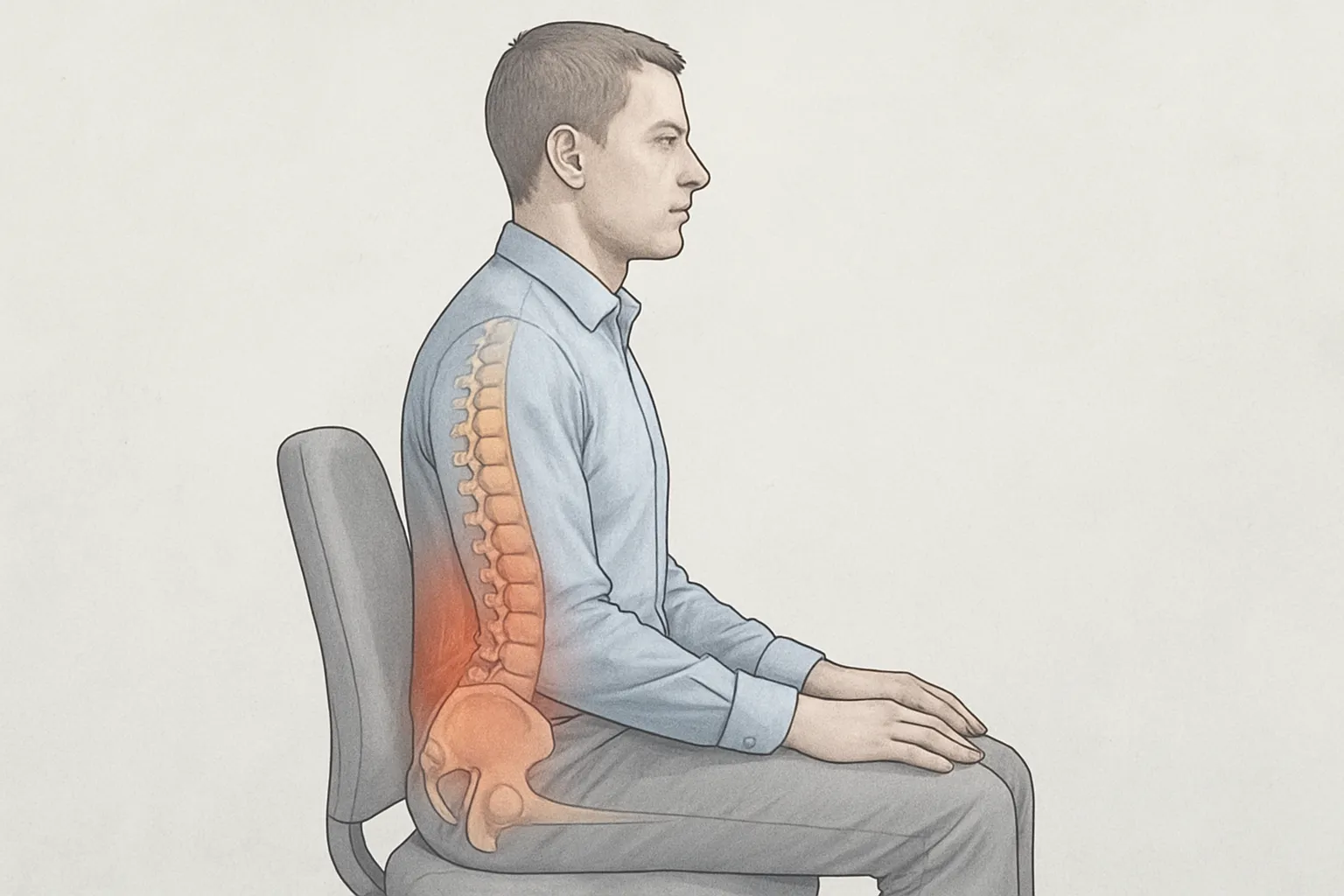
Psoas? ring a bell? have you heard of it?
You may be familiar with it if you are used to doing sport or, on the other hand, you enjoy watching it on TV from the sofa, as it is common to hear about injuries to this muscle in footballers and other elite athletes. Cyclists, spinners and runners in particular are the athletes most likely to suffer from psoas shortening. This is because hip flexion is the main movement performed in these sports.
The Psoas is the deepest muscle of the core. It runs from the twelfth thoracic vertebra down to the fifth lumbar vertebra, through the front of the spine, across the pelvis and into the femur. This muscle therefore connects the upper and lower body, i.e. it acts as a bridge between the two. In other words, the psoas muscles are the main connectors between our body and our legs and therefore play a fundamental role in maintaining our posture and stabilising our spine.
Functions
Understanding its location and how it serves as a link between the torso and the lower limbs gives us a clue as to what its functions will be:
*If you need to pick something up off the ground, it's the psoas that makes you bend forward.
*Allows you to bring your legs and hips closer to your chest for running, climbing stairs or walking.
*It also stabilises the trunk and spine, both in movement and when sitting.
*It also has important functions in the maintenance of the pelvic organs, as it acts as a hydraulic pump helping the circulation of blood and lymph.
*Takes part in breathing. It is connected to the diaphragm and other hip muscles by fasciae.
*In some Eastern philosophies it is known as the muscle of the soul as it is very much involved in physical reactions and emotional aspects. When you're stressed, the psoas contracts, The stress hormones cortisol and adrenaline are the stress hormones, taking an active part in the process known as fight or flight, which is regulated by cortisol and adrenaline.
Consequences Shortened psoas
In continuous periods of stress it is always contracted, which causes problems. This is also the case if you spend too many hours sitting, if you sleep in the foetal position, if you run for long periods of time or even if you overdo squats. In these cases, the front part of the hip is compressed and the psoas shortens.
The shortening of the psoas causes the vertebrae to be pulled downwards. Prolonged shortening causes the vertebrae to crush the discs. If we do not resolve this permanent tension, it can lead to low back pain, sciatica, impingement, disc protrusion and even herniation.
In addition, if it's just a psoas the one that is shortened, twists the spine, which can generating an acquired scoliosis.If the contraction is bilateral, produces a lumbar hyperlordosis. For these reasons it is important and highly recommended to stretch it regularly. When this muscle is:
- Unbalancedcan lead to differences in leg length, fatigue...
- Shortenedcauses posture problems, lumbar hyperlordosis, scoliosis, lumbar pain...
- Very tensecan cause pain in the knees, lower back pain, thoracic breathing (i.e. shallower breathing causing excessive use of the neck muscles), difficulties with bowel movements, menstrual pain...
Benefits of Chiropractic
In short, restoring balance in the psoas will produce... pain relief, greater range of movement, you will be more relaxed... It is a very important muscle that we tend to forget and if you manage to restore its balance, you will notice an improvement in your daily life. Chiropractic is a solution for this, as through vertebral adjustments we will be able to both relax these muscles and balance and correct your posture and, above all, prevent major problems such as the protrusions/hernias mentioned above.