The relationship between postural control and physical performance: definition and clinical and sporting implications
Definition and functional basis
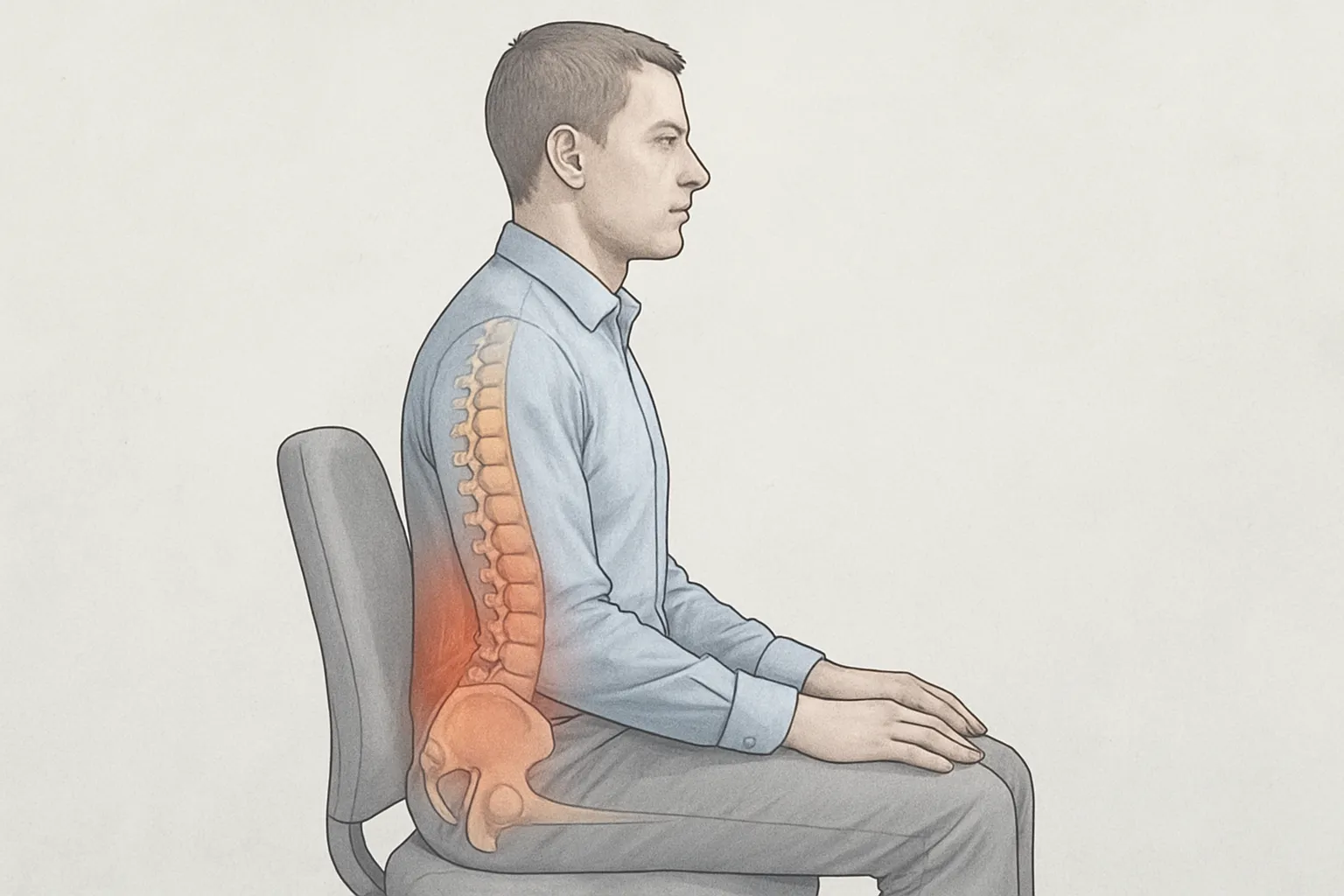
The postural control is the ability of the nervous and musculoskeletal systems to maintain the stability and the body’s orientation in relation to the task and the environment. It integrates information sensory (visual, vestibular and somatosensory) with anticipatory and reactive motor responses, modulating tone, rigidity and alignment to maintain the centre of mass within the base of support. It is not a static state, but a dynamic and context-specific skill.
Relationship with physical performance
In the field of physical performance, effective postural control can contribute to better coordination, spatial awareness and economy of movement, promoting technical precision and the efficient use of force in demanding tasks. This relationship is particularly evident when the speed of execution, changes in the environment or fatigue challenge stability. In practical terms, this interaction is expressed as:
- Sensory integration robust: promotes stable benchmarks in changing environments.
- Proactive and reactive strategies: these support the “timing” and continuity of the movement in the face of disturbances.
- Centre of mass control: facilitates smooth transitions between support, acceleration and braking.
- Trunk stability: helps to transfer forces between limbs and maintain segmental alignment.
Clinical and sports-related scope
In clinical and sports practice, its scope includes the assessment of static and dynamic balance, analysis of alignment and gait, oculovestibular and somatosensory examination, as well as core strength, mobility and control, always taking into account the specific nature of the sport. These findings can guide decisions regarding load progression, task selection and postural education, without replacing clinical judgement or other relevant considerations (pain, fatigue, vision, surface, footwear). Adaptations are usually task-dependent; it is therefore recommended to set individualised goals and monitor the response throughout the process.
Neuromuscular and sensory mechanisms linking balance to movement efficiency and physical performance, according to the available evidence
Sensory integration and postural control
The balance depends on signal integration proprioceptive, vestibular and visual pathways in circuits that include the brainstem, cerebellum and bark. This sensory integration enables the condition of the body to be assessed and the centre of mass to be adjusted in relation to the base of support. The ability to sensory feedback (prioritising the most reliable source depending on the context) helps to reduce late corrections and unnecessary fluctuations. When postural estimation is more accurate, less muscle co-activation is usually required for stabilisation, which may be associated with reduced interference in coordination and greater mechanical economy of movement during functional tasks.
Motor control and mechanical efficiency
The relationship between equilibrium and efficiency is expressed through anticipatory postural adjustments (APA) and reactive responses. APAs prepare the postural foundation prior to the main movement, coordinating muscle synergies which guide ground reaction forces and limit excessive displacement of the centre of mass. At the same time, the modulation of the co-contracting and the joint stiffness It enables stabilisation without unnecessarily increasing mechanical work. More precise control of feedforward/feedback timing tends to reduce delayed corrections and energy dissipated by parasitic movements, and promotes the utilisation of the stretch-shortening cycle when stability is sufficient to transfer forces efficiently.
Modulating factors and their link to performance
The efficiency of movement and the physical performance are influenced by the quality of balance control under different demands. Fatigue, pain or sensory uncertainty are often associated with greater co-contraction, greater non-functional variability and slower response times, with a potential increase in energy expenditure and impaired precision. Conversely, a sensorimotor organisation capable of managing “noise” and stabilising with the minimum necessary activation is associated, in various contexts, with greater consistency in technique, control of the centre of mass during changes of direction, and the maintenance of speed or precision. These effects are task- and individual-dependent and should not be interpreted as universal.
Assessment of postural control: tests and metrics associated with physical performance in clinical and sporting contexts
Instrumental tests
The stabilometry with strength platform enables the quantification of the centre of pressure (CoP) in standing tasks under different sensory conditions (eyes open/closed, firm or unstable surfaces). The dynamic posturography (e.g. Sensory Organisation Test) explores how visual, vestibular and somatosensory information is integrated. In sport, the use of IMUs or platforms during squats, landings and changes of direction provides data on control strategies at the ankle, knee and hip levels, which is useful for contextualising performance without replacing clinical assessment.
Functional clinical trials
The single-leg balance timed (with eyes open/closed), the test for Star Excursion/Y-Balance For functional reach, the Balance Error Scoring System (BESS), the Romberg test and the TUG (Timed Up and Go) are widely used tests. In clinical practice, they provide a practical estimate of the static equilibrium and the dynamic equilibrium; in sport, they are used to assess postural control under conditions of fatigue, after training or upon returning to activity. When interpreting the results, the protocol, the surface, the footwear and the subject’s familiarity with the test must be taken into account.
Relevant metrics and their interpretation
- CoP variables: anteroposterior/mediolateral amplitude, elliptical area, path length and mean velocity; in static tasks, lower values are generally interpreted as indicating greater stability, although this always depends on the context and the task instructions.
- Sensory indices (posturography): these estimate the relative contributions of the visual, vestibular and somatosensory systems, helping to identify dependencies or compensations.
- Normalised reach and asymmetries (Star Excursion/Y-Balance): these have been linked to neuromuscular control during jumping and change-of-direction tasks; differences between sides may provide insight into load distribution.
- Errors in the BESS and time/stability in the TUG or single-leg test: these provide information on control under challenging conditions and functional mobility.
The relationship between these metrics and physical performance depends on the population, the task and the individual’s condition (fatigue, injury history, age). These associations do not imply causality, and they should be considered alongside clinical examination and analysis of the sporting movement.
Evidence-based training and habits to promote postural control and, potentially, physical performance
Postural control depends on sensorimotor integration (vision, the vestibular system and proprioception) and on the neuromuscular capacity to generate and coordinate force. The evidence suggests that a multi-component approach — involving force (particularly in the hip, torso and foot), tasks such as balance/proprioception y mobility targeted training—can promote stability during functional movements and, potentially, improve physical performance. Progression should be gradual and tailored to the individual’s injury history, fatigue levels and technical ability.
In practice, exercises are used that challenge the base of support and control of the centre of mass without compromising safety: single-leg stands, transitions between stable and moderately unstable surfaces, predictable low-amplitude disturbances, and variations involving open or closed eyes or head movements to stimulate the sensory systems. The tasks of dual task (cognitive-motor) can add functional specificity. Integrating these stimuli into movements such as squats, lunges, pushing and pulling facilitates transfer. The diaphragmatic breathing and the management of intra-abdominal pressure is practised alongside posture, avoiding unnecessary Valsalva manoeuvres and prioritising a comfortable and efficient alignment.
Complementary habits that support these objectives include progressive load and planned, active breaks and postural variation throughout the day (there is no single “ideal posture” for all situations), adequate sleep and nutrition to aid recovery, and gradual resumption of activity following periods of inactivity. Signs such as increasing or persistent pain, dizziness, marked unsteadiness or falls warrant an assessment by a healthcare professional. Tailoring the programme to the individual’s response, rather than following rigid protocols, is consistent with a prudent clinical approach based on evidence-based knowledge.
Fatigue, pain, age and history of injury: factors that affect postural control and their potential impact on physical performance depending on the sport
The postural control depends on sensory integration (visual, vestibular and proprioceptive) and adaptive motor responses. The fatigue may impair proprioceptive accuracy, slow down the neuromuscular response and increase body sway; the pain tends to trigger protective strategies (co-contraction, changes in load distribution) that alter stability; the age is associated with reduced strength, processing speed and the ability to integrate sensory inputs, with greater reliance on vision; and the history of injury They can have lasting effects on joint sensitivity and activation patterns, even after apparent functional recovery. These effects are gradual, vary from person to person and are sensitive to the context of the task.
Depending on the discipline, these factors can have different effects on performance:
- Endurance and running: sustained fatigue can increase trunk sway and alter stride pattern, potentially affecting running economy and stability, particularly on downhill sections or uneven surfaces.
- Team and racket sports: pain or a previous injury can affect single-leg support and motor anticipation, thereby impacting performance during changes of direction, jumps and landings.
- Precision sports (e.g. archery, golf): small variations in balance and postural tremor can result in noticeable deviations in fine motor control.
- Strength and power (weightlifting, sprinting): fatigue and pain can affect lumbopelvic control and load distribution, with a potential impact on stability under high demands.
- Gymnastics, acrobatics and dance: even the slightest changes in balance or reaction time can affect the quality of alignment and the safety of landings.
- Cycling and sports on wheels or snow: adjustments to the trunk and neck are common; fatigue can compromise segmental stability and control in the face of vibrations or changing footing.
The extent of the impact depends on factors such as the type of task (static versus dynamic), surface, footwear or material, the presence of dual cognitive tasks, and the state of rest. The timing (acute fatigue versus cumulative load, intermittent pain) and individual variability also play a role. Indicators such as increased oscillation, response latency, accuracy during single-leg stance, or trunk stability provide useful information for interpreting how each factor may modulate performance in specific contexts.