Relationship between mobility and quality of life: clinical definition and key issues
In the clinical setting, the functional mobility is understood as the person's ability to change position, maintain balance, walk, transfer and move safely and efficiently in different environments. The health-related quality of life (HRQoL) encompasses the perception of physical, psychological and social state conditioned by level of functioning and symptoms. Both dimensions are analysed in a complementary way, considering performance, safety and energy demands, beyond the presence or absence of illness.
The relationship between mobility and HRQoL is observed through their impact on the activities of daily living (ADLs) and social participation. Limitations in gait, balance or transfers may be associated with reduced perceived well-being due to pain, fatigue, instability, fear of falling or role restriction. The magnitude of this association varies according to age, comorbidities (e.g. musculoskeletal, cardiovascular or neurological), pharmacological treatment, cognitive and emotional status, and characteristics of the physical environment and social support.
From a clinical perspective, key issues include the distinction between capacity versus performance (what a person can do under standardised conditions vs. what they actually do in their actual context) and the combination of objective and self-reported measures. The assessment typically integrates muscle strength and power, balance and postural control, gait speed and endurance, joint range and coordination, as well as pain, fatigue and fear of falling; environmental barriers and use of assistive devices are also considered. Standardised performance tests (e.g. Timed Up and Go, Short Physical Performance Battery, 6-minute walk test) and HRQoL questionnaires (e.g. SF-36, EQ-5D) are used in different settings; their selection depends on the clinical goal, patient safety and the population being assessed, and their interpretation requires caution to identify clinically relevant changes.
Proposed mechanisms in the relationship between mobility and quality of life: physical function, pain and independence
Physical function
The mobility relates to the physical function through strength, motor control, balance and range of motion. When movement is sufficient and adapted to individual capacity, it tends to preserve neuromuscular coordination, postural stability and cardiorespiratory efficiency, which can facilitate everyday tasks with less perceived exertion. Conversely, prolonged periods of inactivity are associated with disuse, stiffness and loss of power, leading to a cycle of reduced tolerance to exertion and increased fatigue. The response is variable and depends on age, comorbidities, medication and the type and intensity of the movement practised.
Pain
The pain and mobility have a bidirectional relationship. Nociception due to overloading, inflammatory processes or the awareness-raising Peripheral and central movement can limit movement; in turn, restricted mobility promotes stiffness, changes in gait pattern and hypervigilance, factors that can perpetuate pain. In some people, dosed and progressive movement is associated with better modulation of descending inhibitory systems and less hypersensitivity; in others, certain gestures or intensities trigger exacerbations if they exceed the tissue tolerance. Adjusting volume, technique and recovery times is often key to avoiding pain peaks and encouraging adherence.
Independence
The independence functional is linked to the capacity to organise and execute activities of daily living safely and without assistance. Sufficient mobility allows transfers, walking and manipulation of objects with lower energy costs and lower perceived risk, while slowness, instability or pain increase the need for external support and time to complete tasks. Factors such as risk of falling, The relationship between the two, the associated fear, environmental barriers and the availability of technical aids modulates this relationship and can facilitate or hinder participation in the community and autonomy at home.
Assessing the relationship between mobility and quality of life: functional tests and validated questionnaires
Functional testing
The functional tests objectively quantify mobility, providing information on speed, balance, lower limb strength and endurance. In order to make the results comparable, it is recommended that the following be done standardisation (same distance, surface, footwear and technical aids recorded) and basic clinical supervision. The choice of the test depends on the profile of the person and his/her health status, prioritising the security and symptom control during and after exercise.
- Walking speed (4-10 m): time over a short distance at usual or fast pace.
- Timed Up and Go (TUG): stand up, walk 3 m, turn and sit down; integrates mobility, balance and change of direction.
- Short Physical Performance Battery (SPPB): static balance, walking speed and getting out of the chair.
- 6-Minute Walk Test (6MWT): submaximal functional capacity and exercise tolerance.
- Getting up from a chair in 30 s: lower limb strength and endurance.
Validated questionnaires
The validated questionnaires measure the person's perception of how mobility influences his or her quality of life and in daily activities. Culturally adapted versions should be used, with clear instructions and, where necessary, administered by interview to avoid bias. They provide complementary domains (pain, physical function, social participation) that are not captured by objective tests.
- SF-36/SF-12: domains of physical function and physical role.
- EQ-5D: mobility dimension and self-reported health status.
- WHODAS 2.0: mobility-related limitations in activity and participation.
- Autonomy indices (Barthel, Lawton-Brody): performance in ADLs and IADLs linked to movement.
- Specific scales (WOMAC, LEFS): lower limb limitations in specific clinical contexts.
Interpretation and methodological considerations
In order to relate mobility and quality of life, it is useful to triangulate objective and self-reported outcomes, looking at reliability, validity y sensitivity to change of each measure, as well as to possible floor/ceiling effects. Interpretation should be contextualised with age, sex, comorbidities, pain, fatigue, cognitive status and physical environment. Repetitions under similar conditions facilitate the monitoring of clinically relevant changes, avoiding categorical conclusions when there are variations in medication, use of aids or exacerbations. The security bonus: any testing is stopped if worrying symptoms appear and necessary adaptations are documented.
Relationship between mobility and quality of life in older people and chronic diseases: factors that often influence it
The mobility is associated with the quality of life because it affects autonomy in daily activities, social participation and perception of well-being. Limitations in walking, balance or physical endurance may be associated with increased dependency, restrictions in daily life and poorer mood. The relationship is bidirectional: reduced mobility may promote deconditioning and isolation, and in turn, pain, fatigue or fear of falling may further reduce mobility.
In the context of chronic diseases (e.g. arthritis, COPD, heart failure, diabetes with neuropathy, Parkinson's disease) and in old age, mobility is often affected by fluctuating symptoms, comorbidities and episodes of decompensation. This can result in daily variations in functional capacity, with periods of increased or decreased activity. The presence of previous falls, recent hospitalisations or mild cognitive impairment can add complexity. Adaptation of the environment and the correct use of technical aids can facilitate safe movement, although their impact varies from person to person.
Factors that often influence this relationship:
- Physiological and musculoskeletal: sarcopenia, loss of strength and power, pain and swelling, joint stiffness, limited range of motion.
- Neurological and sensory: balance and gait disturbances, parkinsonism or tremor, peripheral neuropathy, vision, hearing and proprioception deficits.
- Cardiorespiratory and metabolic: dyspnoea, exercise intolerance, hypoxaemia, anaemia, glycaemic decompensation, fluid retention.
- Psychological and cognitive: depression, anxiety, apathy, mild cognitive impairment or dementia, fear of falling and activity avoidance.
- Pharmacological: polypharmacy; adverse effects of sedatives, anticholinergics or hypotensives (including orthostatic hypotension); hypoglycaemias.
- Environment and social: architectural barriers, inadequate lighting and surfaces, climate, availability of transport, family or community support, socio-economic status.
- Habits and nutrition: prolonged inactivity, insufficient protein intake, poor hydration and sleep quality, tobacco or alcohol consumption.
- Clinical and functional: multiple comorbidities, previous falls, fragility, The following conditions can be observed in the patient's condition: ailments, immobilisations, recent hospitalisations, inadequate use of technical aids.
Relationship between mobility and quality of life: habits and environment that can safely support it
The functional mobility -ability to move around and carry out daily activities - is associated with better perceived quality of life by facilitating autonomy and social participation. Impairment is often linked to increased effort for basic tasks and unwanted events such as falls or persistent pain. A prudent approach combines habits adapted to the individual's condition and environmental adjustments that reduce demands and risks.
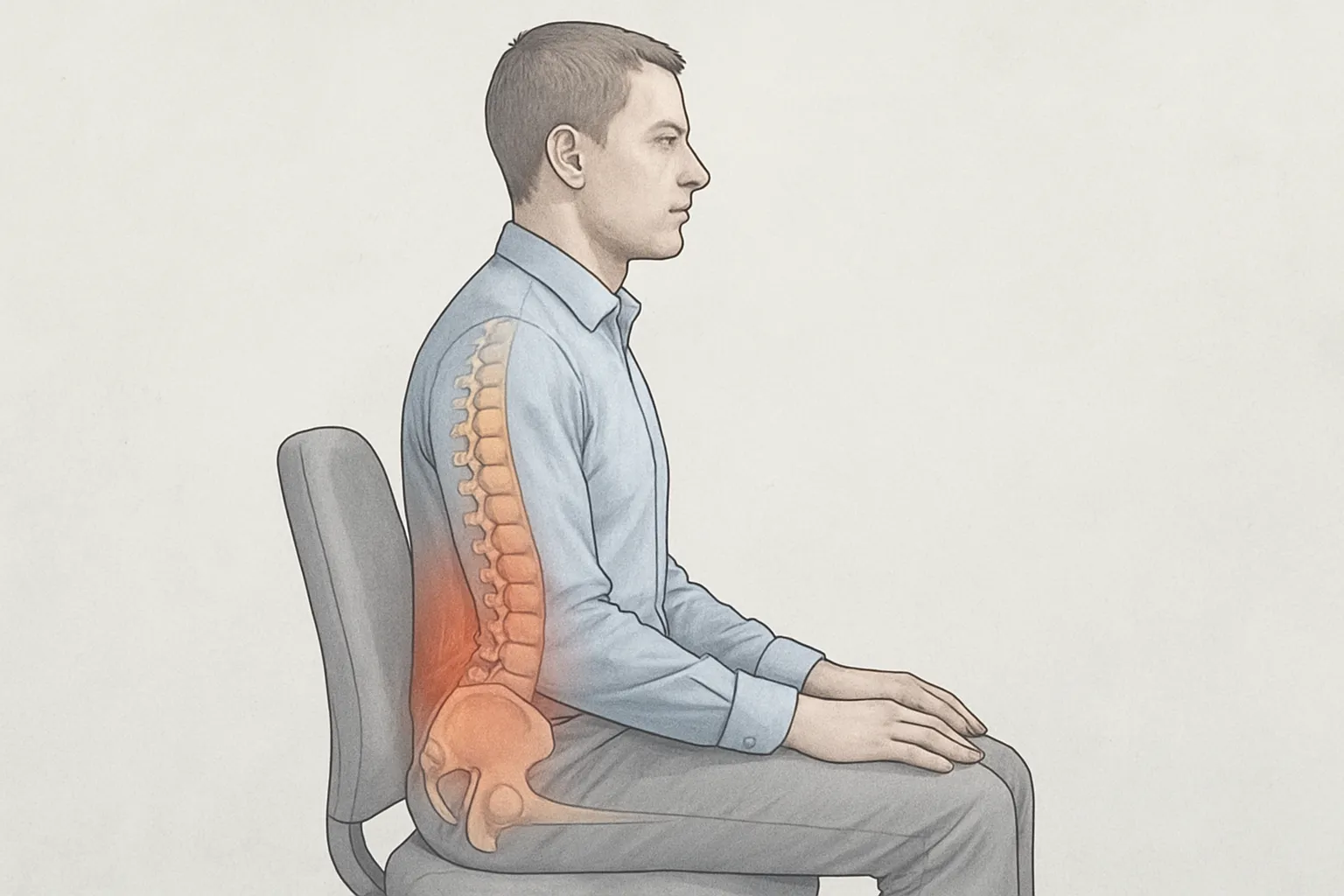
In terms of habits, regular physical activity with gradual progression in volume and intensity can safely promote movement capacity. It is useful to integrate force (especially in the lower limbs and trunk), balance y flexibility, as well as practical functional (e.g. getting out of a chair, climbing steps, walking at different paces). Avoid prolonged periods of sitting, warm up before exertion, choose stable footwear and monitor for warning signs (pain that does not subside, dizziness, disproportionate dyspnoea or unsteadiness), adjusting the exercise dose towards an appropriate level. perceived effort moderate and compatible with recovery.
The environment can facilitate safer mobility when it is accessible and predictable. In the home, it helps to remove obstacles (cables, loose carpets and clutter), the adequate lighting contrast, handrails on staircases and the surfaces of stairways and non-slip in bathrooms and kitchens; placing frequently used objects at comfortable heights reduces overexertion. Outdoors, level pavements, well-marked crossings, rest areas and moderately sloping routes are favoured; planning schedules to avoid extreme heat or poor air quality adds to safety. When indicated, the correct use of technical aids (cane, walker) and the maintenance of footwear and support surfaces contribute to more stable walking.