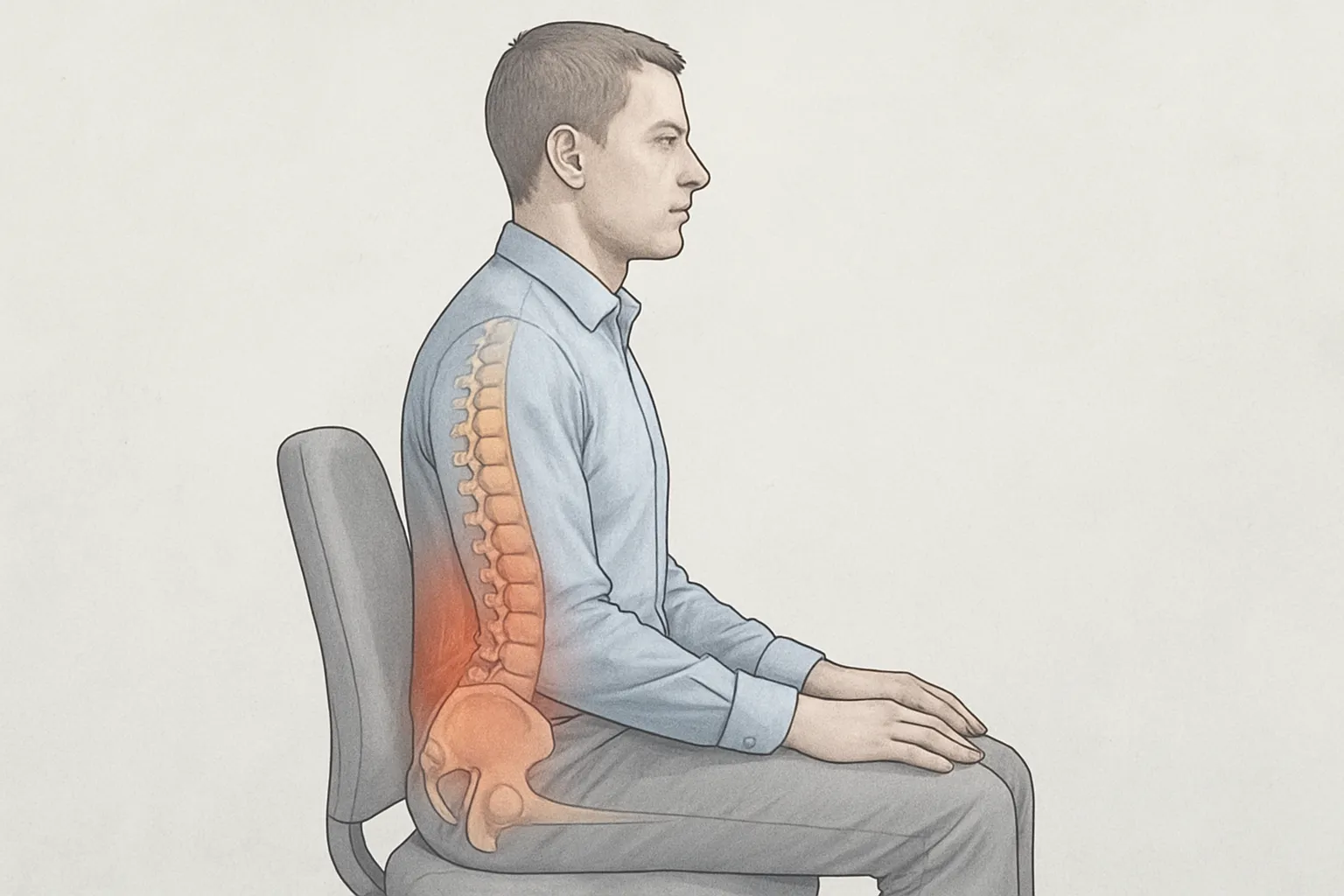
What the relationship between the nervous system and postural control means in terms of health
The postural control is an emergent function of the nervous system which integrates sensory information (vision, proprioception and vestibular system) and generates motor responses to keep the centre of gravity within the base of support. This sensory integration and the coordination of reflexes, muscle tone and anticipatory adjustments enable stability at rest and in movement, influencing everyday tasks such as standing, walking or changing direction without losing balance.
From a health perspective, disturbances in any of these components - for example, in the cerebellum, basal ganglia, brainstem, peripheral pathways, vestibular system, or in the quality of visual and somatosensory information - can affect stability. Factors such as ageing, persistent pain, fatigue, certain medications or physical inactivity may also influence postural performance. These conditions are associated with increased effort to maintain posture, possible instability and risk of falls, as well as musculoskeletal symptoms related to compensatory overloads.
In clinical terms, the relationship between the nervous system and postural control functions as a functional indicator of neurological status and motor control. Assessment may include observation of postural adjustments, balance and gait tests, and, where appropriate, instrumented measurements. Interpretation should take into account age, comorbidities and context of the individual, as individual variability is wide and the findings do not in themselves imply a diagnosis nor are they an absolute predictor of outcome.
Sensory integration of the nervous system in postural control: vision, proprioception and the vestibular system.
- VisionThe visual axis: it provides external spatial references, detects displacements of the environment and the body itself, and helps to align the body axis with the visual context.
- Proprioceptionintegrates signals from muscle spindles, joint and skin receptors (especially plantar) to estimate position, movement and segmental loading, essential for adjusting tone and support strategy.
- Vestibular systemThe head: through semicircular canals and otoliths, it captures angular and linear accelerations of the head and orientation with respect to gravity, providing a stable inertial frame when other signals are ambiguous.
The central nervous system combines these afferents into networks that include the brainstem, cerebellum and parietal areas to estimate the centre of mass and select responses that maintain the base of support. This process is dynamic and involves sensory feedbackThe influence of the most reliable channel is increased depending on the context (e.g. less vision in darkness, more stable proprioception on firm surfaces). Through reticulospinal and vestibulospinal pathways, the following are generated anticipatory and reactive postural adjustments, The movement of the movement is modulated by experience and by internal models that predict the consequences of the movements.
When the reliability of a modality changes (darkness, unstable surfaces, rapid cephalic movements), integration may be challenged and emerge. sensory conflict, with oscillations or compensatory strategies. Clinical disturbances in any of these systems (e.g. peripheral sensory loss, vestibular hypofunction or visual deficit) may modify stability in specific tasks. Balance assessment is interpreted in a multisensory manner, considering how the individual uses and redistributes available information according to the task and environment, without assuming complete or uniform compensation between systems.
Symptoms and signs to seek assessment when the nervous system compromises postural control
Frequent manifestations of neurological compromise of postural control
- Instability persistent, sensation of body displacement or “floating”, with or without dizziness.
- Vertigo or oscillopsia (vision that “jumps” when moving the head) or blurred vision linked to head movement.
- AtaxiaWide-based gait, zigzagging, unsure turns or difficulty in starting/braking.
- Falls or near-falls repeated, especially when turning or on uneven surfaces.
- Visual dependencemarked worsening in the dark, when closing the eyes or in the shower.
- Orthostatic hypotensionpresyncope, weakness or “mental fog” on standing up or after prolonged standing.
- Proprioceptive/sensory deficitsNumbness in feet, sensation of “stepping on cotton wool”, difficulty in perceiving joint position.
- Postural tremor, rigidity or spasticity limiting fine postural adjustments.
- Gait pattern with short or shuffling strides and reduced braking.
- Increased instability with simultaneous tasks (talking, calculating, carrying objects).
- Disproportionate standing fatigue and frequent need for external support.
- Cervical or lumbar pain associated with sustained postural compensation.
Contextual factors and developments guiding valuation
- Home sharp versus progressive; fluctuating course with fatigue, fever or after recent infections.
- Worsening linked to new drugs (sedatives, antihypertensives, hypoglycaemics) or alcohol consumption.
- Background on peripheral neuropathy, The use of a device with a high level of sensitivity, visual disturbances or metabolic conditions affecting deep sensation.
- Triggered by rapid cephalic movements or complex visual environments (e.g. supermarket aisles).
Neurological warning signs
- Installation sudden of severe imbalance with inability to walk or stand.
- Acute vertigo accompanied by diplopia, dysarthria, dysphagia, weakness o focal hypesthesia, vertical nystagmus or other cerebellar/oculomotor signs.
- New and severe headache, The symptoms are different from the usual ones, especially if they coexist with fever or stiff neck.
- Visual loss transient or persistent, or new-onset double vision.
- Altered level of consciousness, acute confusion or unexpected behavioural changes along with instability.
- Repeated falls with head trauma or transient loss of consciousness.
Clinical assessment of postural control and the nervous system: tests and tools used by practitioners
Initial clinical examination
The evaluation begins with directed anamnesis (previous falls, drugs, visual or neuropathic conditions, vestibular symptoms) and observation of posture and gait. The neurological examination It assesses cranial nerves, strength and tone, vibratory and proprioceptive sensitivity, reflexes and coordination. Manoeuvres used include Romberg and Romberg sensitised, unipodal support, cerebellar tests (finger-nose, heel-knee) and diadochokinesis. Interpretation takes into account fatigue, pain and patient safety; atypical findings or progressive deficits require specialised assessment.
Vestibular and oculomotor tests
The vestibulo-ocular integration is explored by using the vestibulo-ocular reflex (VOR) with cephalic impulse (clinical or vHIT), dynamic visual acuity, evaluation of sacadas and slow pursuit, spontaneous and optokinetic nystagmus. In positional dysfunction, diagnostic manoeuvres such as Dix-Hallpike and supine twist are applied, considering cervical contraindications. In specialised settings, the videonystagmography (VNG/VOG) and caloric tests provide objective recording of eye movement and canalicular function.
Instrumental measurement of postural control
The posturography with power platforms quantifies centre of pressures, rate of oscillation and stability limits under static or dynamic conditions (e.g. CTSIB/mCTSIB or SOT). Portable inertial sensors (IMU) allow the analysis of oscillation, gyrations and gait variability in different contexts. Depending on the case, the following can be added Surface EMG for activation patterns and baropodometric templates for pressure distribution. These measurements complement the clinical examination and require standardised protocols and artefact control.
Functional tests and scales
Validated scales and tests are used to estimate functional capacity and fall risk: Berg Balance Scale, MiniBEST, Functional Gait Assessment, Timed Up and Go and balance confidence questionnaires (e.g. ABC). Their results should be interpreted with reference to age, comorbidities and activity level. No single test determines aetiology; clinical judgement integrates neurological, vestibular and postural findings to guide management and the need for referral.
Habits of care and rehabilitation approaches to support the nervous system and postural control
Daily habits that support nervous system regulation and postural control
- Regular sleepConsistent schedules and sufficient quantity are associated with better sensory processing and postural attention.
- Stress managementSlow diaphragmatic breathing, short pauses and reduced multitasking help to modulate the autonomic load during balance tasks.
- Moderate physical activityWalking, gentle cycling or swimming can promote cerebral perfusion and sensorimotor integration without overloading the system.
- Sedentary breaks and ergonomicsPeriodic postural changes and neutral head-thorax-pelvis alignment facilitate more efficient postural responses.
- Hydration and stable footwearAdequate hydration and footwear that provides support and good plantar contact can contribute to the proprioception.
Rehabilitation approaches with sensorimotor emphasis
- Progressive strengthening of the lower limbs and trunk (buttocks, abductors, triceps suralis, paravertebral muscles) to improve postural responsiveness.
- Specific mobility ankle, hip and rib cage, useful for ankle and hip strategies during perturbations.
- Balance training staggered: narrow stance, tandem and unipodal support; controlled progression of base of support, visual input (eyes open/closed), surfaces and dual cognitive tasks.
- Vestibular and ocular work when indicated: gaze stabilisation (VOR), saccades and habituation to low dose head movements and symptom control.
- Proprioceptive stimulationBarefoot tasks on safe surfaces, tactile feedback and light perturbations to fine-tune the detection of changes in support.
- Walking and coordination: practice with changes of pace and direction, turns and steps to integrate dynamic balance into functional tasks.
Progression and safety considerations
- Gradual progressionAdjust one variable at a time (time, complexity, speed or instability) and prioritise the quality of the movement.
- Symptom monitoringkeep sensations mild and transient; discontinue if severe dizziness, double vision, sudden headache, loss of strength, marked unsteadiness or fall occurs.
- Safe environmentClear space, close support point and suitable surfaces; select footwear or barefoot work depending on the task.
- Clinical precautionsIndividual assessment is required in situations such as recurrent falls, acute vertigo, significant sensory loss, uncontrolled cardiovascular or neurological disease and recent post-surgery.